
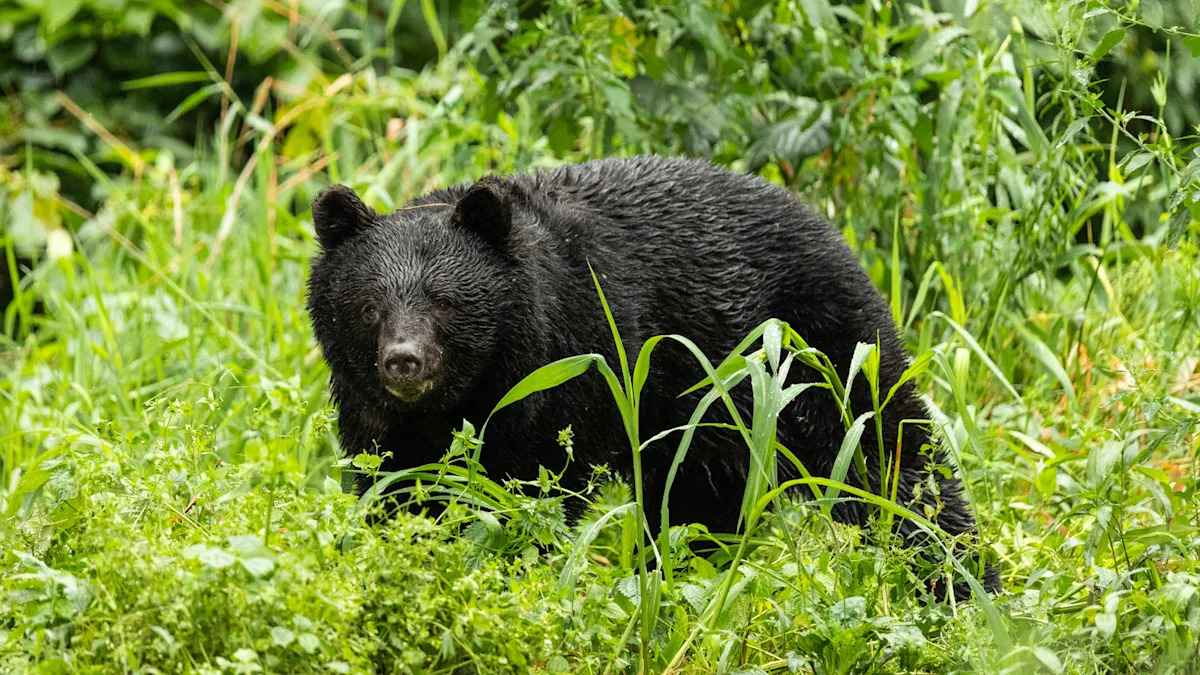
In November 2025, the U.S. Embassy Tokyo issued a rare travel warning for Japan, one of the world’s safest countries, according to visitors. This came in the form of a wildlife alert for the city of Sapporo — a former winter Olympic venue — along with the rest of Hokkaido. The headline-grabbing alert also covered other parts of Northern Japan, including Akita Prefecture, where there’s a bear meat vending machine outside one bullet train station. It followed a bear sighting in Sapporo’s Maruyama Park, which is beside the U.S. Consulate General.
The sighting in question wasn’t an isolated incident, as Japan has seen a notable rise in bear attacks in recent years. By mid-November 2025, public broadcaster NHK had already reported a new record of 220 attacks (breaking the previous record of 219, set in the 2023 fiscal year). That was before a bear mauled a man in a public restroom in the city of Numata in late November. The month before, it made international news when a bear in the same city, located in Gunma Prefecture, wandered into a local supermarket, raiding the sushi section and injuring two customers.
Earlier in the year, in Yamagata and Iwate, bears even appeared on airport runways and forced officials to temporarily halt all flights. Both those prefectures have also seen bears encroaching on their hot spring inns, even as National Geographic named Yamagata one of the world’s best places to travel in 2026. Five of the 13 nationwide deaths caused by bear attacks in the year to date happened in Iwate, where authorities recovered the body of an inn worker who had been mutilated while cleaning an open-air hot spring bath. Incidents like these have brought attention to a growing problem that travelers should know how to handle — or avoid altogether — before planning their next outdoor adventure in Japan.
Read more: 20 Most Dangerous Islands In The World
Be aware of your surroundings and consider renting bear spray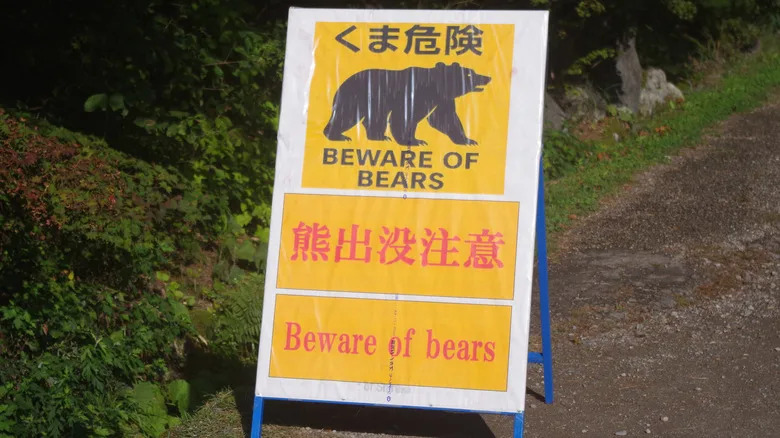
Japanese Beware of Bears sign Shirakawa-go – Kazuno William Empson/Shutterstock
Despite the wildlife alert, the U.S. State Department, which issues travel advisories for foreign countries, didn’t alter its assessment of Japan as a low-risk tourist destination. Its Level 1 indicator, advising, “Exercise normal precautions,” remains unchanged as of this writing. However, roughly 75 percent of Japan is made up of mountains, and as the human population decreases in rural areas, the bear population has increased. In places like Okutama, Tokyo, where you can spend the night in a spooky movie cabin, the animals are moving back in to reclaim their natural habitat. As such, the U.S. Embassy urges travelers to be aware of their surroundings and avoid walking alone in bear sighting areas.
That applies to all international visitors, as a Spanish tourist learned while sightseeing at the UNESCO World Heritage Site of Shirakawa-go. You can visit this Japanese village for a picture-perfect winter vacation, but don’t be surprised if you see vendors selling bear bells or signs warning, “Beware of bears.” The October attack happened near a shuttle bus stop for an observatory overlooking the village’s famous thatched-roof farmhouses. A site representative encouraged visitors to refrain from leaving litter that could attract bears (via NBC News).
If you’re going hiking, you might also consider renting bear spray, which isn’t allowed on planes and can be expensive to purchase. A single spray can, produced from a chili pepper extract, sells for 10,000 to 20,000 yen (about $65 to $130). You can rent one for as little as 1,000 yen a night at outlets like Nandemo Recycle Big Bang, a Hokkaido-based thrift store chain with a location near New Chitose Airport. In addition to outdoor shops, some tourist information centers, such as the one in JR Niseko Station (a popular skiing gateway), rent out bear spray.
Attacks can happen in winter, and they warrant preparation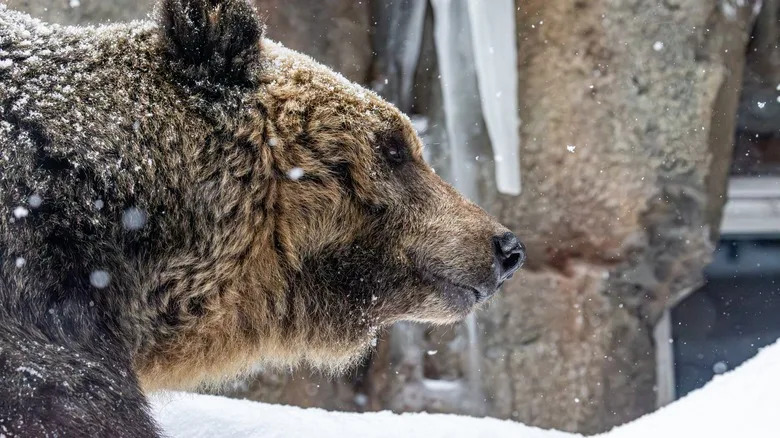
Brown bear snow sidelong profile Hokkaido – Tommy_HSIEN-TSE/Shutterstock
Another thing driving Japan’s bear attack surge is a dwindling food supply of acorns and beech nuts, linked to dry summers and possibly climate change, according to some experts. In the fall, bears typically go through an intense eating phase called hyperphagia as they prepare for hibernation. Unfortunately, that phase overlaps with the autumn tourism season, as the animals seek food for a long winter sleep while leaf peepers converge on spots like Nikko. This underrated city for waterfall-loving hikers outside Tokyo closed its trail leading down from the Akechidaira Ropeway due to bears.
Other experts have warned of meat-eating bears that don’t hibernate as usual and even appear as late as December or January, per The Mainichi. In America, the National Park Service (NPS) makes a clear distinction between brown bears and black bears, recommending that cornered hikers play dead with the former, but not the latter. Japan has around 13,000 Hokkaido brown bears and 50,000 Asiatic black bears by some estimates, and they’re spread out over fewer square miles near densely populated cities. This is why hikers wear those jingling bear bells, since, as the NPS notes, “Most bears will avoid humans if they hear them coming.”
In the event you do see a bear, never turn and run unless you want to be chased, and be mindful of which way the wind is blowing when you unholster your spray. It doesn’t hurt to rethink your outdoor travel plans, either. When I first visited Sapporo for its annual snow festival, I decided to make the 30-minute nature walk down a mountain road from Okurayama Ski Jump Stadium to the Hokkaido Shrine in Maruyama Park. It’s not a trek I’d advise anyone to repeat after that same park set off the U.S. Embassy’s wildlife alert.
Ready to discover more hidden gems and expert travel tips? Subscribe to our free newsletter for access to the world’s best-kept travel secrets. You can also add us as a preferred search source on Google.
Read the original article on Explore.
AloJapan.com