
Interior worlds of Tokyo’s creative gyaru
Gallery / 10 images
“Tokyo is so often romanticised through the streets, the neon, the chaos, the energy – but we rarely see the rooms people go home to,” says photographer Alexandra Waespi. Her new project, The Interior Worlds of Tokyo’s Creative Gyaru, takes us away from the city’s cacophonous exterior and into the bedrooms of young creatives connected to gyaru, otaku and adjacent subcultures.
The project began with a trip planned around meeting the nail artists that populate Tokyo’s expressive scene, but Waespi’s curiosity soon led her to the world of gyaru, a subculture emerging in the 1990s that has become known for its playful and often excessive aesthetics.
As the foundation for the series began to take shape, the photographer dug more deeply into the world. “I found how many misconceptions there are [about gyaru] and how misunderstood it is…it’s not just about cliches of big eyelashes, tanned skin and blonde hair.” Determined to show a real view of Japanese youth subculture and those who pertain to adjacent aesthetics, Waespi started connecting with subjects online.

 Photography Alexandra Waespi
“As soon as I started meeting people, I saw how huge the spectrum is. Some of the girls identified with gyaru, others more with otaku culture, and some feel outside any label entirely,” Waespi explains. “Each of the girls is an artist in their own right. Sea is a tattoo artist, Hina a textile artist, Minori a model and multidisciplinary artist, Hao works in designing and upcycling, the Onegai twins DJ anime happy-hardcore nights, and Karen works in fashion PR.” What linked the creatives she encountered was a shared freedom in their self-expression.
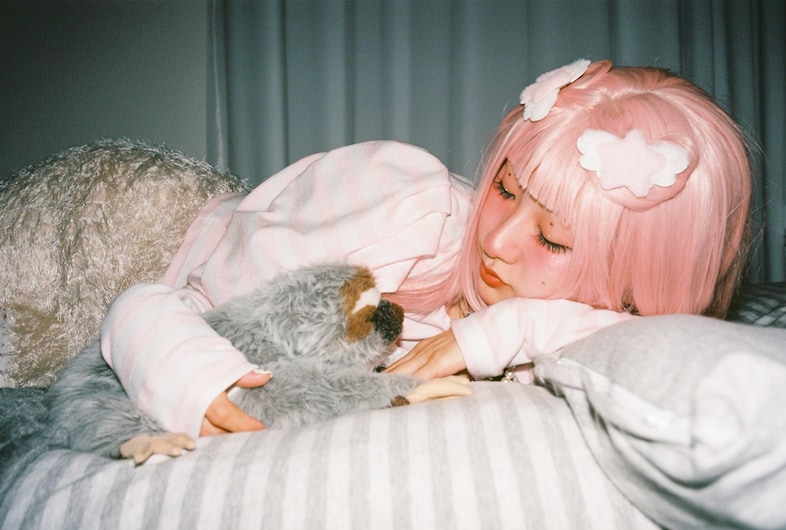
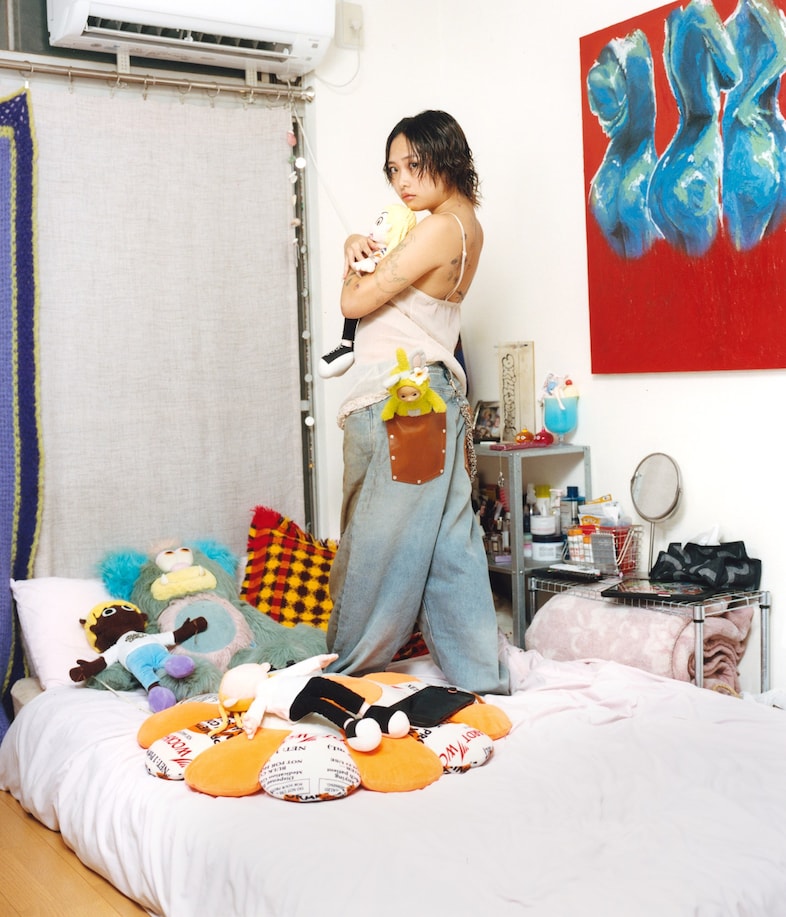
This playfulness emerged in the spaces these creatives call home. Each time one of the girls let Waespi into their room, they opened their doors to a cluttered mix of nail art, makeup, kitschy accessories, colourful beads, and toy dolls. “The spaces all hold the tools they need to create and build these characters and worlds and identities,” she says. “They all showed intention and care in how things were arranged, whether the space was minimalist or maximalist. Everything felt purposeful, like nothing was there by accident.”
A key influence behind the project comes from Waespi’s long-standing love of photobooks. “One of my influences was a photobook I found a few years ago at Megutama, this incredible photobook café in Ebisu,” she says. There, she discovered Masato Seto’s Living Rooms Tokyo. “I was intrigued by how he photographed people in their homes, letting them compose themselves however they wanted to be seen without any direction.” She also points to other Tokyo-specific works she admires, including Kyoichi Tsuzuki’s Fashion Victims, Hana Shimodate’s Girls Room Diary, and Shiori Kawamoto’s Onago Room.
 Minori @minori_fujikawa
Hao @haoarise
Sea @sea_hirayama
Karen @__teayea873__
Onegai * twins @kikoeru_ayane and @oyasumi0220
Hina @hina_beaute
Production Assistant and Translator – kenshu shizukaPhotography Alexandra Waespi
Like the projects she is inspired by, Waespi is driven by a desire to understand her subjects beyond the surface. “For me, making personal work is a way for me to connect with people I’m curious about and learn from them… my focus is on the subject and our collaboration, making sure they feel seen on their own terms.” Her approach pushes back against how these scenes are usually documented. “Most portraits of these subcultures show girls photographed in the street, often through a male gaze. I admire how boldly they present themselves publicly but I wanted to understand where that comes from.”
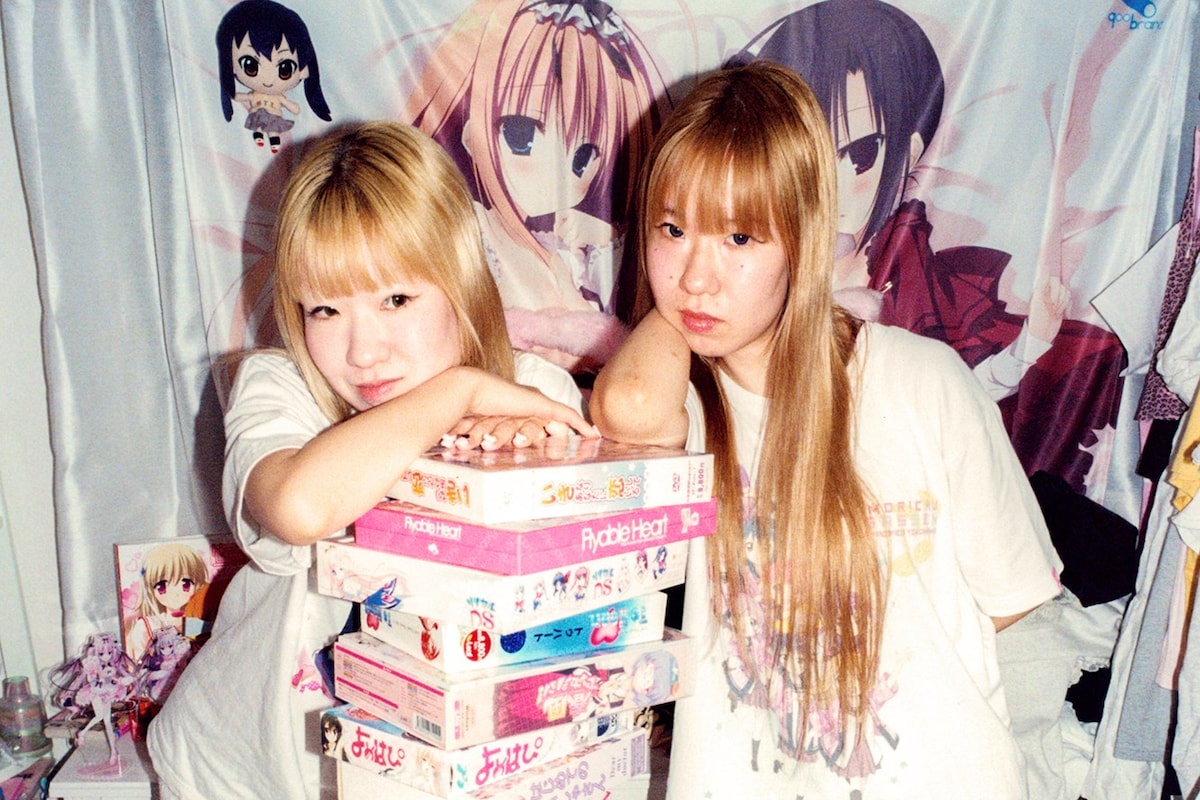
In one photo, the Onegai twins proudly stand next to a tilting pink tower of games. As self-proclaimed otakus, the duo are fixated on collecting, their latest triumph is their tower of eroge (エロゲ) (x-rated video games) they show off to the camera. Also in their collection are Otaku dolls that scatter across their room. “The characters they idolise are living with them as a source of constant influence.” Waespi adds.
 Photography Alexandra Waespi
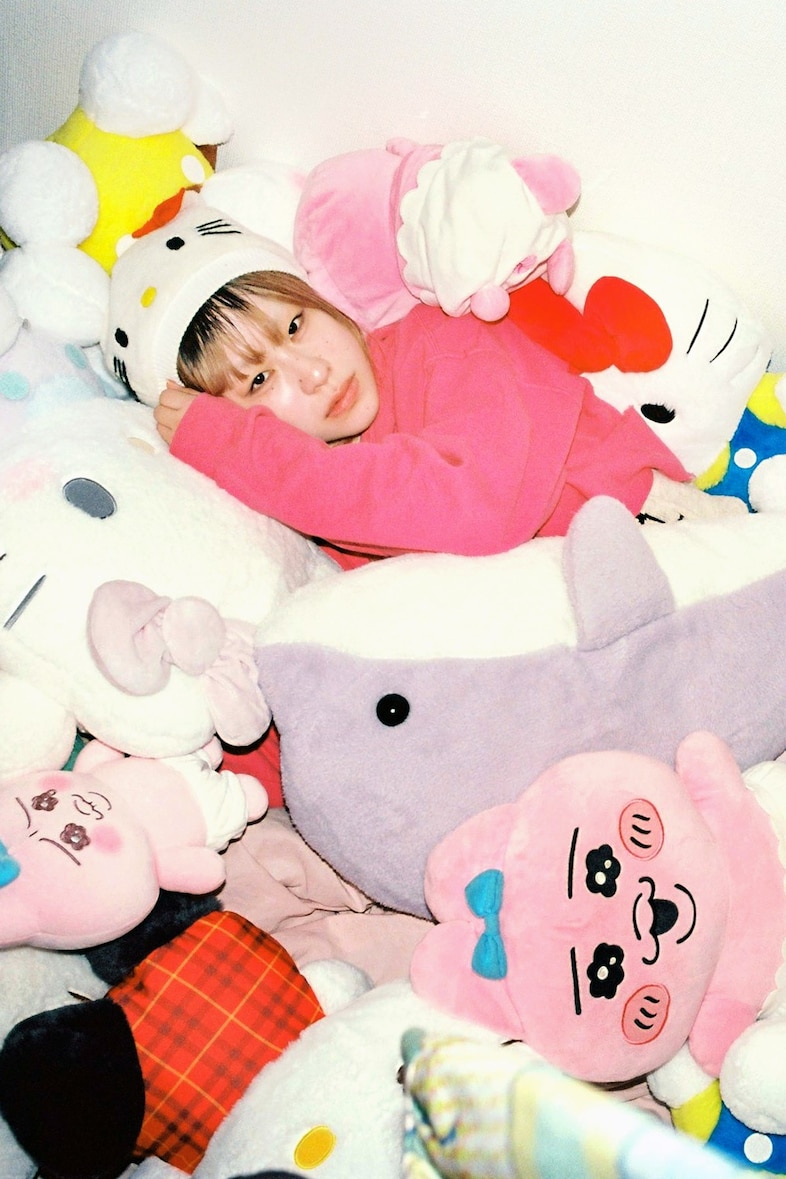
Kawaii culture has been a dominant aesthetic of Japan since the 1920s, and cuteness has only continued to bloom since then. The appearance of cute objects threads throughout the bedrooms, Hello Kitty plushies stack on beds and various cutesy dolls with bewildering eyes and dilated pupils strewn across the floor. Likewise, the photographer recalls encountering “modern shrines” and “small altar-like areas” where objects, photos, plushies, and charms were arranged neatly together, while the rest of the space often stayed scattered in paraphernalia. “Lots of people view them as their pet and companion… one plush can feel like an anchor, something steady and personal,” the photographer explains, “a whole group of characters creates a little world around you, a soft space full of imagination. They’re comforting, non-judgmental, and always there” – a grounding that Waespi feels is most welcomed in a dizzy, vertiginous city like Tokyo.
AloJapan.com