
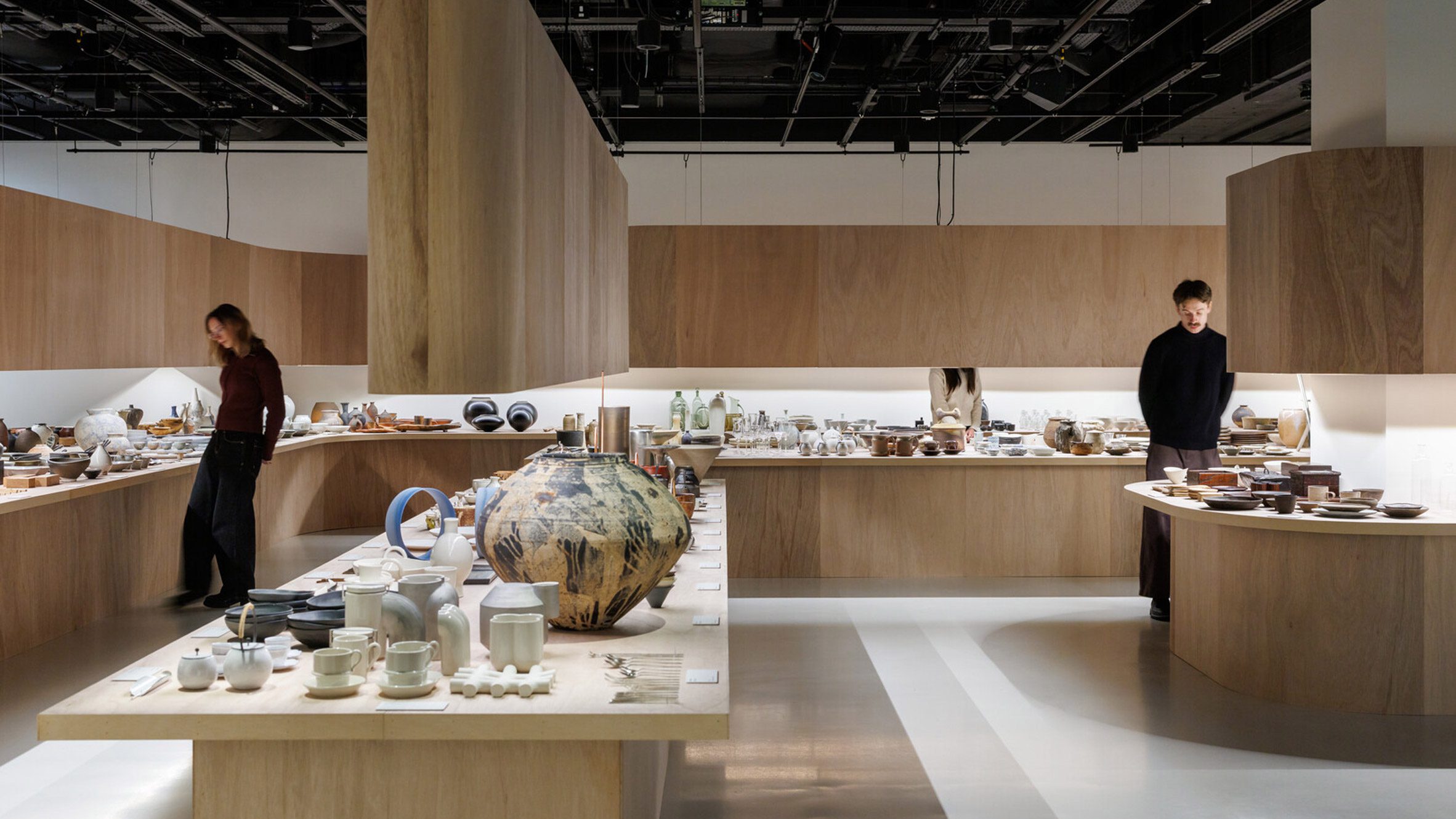
A myriad of tactile products made from materials including ceramic, glass, lacquer and wood have been displayed at Japan House London as part of the Hyakkō exhibition, which examines Japan’s contemporary craft landscape.
The exhibition, which showcases almost 2,000 works made by more than 100 designers, was organised in collaboration with retail brand Muji’s owner Ryohin Keikaku and curated by Nagata Takahiro.
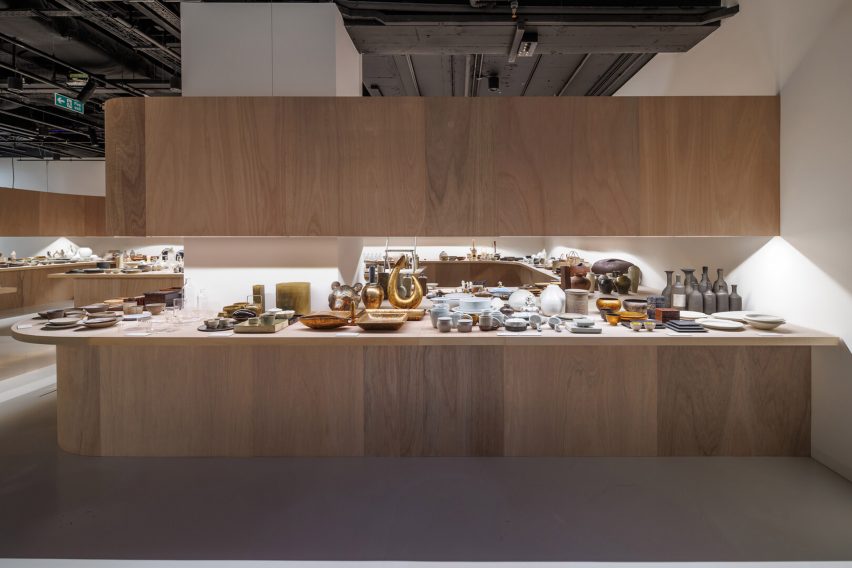 Japan House London is showcasing almost 2,000 artisanal products
The curator aimed for it to show pieces in a wide range of materials and from many different regions.
“Rather than focusing on a particular school or genre, the exhibition seeks to give shape to the idea of hyakkō – craft as countless forms of making – bringing together work in clay, wood, metal, lacquer, bamboo, glass and more, from a wide range of regions,” Takahiro told Dezeen.
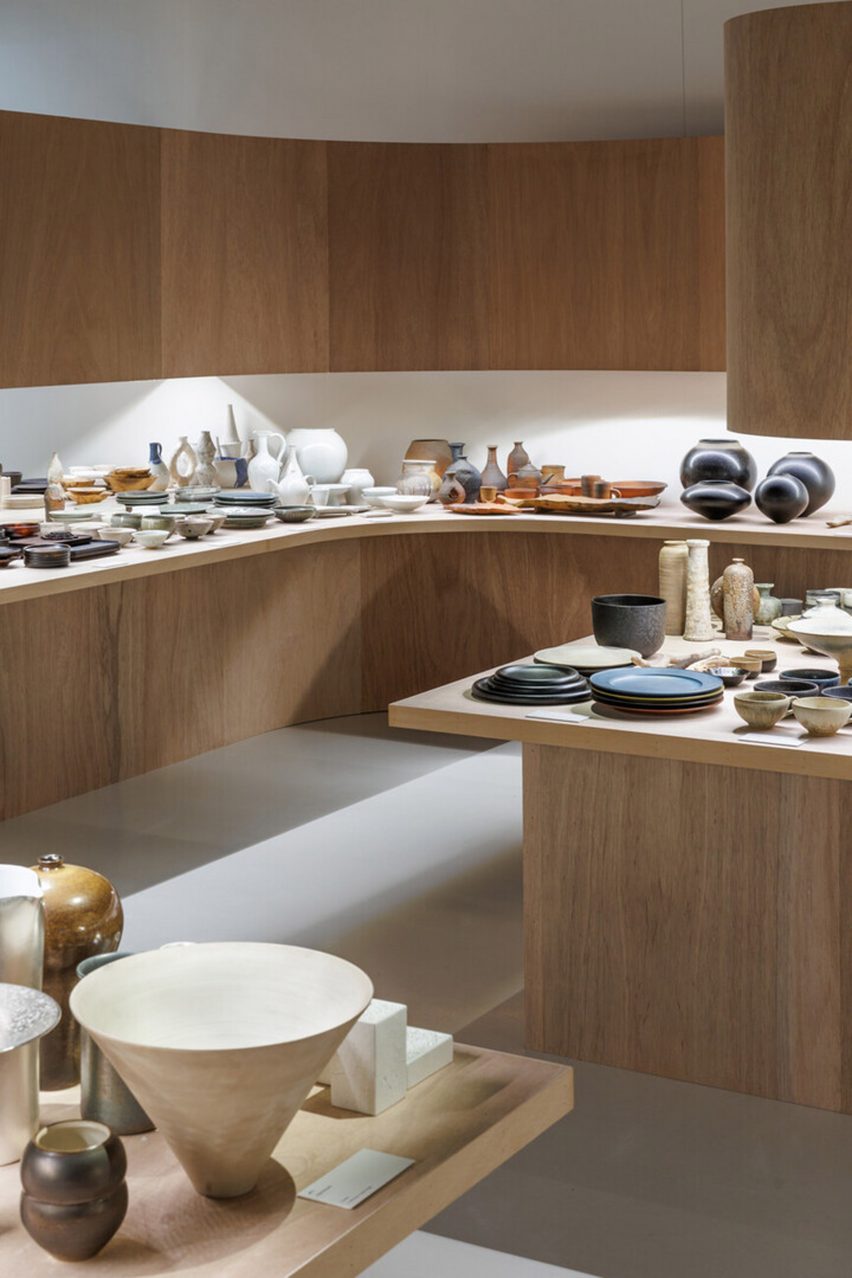 Designers used many different materials
Takahiro and his team traversed Japan to find the makers on show in Hyakkō: 100+ Makers from Japan, whose contributors are based in the countryside as well as in urban cities.
“This exhibition began with a simple question: How many makers sustain the landscape of craft in Japan today?” he said. “We began by visiting each region in person and prioritised meeting every maker face-to-face.”
“From studios nestled deep in the mountains to workshops in small rural communities or in pockets of major cities, we travelled across Japan and selected makers whose approach to their materials felt sincere, and whose work naturally reflected the environment and culture of the place where they create,” he continued.
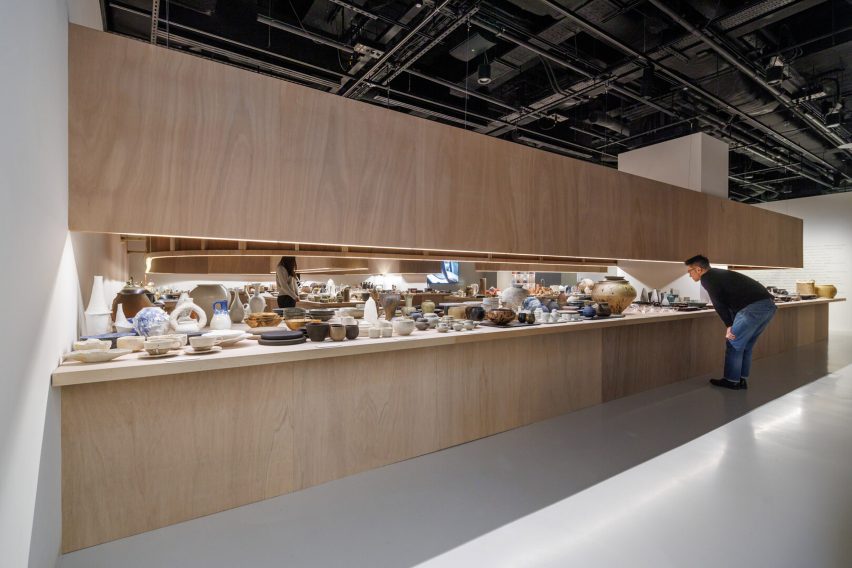 The curator chose pieces that represented differen Japanese regions
Among the works on show in the exhibition are sculptural glass pieces by Toyama-based Takeyoshi Mitsui and delicate ceramics by Shiga-based Haruyuki Matsumoto, as well as larger pieces such as a slender aluminium chair by Yamanashi-based Jiro Nagase.
Each of the makers represented in Hyakkō – the word means roughly “hundred pieces” in Japanese – had held solo exhibitions and established their own styles and expressions.
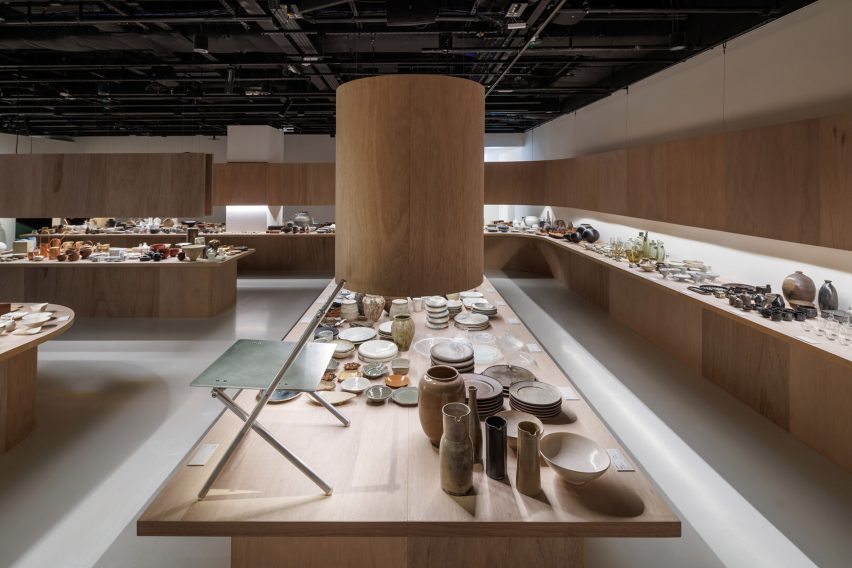 The Hyakkō exhibition speaks to how “making exists as countless practices”
While it includes makers from all across Japan, the exhibition doesn’t aim to represent everything, Takahiro said.
“However, it is structured to offer a tangible sense of one part of the craft landscape in Japan today,” he added. “The word hyakkō speaks not to a single stream or discipline, but to the understanding that making exists as countless practices.”
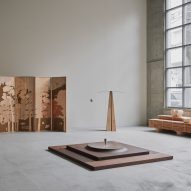
The Age of Wood exhibition challenges conventional perceptions of timber
Japan has a thriving craft scene compared with many other countries, with notable regional differences. Because of this, Takahiro says, it is impossible to create a complete picture of Japanese craft today.
“Still, by bringing together a wide range of materials, places and perspectives – ceramics, wood, metal, lacquer, bamboo, glass and more – the exhibition offers a multifaceted view of craft as it is lived and practised now,” he said.
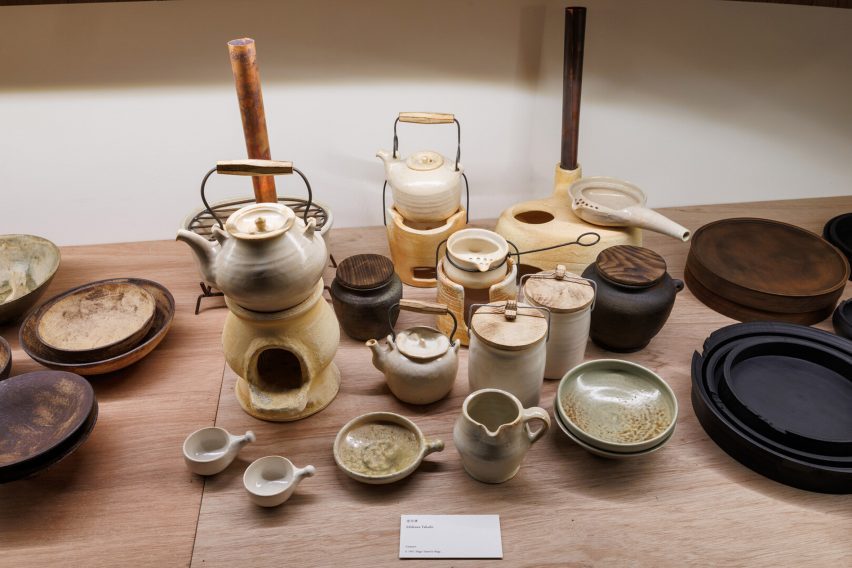 It was first shown at Atelier Muji Ginza in Tokyo
The curator believes that the increased interest in Japanese craft makes this the right time to present the exhibition, which was first shown at Muji’s own exhibition space, Atelier Muji Ginza, globally.
“Around the world, there is a renewed interest in the stories behind objects and in the ethics of those who make them,” Takahiro said.
“Japanese craft carries a distinctive worldview: it begins with an acceptance of natural cycles, embraces irregularities and chance, and centres on working with the materials of a place,” he continued.
“In a time shaped by mass production, the patience with which makers engage with their materials and the quiet beauty that supports daily life are becoming increasingly significant values. In this sense, sharing Japanese craft with audiences now feels especially meaningful.”
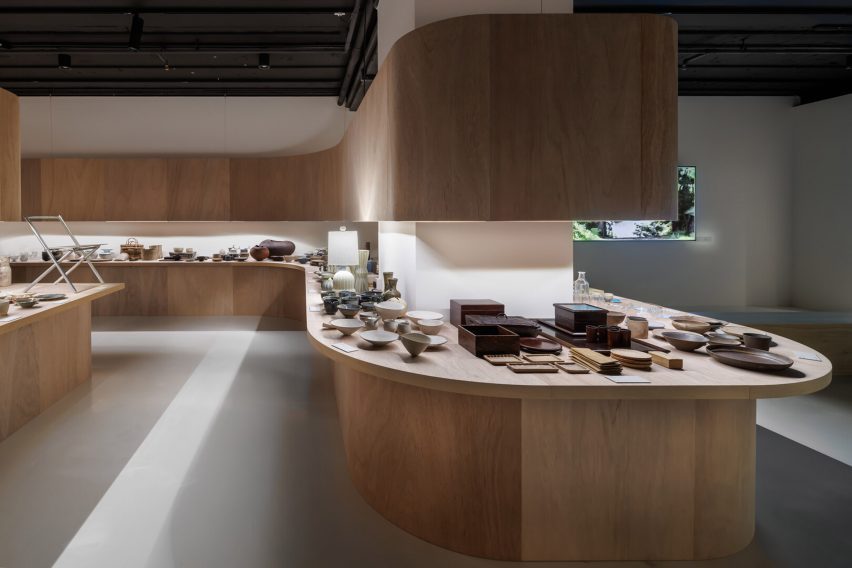 The display shows how “Japanese craft carries a distinctive worldview”
The exhibition will move on to the two other international Japan Houses, in Los Angeles and São Paulo, at the end of its London run.
Previous Japan House London exhibitions have taken in-depth looks at Japanese carpentry, the role of graphic signage in our daily lives and hyperrealistic food models.
The photography is by Jérémie Souteyrat, courtesy of Japan House London.
Hyakkō: 100+ Makers from Japan is on show at Japan House London until 10 May 2026. For more global exhibitions, talks, and openings in architecture and design, visit Dezeen Events Guide.
AloJapan.com