
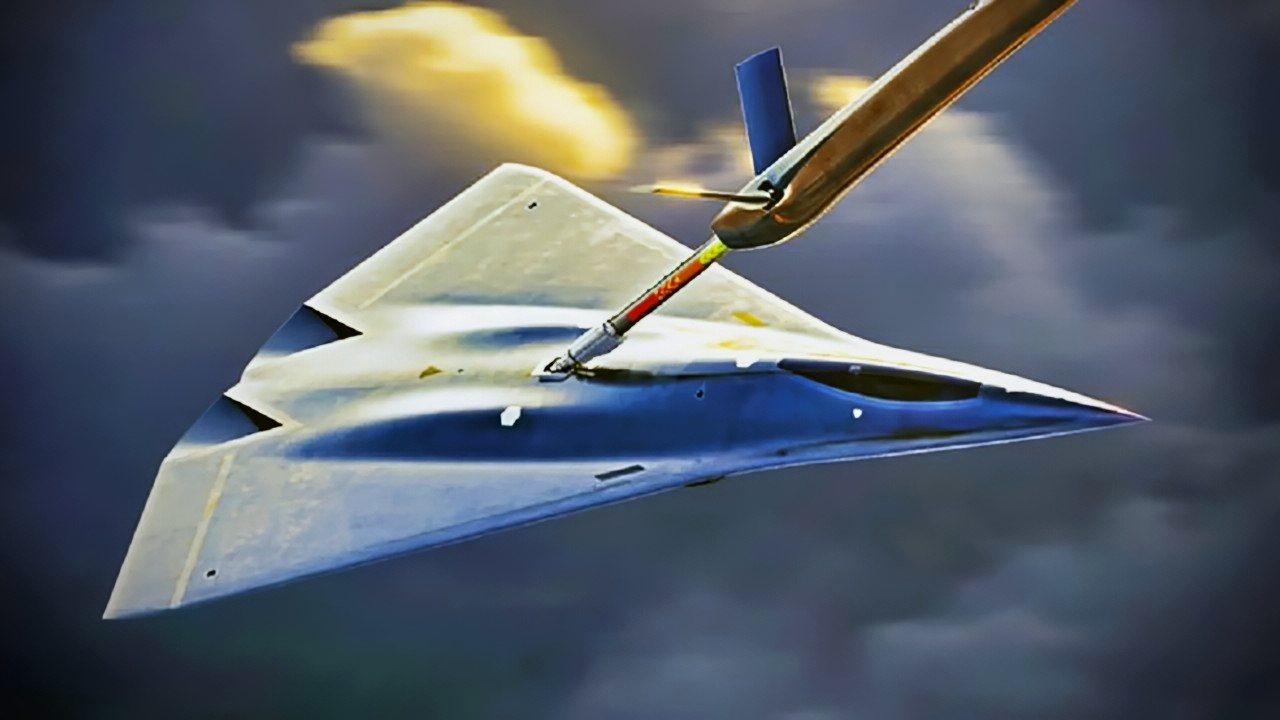
Key Points and Summary: F-X: Japan’s Stealth Fighter Gamble?
-Japan’s F-X program, now rolled into the UK–Japan–Italy Global Combat Air Program, is supposed to field a sixth-generation stealth fighter by 2035, with deep stealth, AI-enabled loyal wingmen, and huge internal payloads.
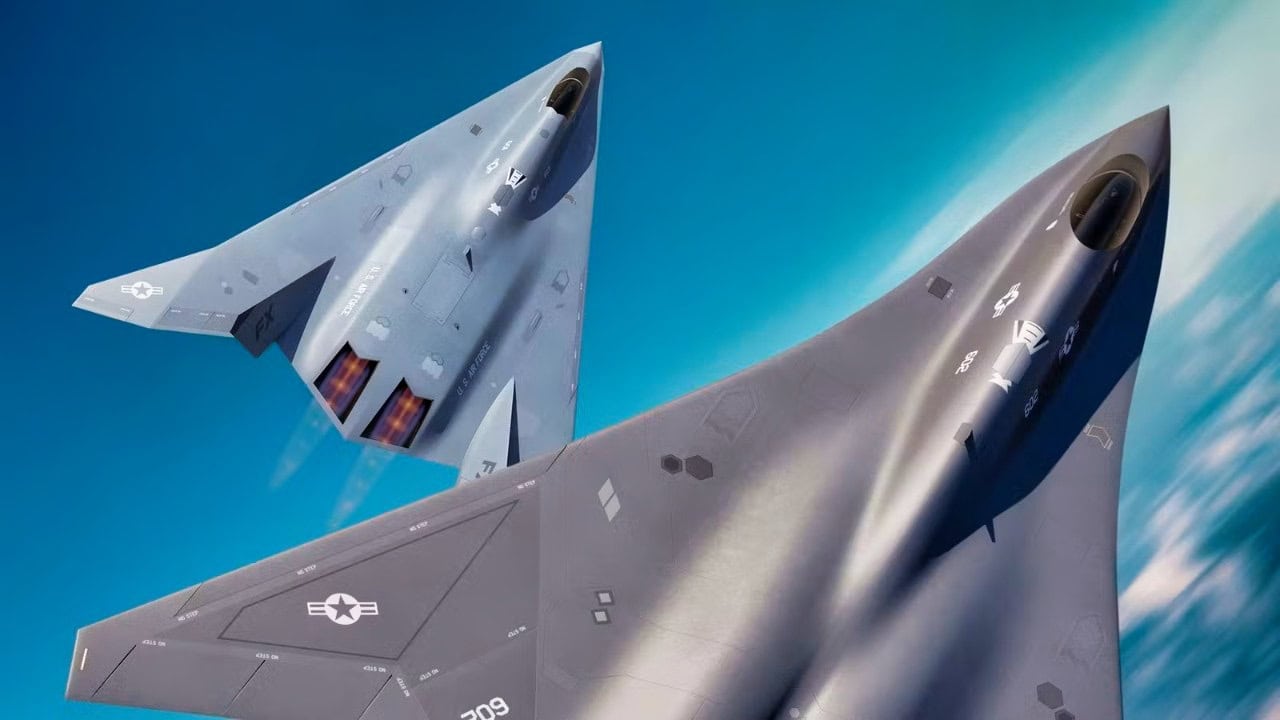
NGAD F-47 Fighter. Image Credit: Creative Commons.
-Tokyo’s 2022 strategy shift opened the door to exports and a bigger defense-industrial role, but GCAP is lagging: no prototype yet, big promises on sensors and engines, and growing doubts about the schedule.
-Enter the U.S. F-47 NGAD wildcard. Washington has floated the idea of selling its own 6th-gen fighter to close Japan’s capability gap—an offer that could complicate, but not necessarily kill, GCAP’s long-term ambitions.
Where Is Japan’s F-X Stealth Fighter Program At?
Japan’s F-X stealth fighter program, which is now part of the Global Combat Air Program (GCAP) with the UK and Italy, is developing a sixth-generation, twin-engine fighter to replace its aging F-2 fleet.
The program aims for a 6th-generation fighter with unmatched stealth, advanced AI-driven Collaborative Combat Aircraft (loyal wingmen), and multi-domain capabilities, with Japan’s Mitsubishi leading development and targeting an operational entry in 2035.
The GCAP (Global Combat Air Program), comprising the UK, Japan, Italy, and the US F-47 sixth-generation stealth fighter NGAD (Next Generation Air Dominance), is a competing/complementary 6th-generation fighter program.
The Japanese, Italians, and the UK are seeking to rely less on the United States while building their own export programs.
Japan Rewrote Its Strategy In 2022
In 2022, Japan rewrote its three strategic documents, including lifting the country’s ban on fighter aircraft and other defense exports that had been in place since the end of World War II.
In September of last year, the government submitted a request for the country’s largest defense budget in history for fiscal year 2025.
Part of strengthening Japan’s defense posture is boosting its industrial base, a recurring theme at the country’s first Japan International Aerospace Exhibition in six years, held in October 2024 in Tokyo.
Features Of the Japanese F-X/GCAP Fighter
The F-X fighter will feature 6th-generation technology, integrating AI, advanced sensors, directed-energy weapons, and network-centric operations, and will move beyond traditional fighter roles.
The fighter will be built with advanced stealth features. It will utilize serpentine air ducts, adhesive molding, and plasma stealth for an extremely low radar cross-section.
The F-X fighter will incorporate drone integration, serving as a collaborative combat aircraft that controls autonomous “loyal wingman” drones (CCA) for scouting and combat support.
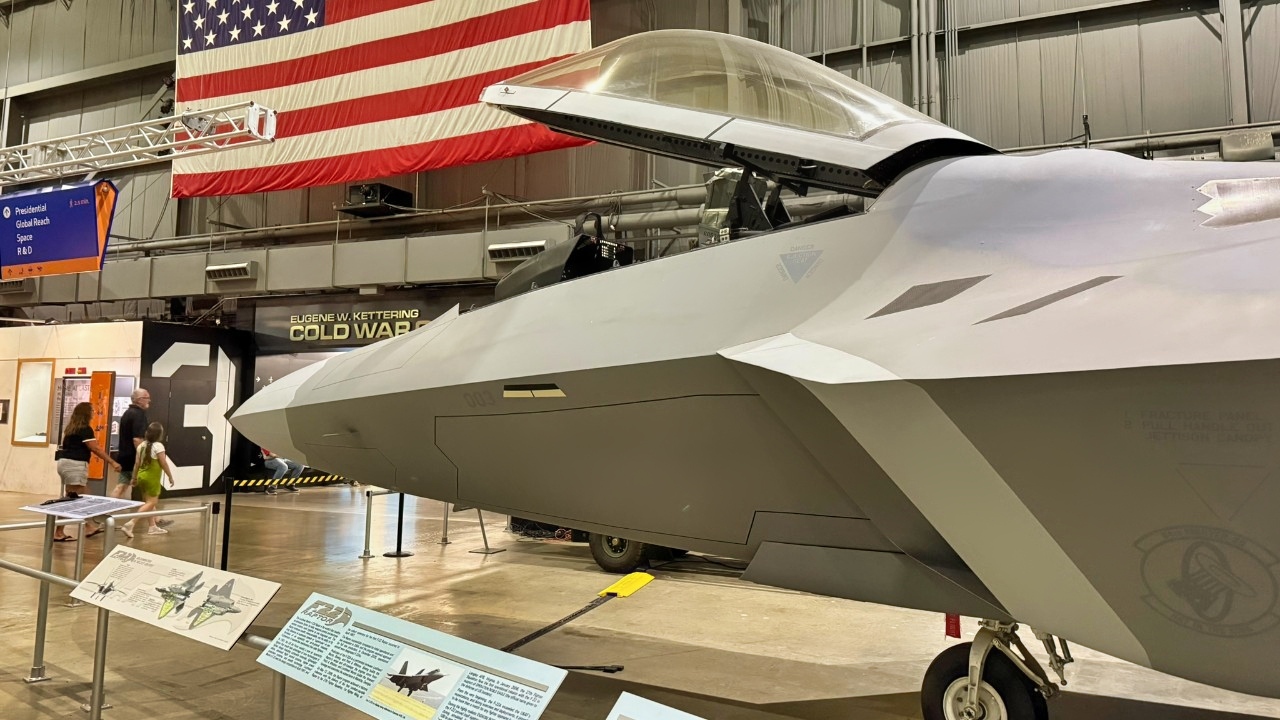
F-22 Raptor at USAF Museum. Image Credit: National Security Journal.
The size and payload are intended to be much larger than those of the F-22, with significant internal weapons for long-range missions.
Electric actuators are slated to replace hydraulic systems for simpler, more reliable control.
The aircraft will boast an intelligent weapons system, a software-driven interactive cockpit, and integrated sensors. The GCAP aircraft will feature a powerful next-generation radar system capable of providing 10,000 times more data than current systems, incorporating advanced sensing and artificial intelligence.
Unlike the ill-fated FCAS program in Europe with France, Germany, and Spain, the GCAP program promotes an equal partnership. This is a significant shift from purely domestic development, merging with the UK’s Tempest program under GCAP for shared costs and tech.
The F-47 May Be Sold To Allies, And Could Entice Japan Away
While the F-35 has achieved immense commercial success worldwide, the F-22 Raptor was notably excluded from the export market due to its advanced technology.
The question remains whether the F-47 will take the F-35 or F-22 route. The F-47 is designed to be the most advanced aircraft ever built and the successor to the F-22.
In an attempt to draw Japan away from the GCAP, President Trump reportedly offered the F-47 to Japan during a phone call with Prime Minister Shigeru Ishiba. The offer has some merit because Japan is allegedly concerned that the GCAP will not meet its planned 2035 operational deadline.
Citing two senior sources, a Reuters report suggested that Japan may consider acquiring more F-35s. Another possible stopgap measure would be for the United States to sell the F-47 NGAD to Japan.
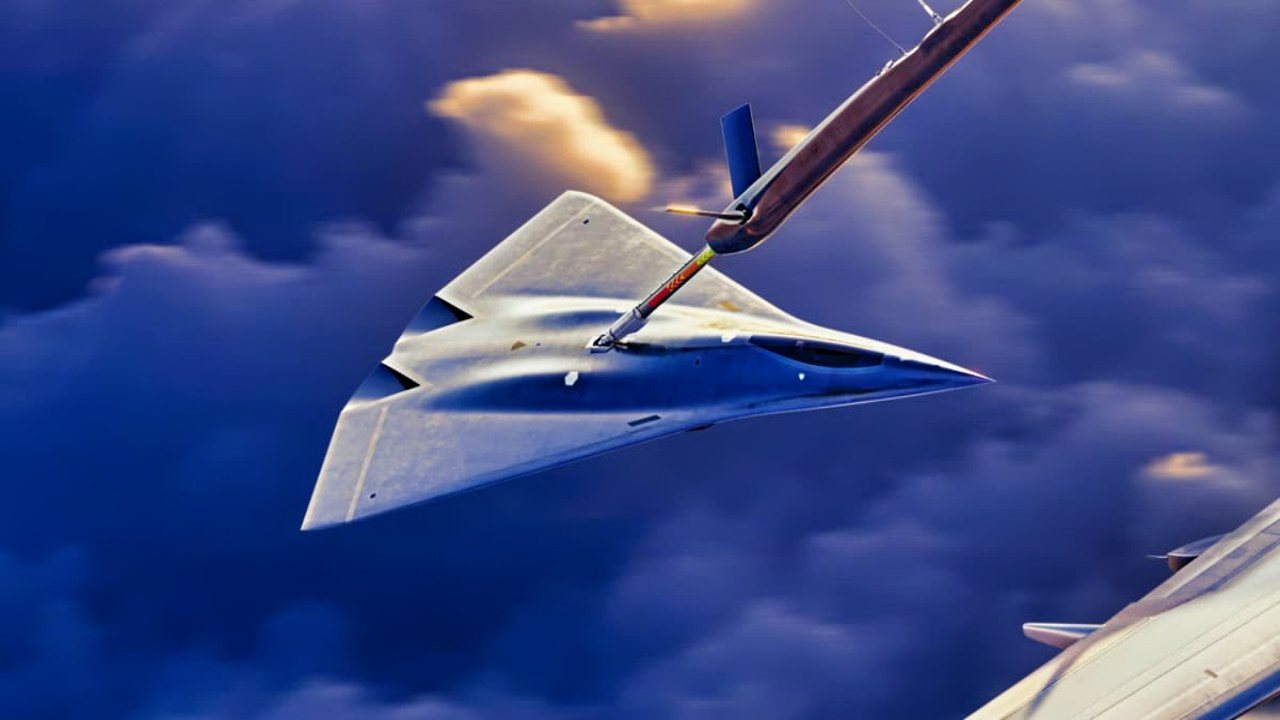
NGAD. Image Credit. Lockheed Martin.
If the US decides to sell the F-47 to Japan and other key allies (Australia, Israel, and perhaps others), this would no doubt bring the price down to more affordable levels.
Would this cause the GCAP program to break apart and fail? Not necessarily. But it certainly won’t help. Part of the draw of the GCAP and FCAS programs is that countries are seeking to break their reliance on the United States.
The NGAD Is Further Along In Development Than The GCAP
The GCAP partners–the United Kingdom, Japan, and Italy- unveiled a new concept design for their collaborative next-generation aircraft at the Farnborough International Airshow last year.
The new design is an enormous aircraft with a larger wingspan and a far more advanced aerodynamic design compared to previous concepts, including the Tempest, unveiled by London in 2018.
The GCAP aircraft is being designed with a tailless delta-wing configuration. Twin Rolls-Royce/IHI engines will propel it. Designers and engineers believe this foundation will equip the jet to be extremely stealthy, with quality radar-absorbing coatings that will minimize its radar cross-section.
While the GCAP development is progressing, and contracts for Leonardo Electrics Italy, ELT Group, Mitsubishi Electric, and Leonardo UK for delivering the Integrated Sensing and Non-Kinetic Effects and Integrated Communications System package for the fighter are close to fruition, the timeline for fielding the aircraft by 2035 is growing increasingly unlikely, as seen by Japan’s concerns.
The partners have yet to build a prototype for testing purposes.
Germany, Australia Set To Join GCAP?
With the FCAS program looking increasingly likely to break apart, as France seems intent on going it alone, Germany may opt to join GCAP.
Launched by France and Germany in 2017 and later joined by Spain, FCAS has been dominated by tensions between the industrial partners from the start, notably between Airbus, which represents Germany, and France’s Dassault. Spain’s Indra Sistemas is also a partner.

GCAP 6th Generation Fighter.
France insists it will not share proprietary information. Germany may also seek to work with Sweden.
Australia also expressed interest in the project; however, no decision has been made yet. Air Vice-Marshal Nicholas Hogan commented, saying, “there’s a lot of unknowns … so many unknowns that it wouldn’t be possible to present the government options regarding the aircraft at this stage.”
But Japan’s 6th-generation stealth fighter program lives on, and while delayed, is still on track for eventual production.
About the Author: Steve Balestrieri
Steve Balestrieri is a National Security Columnist. He served as a US Army Special Forces NCO and Warrant Officer. In addition to writing on defense, he covers the NFL for PatsFans.com and is a member of the Pro Football Writers of America (PFWA). His work was regularly featured in many military publications.
AloJapan.com