
December 10, 2025 — 5:00am
Save
You have reached your maximum number of saved items.
Remove items from your saved list to add more.
Save this article for later
Add articles to your saved list and come back to them anytime.
Got it
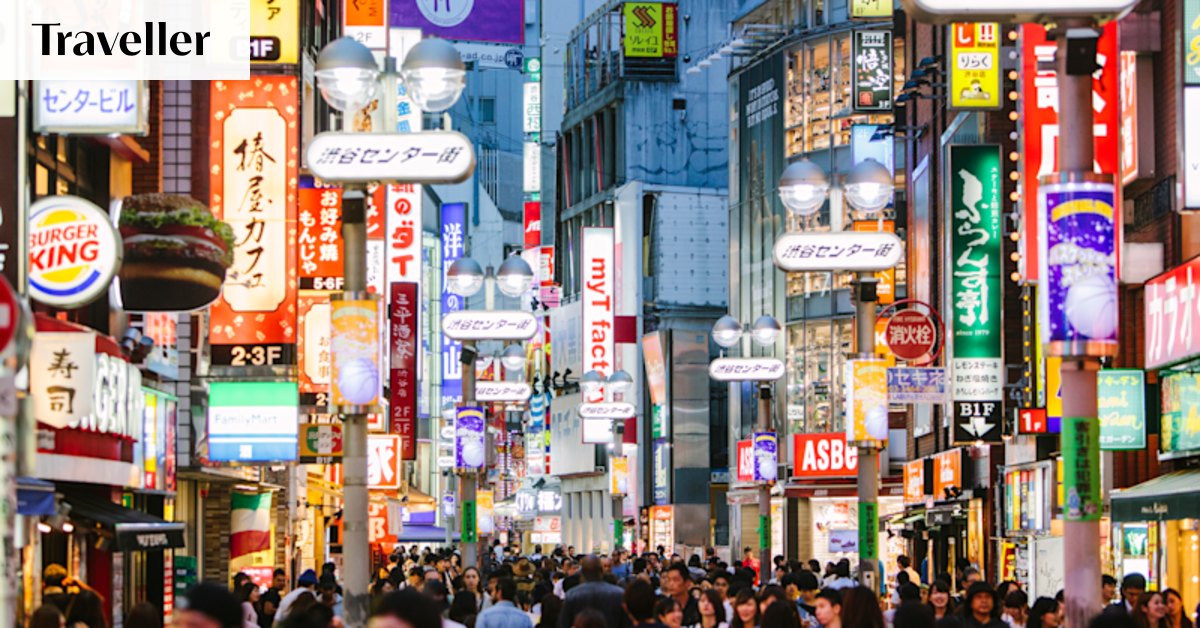
Japan is the future in many ways. It might be a stylised version of the future, like a technicolour imagining from Blade Runner or Back to the Future with its giant video billboards and seas of neon – but feels like the future nonetheless.
One day, our country might also have high-speed rail criss-crossing its mountains and valleys. One day, we too might have transport cards that seamlessly integrate with vending machines and taxis and the like.
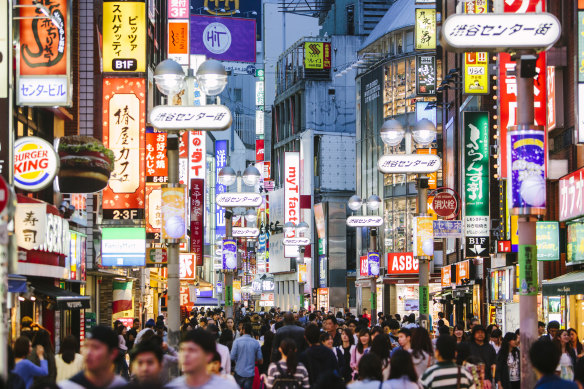 Being in Japan can feel like stepping into Bladerunner’s vision of the future.iStock
But there’s a flipside to Japan because this country might be the future, but it’s also the past. And not the distant past either, like the samurai traditions and feudal empires – this is a country that can seem stuck in the ’80s and ’90s, when you could smoke in bars and only pay with cash, where buying train tickets was an exercise in mind-numbing bureaucracy and if you wanted to make a restaurant booking, you would have to call up and actually talk to someone.
Until recently, all those things were still true in Japan. You had to hold both realities in your head, the mind-boggling modernity of it all with the quirky, frustrating throwbacks.
Gradually, though, Japan is changing. It’s modernising. You can’t smoke in Japanese bars and restaurants any more, save for a few relics that have been allowed to maintain their old-school, cancerous atmospheres.
Cash is no longer king. Most shops, restaurants and bars now accept international credit cards; you can often make tap-and-go payments as you do at home, and just carry a small amount of yen in cash for emergencies.
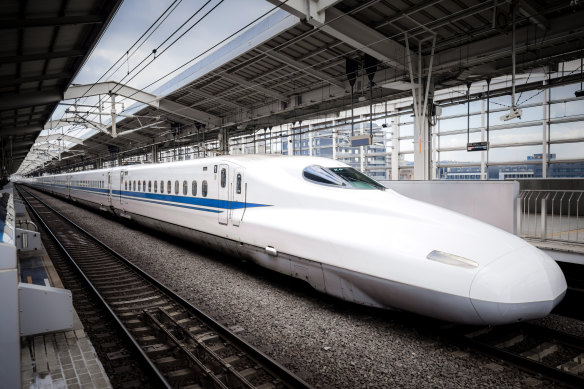 Buying shinkansen tickets is still confusing.iStock
Long-distance train tickets are still bafflingly complex, though a few apps have been introduced to allow online bookings for certain shinkansen and express lines.
How about restaurant reservations? This has long been a difficulty for foreign travellers in Japan, because this ultra-modern country has resisted the almost worldwide conversion to online platforms for reservations. Japanese concierges must be the hardest working in the world, with all the requests from foreign guests to book them somewhere good to eat.
Many of those sought-after restaurants, however, only have 10 seats or fewer, and need to be booked weeks – if not months – in advance. By the time you arrive in Tokyo and speak to the concierge, it’s too late.
But even this relic is changing now. Most Japanese restaurants still don’t have online booking functionality of their own; however, numerous businesses have stepped in to act as middlemen.
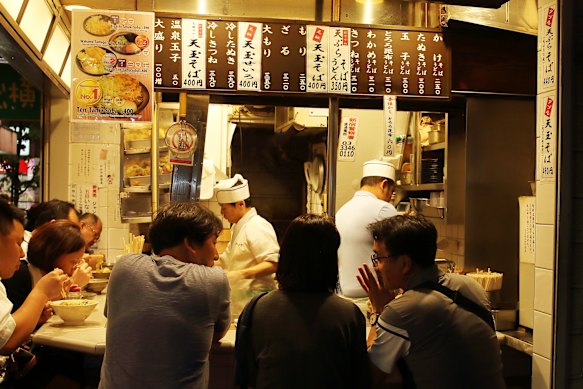 It will be easier to get a table at small local restaurants, but you might find yourself sitting next to other tourists.iStock
Websites such as TableAll, Omakase.in and Pocket Concierge allow foreign visitors to book a selection of high-end Japanese restaurants online, with the websites charging a booking fee on top of the standard meal price. The Japanese review website Tabelog also offers this service for a vast range of restaurants across multiple price points, with a slightly lower fee for the service.
This is a game-changer for food-loving visitors to arguably the world’s finest dining destination. Many previously untouchable restaurants are now bookable with a few clicks. You can look through lists and see who has reservations available on any given night. Decide how much you want to spend. Secure your place.
It’s almost like … everywhere else in the world.
Only, there’s a small problem. Because plenty of truly great restaurants in Japan don’t participate in this new system. They don’t work with Tabelog or Omakase or any of the others. They remain as opaque and difficult to book as ever.
Related Article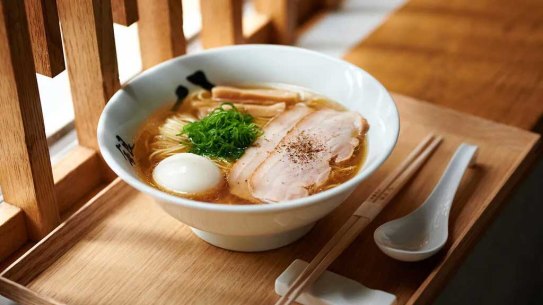
That’s their prerogative. The issue now is that the restaurants that do participate with these new platforms – the high-end sushi joints, the Michelin-starred kaiseki, the omakase tempura places – tend to attract a lot of tourists, because Japan has a lot of tourists, many of whom are desperate for memorable dining experiences and attracted by the ease of booking and the new accessibility.
I’m not one of these people who thinks they’re better than any other foreign visitor – we’re all just out there doing the same thing. However, I’ve written before about the experience of dining at a high-end sushi joint with a bunch of fellow tourists, and it’s not great.
Very few of us travel to be surrounded solely by other travellers. We go to witness local rituals, to mix with people we wouldn’t normally encounter, to learn something about a place through those who call it home.
Related Article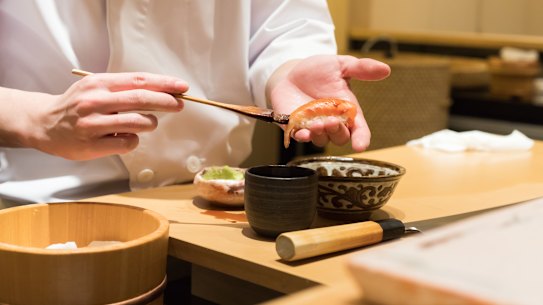
A visit to a restaurant in Japan is an intense, immersive cultural experience. It’s not just the food, it’s the atmosphere, the etiquette, the reverence with which people treat the chef and the experience.
You could get this at a ramen shop where meals cost about $15. You could experience it at a busy izakaya – in fact, you should.
But you will find the experience even more intense and fascinating at a high-end restaurant, the sort that local people go to for special occasions to really treat themselves.
And you can make reservations at those places now, online. Easily. But chances are, when you go, you will be surrounded by people just like you, people who know nothing about the food or the ritual and who are hoping to learn from others. Instead, they find you. And it’s just not the same.
Japan has caught up in many ways. But that may not be a good thing.
Sign up for the Traveller newsletter
The latest travel news, tips and inspiration delivered to your inbox. Sign up now.
Save
You have reached your maximum number of saved items.
Remove items from your saved list to add more.
 Ben Groundwater is a Sydney-based travel writer, columnist, broadcaster, author and occasional tour guide with more than 25 years’ experience in media, and a lifetime of experience traversing the globe. He specialises in food and wine – writing about it, as well as consuming it – and at any given moment in time Ben is probably thinking about either ramen in Tokyo, pintxos in San Sebastian, or carbonara in Rome. Follow him on Instagram @bengroundwaterConnect via email.From our partners
AloJapan.com