
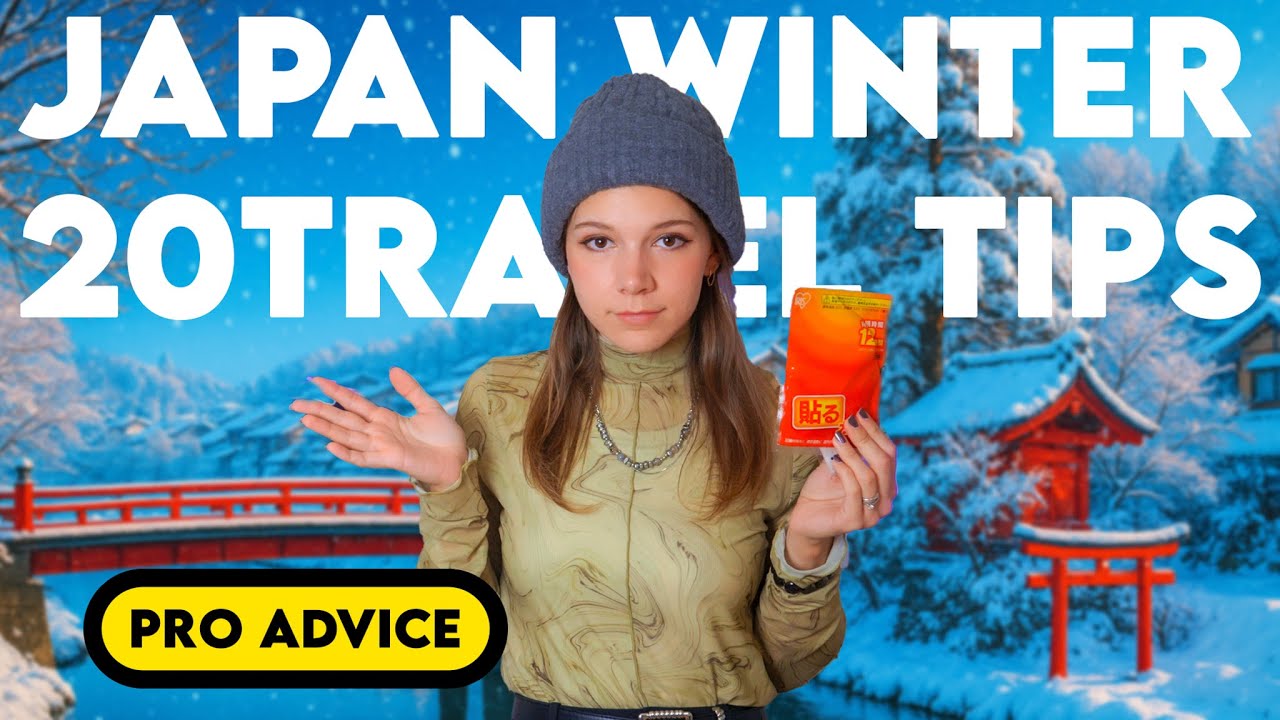
Traveling Japan in Winter? Watch This First.
The Odin is here, meaning it’s finally getting cold in Japan. So, let’s talk about what to expect here in winter. From weather to holiday events to whether or not stuff will even be open. Hi everyone, it’s Abby from Pour. And if you’re visiting from Decemberish to Februaryish or thinking about it, this is the video for you. Okay, so first let’s talk about what Japanese winter actually feels like because it surprises a lot of travelers, even the ones who think they’re prepared. So, Japan’s winter has a very distinct vibe. It’s very crisp. It’s very dry. It’s very windy. And honestly, I think it’s colder than most visitors expect. So, temperature- wise, here’s the general idea. Tokyo, Kyoto, Osaka will usually sit around 2 to 10° C in the daytime. So, it’s cold, but it’s not like Canada level cold. Hokkaido and the Tohoku region that’s more like real winter. So you have more full snow ski resort weather and temperatures that will go below zero. One thing I think people don’t really expect is a humidity difference. So summer here is crazy high in humidity to the point where you’re essentially swimming everywhere. But Japan’s winter is dry. Like my hands are already starting to suffer. I have like five different moisturizers spread out throughout the home. That’s how dry it is. So, if you’re coming from a place with like a wet cold, like maybe like the UK, this is going to feel really different. Your skin um your lips will dry out almost immediately. So, chapstick, uh hand cream, and then moisturizer of course are absolutely essential. Also, like masks are amazing for blocking wind and keeping the moisture in. I tend to wear my mask all winter just to keep my face warm and protected and also um germs. And then there’s the indoor heating culture. And this is something every traveler notices. So Japanese buildings and trains are blasting the heat. So you’re going to be freezing outside and then you’re going to step into a store and it’s going to it’s going to feel like a literal sauna. So your entire trip is going to become this constant routine of like jacket on, jacket off, jacket on, jacket it off, jacket it on, jack it off. And you’re going to go through that cycle literally all day over and over. So consider wearing things that are layered and can be easily removed as needed. Another thing to keep in mind, uh, sunset is early, so we’re talking like 4:30 to 5:30 in most of Japan. Um, winter days feel really short. Um, and a lot of temples and gardens will close earlier in winter than they do in summer because they tend to just close at sunset sometimes. So if you’re planning outdoor sightseeing, you really want to start earlier in the day. Um, and then always just confirm the hours of places you’re trying to go online. I recommend going to their actual websites if possible and just even if you have to Google translate the page because sometimes the hours on um like Google Maps are not going to be based off of season. Next, everyone asks about snow. Does it snow a lot in Japan? And the answer is it really depends on where you are. So I think sometimes people imagine this like really fluffy snow everywhere, but in Tokyo, Osaka, Kyoto, snow is actually pretty rare. Usually it only snows and then sticks a few days between like late January and February and even then it probably will melt the same afternoon. So if you want guaranteed snow, you’re going to need to go north or head into the mountains. I will say that the day or two that it does snow um in these less snowy areas such as like Kyoto, people aren’t really prepared for it and so things will slow down and roads and sidewalks will be really slippery. But even without snow, winter can be slippery. The entrances to shrines, temples often have stone paths or slopes, and this can get really icy. So just be careful. Um, if you’re going somewhere snowy like Hokkaido or the Alps, um, Japanese Alps, you also essentially need to bring ice cleat, which are called Eizen in Japan. Otherwise, you might end up at a Japanese hospital. Follow up that if you’re driving in winter here, you of course will be required to have tire chains. So, whether they need to be on the vehicle or in the vehicle somewhere will just be up to the area and the weather. So, you’ll want to check signage or I would just talk to the people that you rent the car from. Cart rentals will also provide you with chains, but um please just pay attention because if you’re caught without chains in an area that you need to have chains, um that will be bad. So, winter here, cold, crisp, uh strong wind, very dry skin, early sunsets and warm buildings and occasional snow depending on where you go. Next, let’s talk about what to wear in Japan during winter because this is one of the biggest mistakes I see travelers make. So people think, “Oh, Japan doesn’t look that cold um on the weather app or in these pictures that this person took when they took their jacket off for 10 seconds to get a shot with the temple behind them, you know. Um and then you get here and immediately regret everything that you’ve packed. So the cold here does sneak up on you, especially in Kyoto. Um I feel like the wind literally just cuts through the clothes. So here’s a few things that will actually help you out. First will be HeatTek. This is from Uniqlo. So Unilo has two main versions of Heat Tech and they sell Heat Tech everything, but I just have the shirts in my hand. So you have kind of like the normal one, which is this kind of like thinner material. So you can see this is like really loose and thin, but it’s a nice layer to put under a normal shirt or sweater. Goodbye. You also have the thicker version. So this is my husband’s. That’s why it’s so big, but it’s this much. You can see already it’s this much thicker material that’s going to be heavier. You could honestly just wear this as is even. But when it gets cold enough here, you’re going to want this. Goodbye. If you’re staying around Tokyo, Osaka, Kyoto, I think the normal kind of the thinner version is probably fine. Um especially if you’re going to have a coat as well. But if you’re going to those colder regions, you’re going to want the ultra warm. And this will make a huge difference. I really have heat tech everything. everything they sell, I’ve bought it. Like, please sponsor me because I love heat tech. I also recommend if you’re going to wear kimonos while you’re here, like if you’re doing a photo shoot with yours truly, you can literally just wear heat tech under the kimono. Um, next, you’re going to want either some kind of like thin like puffer jacket, which you can get Unilo, or a long winter coat, depending on your style. Those are kind of the aesthetic right now is either kind of the Uniqlo puffer or the long kind of classic coat look. Obviously, you wear whatever you want. Um, but those are generally my recommendation. Next, don’t forget warm socks. Um, the cold literally just comes up from the ground here, especially cuz the ground is often like stone. I don’t know, it just feels colder here. And then next, the most lifechanging item would be these bad boys. So these are Kaido. These are heat packs. They sell these literally everywhere. Convenience stores, drugstores, supermarkets. You’re going to have two different versions. And so just screenshot this, maybe take it with you to the store depending on what type you want. So if it says this, this means that it’s sticky. So you will be able to peel something off and you will be able to stick this to your clothes. Don’t stick it to your skin, please. If you don’t want a sticky type, like you want to be able to just hold it in your hands, you’re gonna want it to say this. This is going to be nonsticky type. So sticky, not sticky, sticky, not sticky. I’m going to open it for you and show you. You’re welcome. So you can see this is pretty big. And it just peels on the back here. I love sticking these to the inside of like a coat. Um especially like here on the core like maybe on my back or on the front of the coat and just let it be there cuz it’ll keep your core warm and if your core is warm that’s already going to have you in a better place. And this is the not sticky type. So you can see it literally just exists. Thank you very much Kaido for for existing and keeping me warm. A few more things. If you’re visiting snowy regions, make sure your shoes um are waterproof. Your feet will get wet instantly if you’re walking on slushy snow and that is the fastest way to ruin your day. You’re also going to want to bring the basics. So, I have the basics here. Basics are hat, gloves, scarf that I’m too lazy to open up right now. So, we’re going to go like this. These are your basics. You should have these. Next, because the air is really dry, like I said, bring the chapstick, bring the moisturizer. Especially in the wind, my skin gets whipped. I mean, it gets so dry and I put a lot of moisturizer on. So, just keep that in mind because I’m gonna have hat I’m just gonna leave this on for the rest of the video, guys, because I don’t I’m scared to see my hair after this. Moisturize well, okay, please. So, that is the basic winter packing checklist. Dress warmly, layer smartly, uh use the Kaido, and you’re going to be totally fine. So, what about the holidays here? Is it a good or a bad time to come? Is it crowded? Well, let’s first talk about Christmas in Japan. So, first of all, Christmas is not a national holiday here. Schools are open, offices are open, people go to work like normal. It’s also not a big family event the way it is in many Western countries. Christmas is basically Valentine’s Day 2.0. So, it’s like a romantic date time. So like on Christmas Eve, Christmas Eve Eve, um couples go out for dinner, they go to Illuminations, they really just enjoy the atmosphere. Um so if you’re visiting around that time, just be aware that many nicer restaurants are going to be fully booked. So if you want to have a special dinner, you’re going to have to make reservations early. Um now, the biggest thing for tourists, of course, would be the illuminations. So Japan does go all in on Christmas lights. In Tokyo, you have Ropongi Midtown. You have Shibuyo’s Al Nokutsu, which is also called the Blue Cave. Uh the Tokyo Dome area, um and Munowuchi, which is classy and walkable. In Osaka, you’re going to have the Mid Suji illumination. Um basically the entire main avenue is just lit up. And then in Kyoto, you get kind of a little bit less illuminations, but the Rome illumination is um pretty calm and kind of underrated. Other things you’ll see around Christmas here would be Christmas cakes, and you’re also going to see the famous KFC uh Christmas meal tradition. Everyone’s going to be eating fried chicken. So, these are just fun details of Christmas, but honestly, as a tourist, you don’t need to go out of your way for these things unless you’re already curious. What is worth your time, though, are going to be the Christmas markets. So, these have become popular recently and especially in Tokyo and Osaka and they’re designed to feel like European style Christmas markets. I actually did a video on these before. I have a whole video on Christmas actually by the way um if you want to see that. But the best markets would be in Tokyo, the Tokyo Christmas market in Hibia Park. Um nearby in Yokohama at the Red Brick Warehouse and then the Ropongi Hills Christmas Market in Osaka. you have around Umemeda Skybuilding Christmas markets and then at most kind of major department stores there’ll be some kind of smaller scale Christmas market as well. So at these markets you can expect what you would expect which would be like hot wine, German sausages and snacks, souvenir mugs and a really cute cozy nighttime atmosphere that is good for photos. A few tips, try to avoid weekends if possible. Obviously, everyone’s going to emerge out of the woodwork and things will get crowded and then occasionally markets will require tickets or if you want to do like ice skating or stuff like that. So, um just check in advance so you can buy your tickets as needed. So, if Christmas in Japan is all about lights and date nights, New Year is completely the opposite. So, New Year’s is the big cultural moment here. It is very quiet, traditional, and it’s very meaningful. And for travelers, it’s the time when the entire country will suddenly slow down. So let’s start with the end of the year like December 31st uh which is called Misoko. So on New Year’s Eve, many temples are going to ring large bells 108 times in a ceremony called Joya Noane. It’s meant to symbolize letting go of life’s worries from the past year. Some temples and shrines will have countdown events, but um it’s going to be much calmer than kind of the western style, you know, time square countdown. Um people will also eat toshi koshi soba, which are year crossing noodles. This is long soba noodles, and they’re simple and warm, and they are long, just like the long life that you’re going to want to lead. So then one of the biggest New Year traditions is Hatsumo Day, which is the first shrine visit of the year. So, major shrines, uh, Maji Shrine in Tokyo, Fushimiari Shrine in Kyoto. These places will become insanely crowded, like the longest lines you’ve ever seen in your life. So, if you want to experience Hatsumo, um, go early in the morning, but every other Japanese person is also going to go early in the morning. So, um, be prepared for that. Um, at the same time, you’re going to have fukubukuro or lucky bags, which are going to appear in department stores. So, these are basically mystery grab bags with discounted items. So, it’s a fun way to get some unique stuff. You’re also going to see Hatsuri, which is the first big sales of the year. So, these are going to happen mostly on the first and the second and malls will get absolutely packed. It’s like the almost like Black Friday here. Um, now for travel logistics, because this is the important part. So, if you’re going to like get anything out of this video, please just pay attention to this if you’re here for New Year’s time. Um, trains will be running normally. Uh, but the morning of January 1st will be absolutely insanely crowded because everyone is going to shrines. And then from the 2nd to the 4th, millions of people are traveling back home after going to see family. So, Shing Consent trains will be completely full. People are going home to see family and then they’re going back home after that to go back to work. So, everybody is traveling. So, if you’re taking long-distance trains, especially during this time, you will need to get reserved seats. If you’re taking the Shink Consen, you will need to get reserved seats. Please plan accordingly. By the way, many museums and attractions will be closed during this time, the turn of 29th to the 3rd, uh sometimes longer. Convenience stores, big malls, chain restaurants, those will stay open. So, you won’t be totally stranded, though. So, please don’t be in my comment section panicking everything’s going to be closed. know people still live here and they have to go to the store. So things will be open, but your kind of your smaller places will be closed and things will be more crowded. If you know what’s open and where the crowds will be and how much transportation will work, you will have a much smoother experience and you won’t need to be in my comment section panicking about it. All right, moving on. Let’s talk about winter foods. Um, like my Odin that I was enjoying earlier because this is one of my favorite parts of Japan in the colder months. And there’s definitely a few things that you should not miss. First up is nab, which is Japanese hot pot. There are a lot of styles, but the most popular ones for winter would be skyaki, shabu shaboo, and oden. Nab is so perfect when it is freezing outside because it is warm, it is comforting, and it’s really one of the easiest ways to enjoy a real Japanese winter meal. Next would be winter strawberries. So, Japan grows incredibly sweet, soft, delicate, beautiful strawberries in winter. Just try one. They’re very different, I think, than the strawberries you tend to get in many other countries. You’re also going to see a ton of yuzu items. Yuzu is like a fragrant Japanese citrus, and winter is peak season for it. So, you’ll have yuzu tea, yuzu desserts, yuzu honey, um yuzu ramen, depending on where you go. Um, next up there’s mochi, which is especially popular around New Year. You’re going to see it grilled uh in soups such as red bean soup in desserts. It will pop up everywhere. Convenience stores also lean into winter. I got my Odin from the convenience store. Um, and every company also releases limited edition winter flavors. And honestly, trying the seasonal snacks is half the fun of traveling in Japan. So, while you’re there, you can also grab a hot drink from the combini or even straight from the vending machine because Japan’s vending machines are amazing and they literally will heat the drinks for you. So, if you see a red button, not a blue button, if you see a red button, that’s a hot drink. Congratulations. And I love to get these and just carry them around with me to keep my hands warm as well. But finally, I have to talk about perhaps the most interesting thing on this list for some people, which would be the Gurakuro. So McDonald’s in Japan releases a winter only burger called the Gura Koro, which is short for Guraten Kroet Burger. Um, Guraten Croet for some of y’all. So it sounds strange, but it is extremely popular here. Um, it’s very creamy but crispy and very seasonal. And it’s absolutely a you can only get this in Japan, winter type of food. I always tell people, and y’all can hate on me, but go to McDonald’s once while you’re in Japan. It’s fun. They have cool stuff. So, if you’re visiting Japan in winter, definitely take advantage of the seasonal food. Uh because it’s it’s warm, it’s comforting, and honestly, it’s a huge part of the experience. So, winter in Japan comes with a lot of special experiences that you can’t really get at any other time of the year. First would be snow festivals. If you’re coming in February, the Sapoorto snow festival is the big one. It’s famous for its massive snow and ice sculptures. It gets very crowded. Uh, but it’s a bucket list experience if you’re already heading north. You will need to book your hotel ASAP though if you haven’t already. Next, my favorite would be onen trips. So, honestly, winter is the best time to visit hotring towns in my opinion like Hakon, Kusatu, Aima, Kinosaki. Um, there’s nothing better than sitting in an outdoor bath with steam rising around you while the air is freezing. So even if you’re not usually a hot spring person, winter makes it extra magical. Um then of course Japan is one of the best places in the world for skiing and snowboarding. So top spots will include Nco and Hokkaido, Hakuba in Nagano in Nosawa onen which is a great mix of ski slopes and traditional town. Powder snow here is really soft so even beginners can enjoy it. And finally, keep an eye out for mochi ski, which is the traditional mochi pounding. So in winter, um especially around New Year, you’ll sometimes see these events at community centers, temples, or like small local festivals. This is where you literally create mochi. You hammer it and you eat it and you you’re making it from rice, from its original form. So it’s fun. It’s messy. And trying that freshlymade mochi afterwards, especially if you got to um use your own power and actually hammer it is just just on another level. And it tastes completely different from storebought. So whether you want something cozy, something adventurous, or something cultural, winter in Japan has a lot of unique experiences that you won’t find in other seasons. So I think that’s about everything that I have to tell you about how to enjoy winter in Japan. Um, it’s cold, it’s festive, it’s a little chaotic around New Year, but honestly, I think it’s one of the most beautiful times to visit. So, if you found this helpful, uh, please leave a like and consider subscribing. I do appreciate it. You can check out some of my other guides I have on things. You can check out my website. Lots of information here on our blog. And I’ll see you guys in the next video. Bye bye.
Are you actually ready for winter in Japan? Here’s what you might not know!
📸 Kyoto Photo Shoots & Tours: https://piqtour.com
📘 Free Japan Trip Timeline Guide: https://piqtour.com/timeline
This video covers the essential things you really need to know before visiting Japan in winter: from weather and what to wear, to Christmas lights, New Year closures, winter foods, and seasonal experiences. If you’re traveling between December and February, this will help you avoid surprises and plan the perfect trip.
#japantravel #japanwinter #thingstodoinjapan #traveljapan #tokyo #kyoto #osaka
4 Comments
Just in time for my Tohoku & Hokkaido winter wonderland trip! Thank you, stellar video as usual ❤
Im going in early January after visiting family in philippines for new year. Your videos are very useful and informative the past month of planning 🙂
8 days to go. still have to make the list of all the food, children would like! it seems like right now it is not too cold in the bigger cities. i wonder how it will be in the days after christmas in and around nagano. and you should spread some love and excitement for njpw and hiroshi tanahashis last match at wrestle kingdom 20, january 4th! 🙂 greetings from germany
January is my travel time, and japan is the top of my list. Went this year, going back next month. If I can share anything it’s this.
Uniqlo heat tech is amazing. Buy it, thank me later.