
In January 2025, Nippon published findings from the Japan National Tourism Organization (JNTO) revealing that Japan welcomed about 37 million international visitors in 2024, the highest it had ever received, even before the pandemic. While it’s still behind tourism giants like France and Spain, those are high numbers, and demand often affects hotel prices, plane tickets, and of course, how long the queues in major city hotspots are.
Japan may not be as pricey as Singapore or Scandinavian countries, but it’s far less affordable than other East Asian destinations. So, if you’re on a tight vacation budget and worry about getting into debt on your travels, your precious dollars could stretch further in a similar East Asian location, like Taipei, Taiwan. Now, make no mistake, you can’t actually replace Japan; it has its own culture, food, and unique attractions. However, you can still get that same East Asia vibe, delicious Asian food, and temples with fewer crowds, if those are the things you’re looking for.
Getting to Taiwan is quite a bit cheaper than flying to Japan. Per Kayak, the average cost of a round trip between New York City and Tokyo is $1,156. The same trip to Taipei would cost $962 on average (if you’re flying from the West Coast, you’ll spend a few hundred less on either flight).
Taipei is the cheaper option in almost every other metric, too. Suggestions from Budget Your Trip indicate that a one-week trip in Japan for two people costs $1,946 on average, while the same costs $1,769 in Taiwan — and this includes food, accommodation, local transportation, and sightseeing. That’s 9% less you’d spend daily if you pick Taiwan, which could add up to a lot of money if you plan to stay over 10 days.
Read more: People You Should Never Tip
What you gain by traveling to Taiwan instead of Japan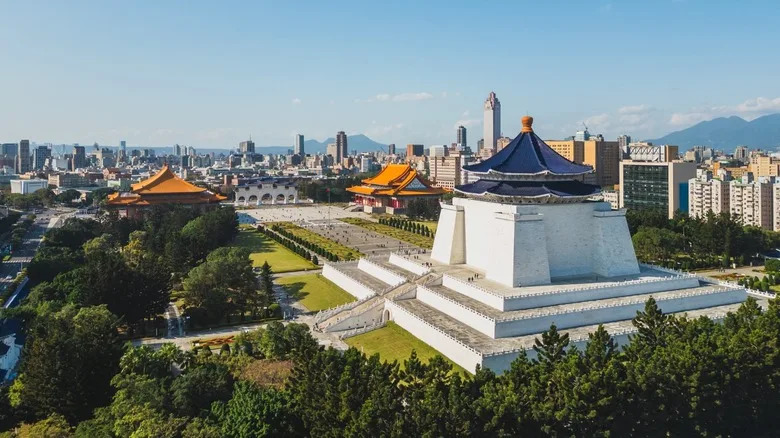
Aerial view of Taipei’s Chiang Kai-shek Memorial Hall with its blue-tiled roof, flanked by the National Theater and National Concert Hall, set against the modern city skyline and distant mountains – Richie Chan/Shutterstock
Let’s start with the things Taiwan and Japan have in common. They both have safe, walkable cities; they have cheap, reliable transit systems; they have delicious street food; they have that traditional temple-mixed-with-mega-city appeal; and they have a similar hot springs culture. Crucially, both nations have friendly locals.
However, Taiwan is just cheaper. One appealing example is how you can get great street food for just a few dollars in many parts of Taipei. There are also big savings when it comes to sightseeing. Since Taiwan is compact, you can choose Taipei as your base and do a lot of day trips from there. Taiwan is about one-tenth of Japan’s size, and Taipei sits in a target-rich area of the country — there are as many as 38 solid day trips you can make from your base in Taipei, according to Nickkembel Travels.
That’s less hotel-hopping (and more savings) compared to sightseeing in Japan. Many mainstream Japanese itineraries suggest going to Tokyo, then Hakone or Mount Fuji, then Kyoto, then Nara, and finally, Osaka. That entails at least three or four separate hotel bookings, so you don’t have much room to negotiate good hospitality deals for extended stays. That said, if you adopt some of Rick Steves’ traveling tricks, you could save some money on pain points such as this.
Taipei avoids Japan’s peak-season price hikes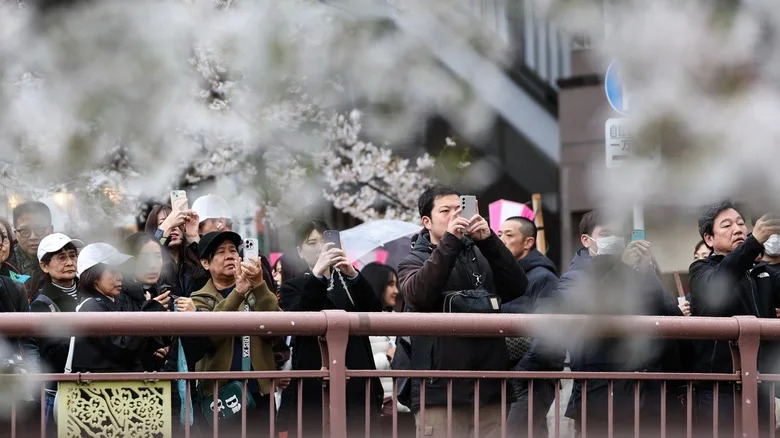
Crowd of people standing on a bridge, photographing cherry blossoms with their phones, framed by blurred sakura branches in the foreground – Takashi Aoyama/Getty
One major savings advantage Taipei has over Japan is how stable its prices are throughout the year. Japan experiences extreme seasonal demands that often push hotel and flight costs sharply upward. Cherry blossom season, Golden Week, and the autumn foliage rush are major examples of such seasonal surges. In fact, it’s because these seasons are so crowded and pricey that it’s best to time your vacation in “shoulder season” to save money.
On the other hand, Taipei doesn’t experience the same level of international tourism spikes or global event-driven rushes. Therefore, hotel prices in Taipei end up being more stable across the calendar year. You’re far less likely to encounter the kind of “sold-out months” or price surges that Japan sees every spring. Because Taiwan’s tourism numbers are much more modest, even its busiest travel weeks don’t cause massive price hikes. If you can only travel during peak vacation windows in the U.S., Taipei becomes the reliably cheaper destination. Without the need to fight inflated hotel prices, limited availability, or intense competition for flights and accommodation, you stand to save hundreds, if not thousands on your trip.
Unlock your financial potential. Add Money Digest to your preferred sources for smart money insights!
Read the original article on Money Digest.
AloJapan.com