
Overlooking Osaka Castle Park, at Patina Osaka Hotel stone-and-timber architecture and an OJAS analog listening room – the city’s craft heritage and contemporary cultural identity
Patina Osaka: a structure positioned to face the castle and the city’s shifting topography
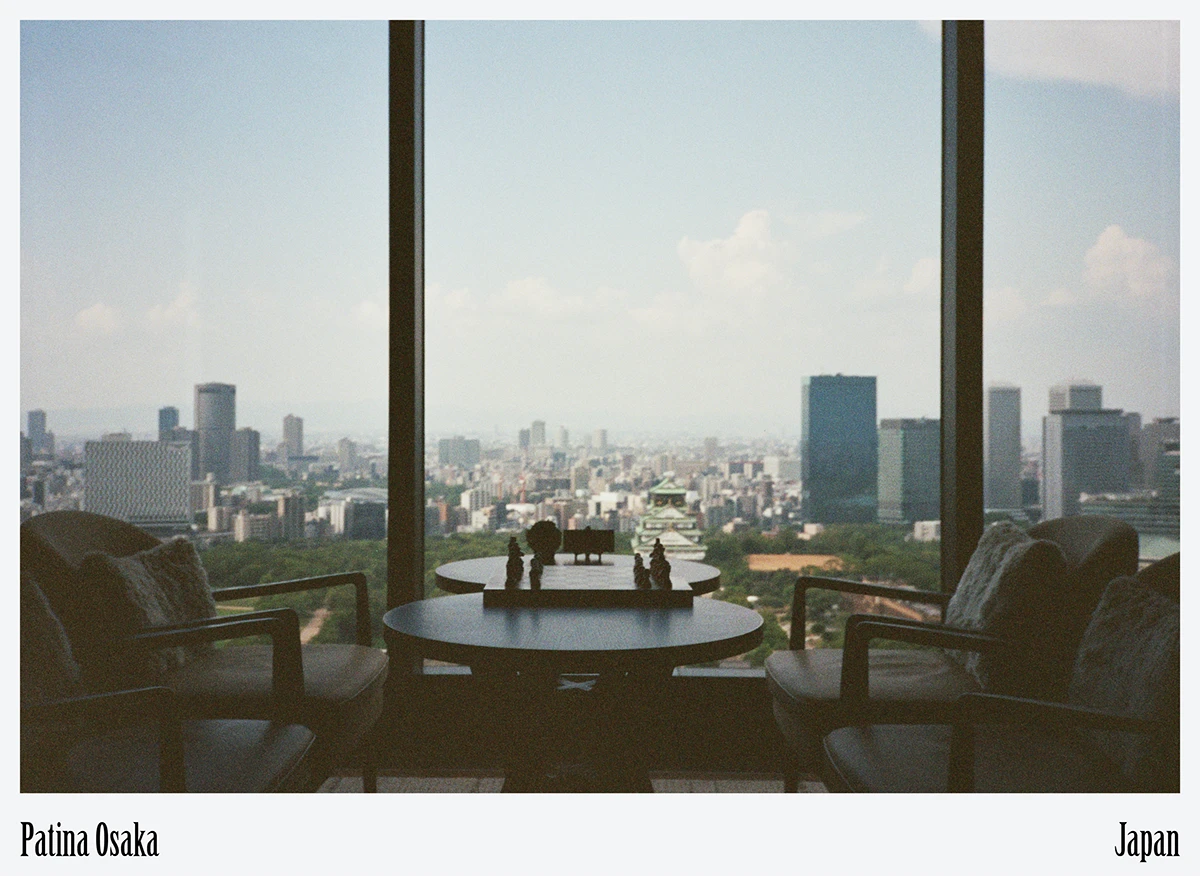
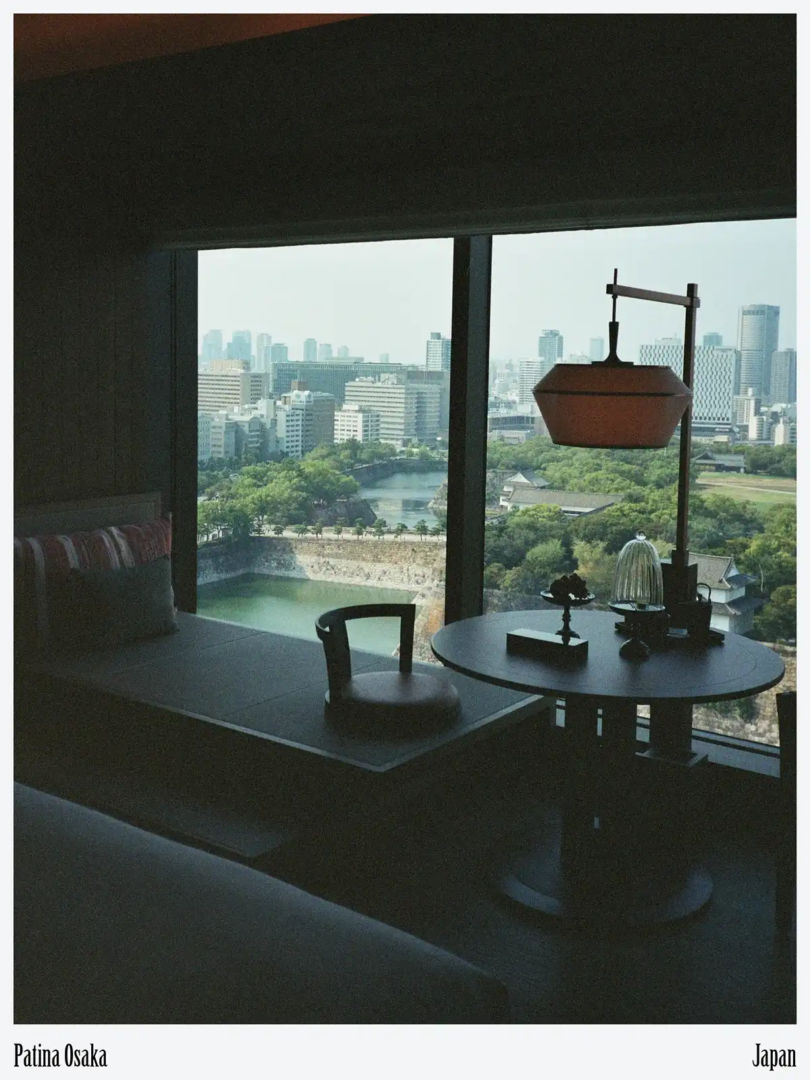
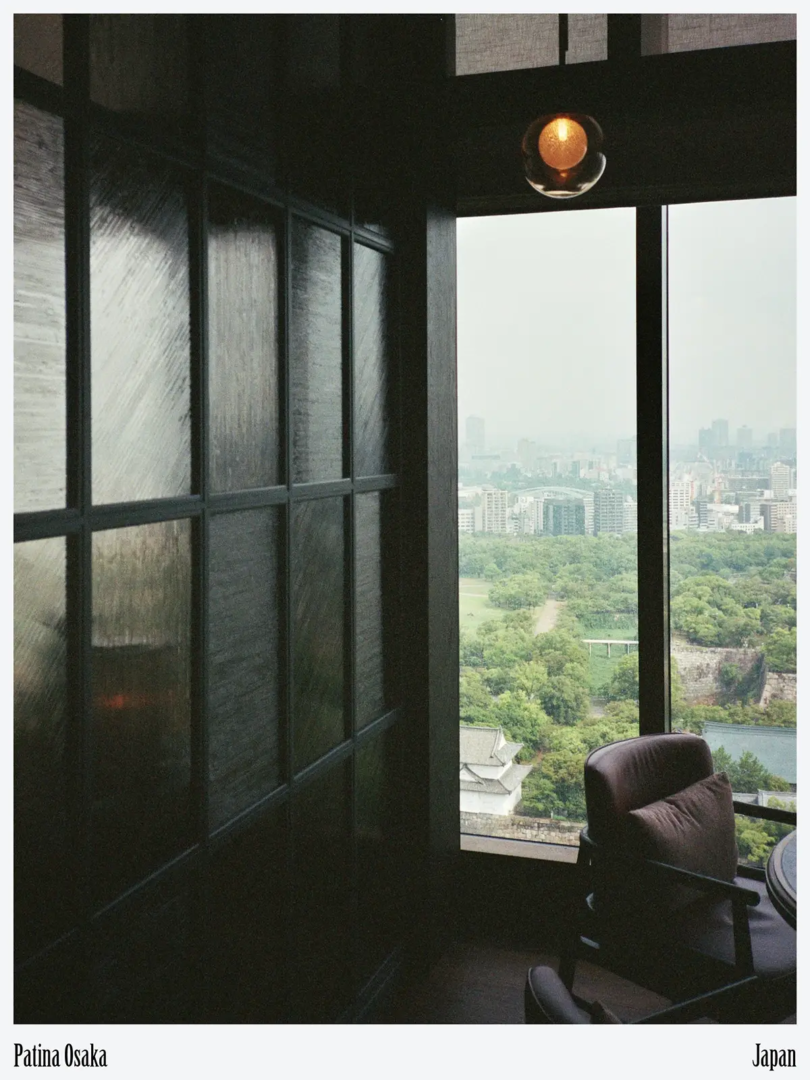
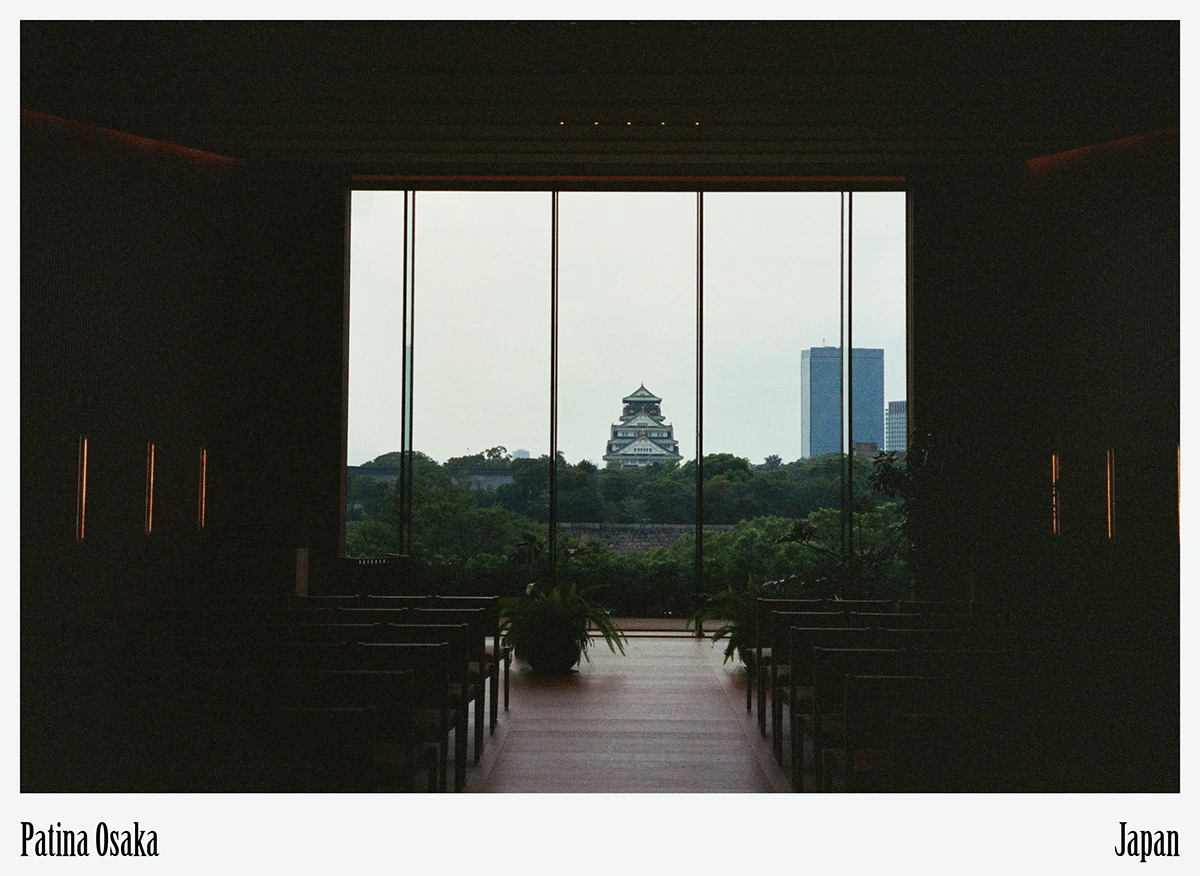
Patina Osaka sits within the line connecting Osaka Castle to the surrounding parkland. Jun Mitsui & Associates designs the tower as a structure anchored to this perspective, aligning its two hundred and twenty-one rooms and suites – ranging from the fifty-square-meter entry category to the two hundred and thirty-three-square-meter Patina Suite – toward the castle’s stone mass and the tree line of Naniwa-no-Miya Park. The building’s form is calibrated around these views: terraces, balconies, and circulation zones orient toward the castle, allowing natural light and seasonal shifts to define interior conditions.
Strickland’s interior design extends this approach. The studio avoids redundant elements, adopting surfaces and colors that amplify daylight and reflect the presence of the park. Capella Hotel Group’s identity – linked to cross-cultural programming in wellness, sound and craft – appears in the selection of materials, commissions and sonic environments rather than in prescribed visual tropes. Patina Osaka positions itself within the city’s historical field, using orientation as its primary architectural strategy.
Raw materials as a system of relations between light, craft and historical landscape
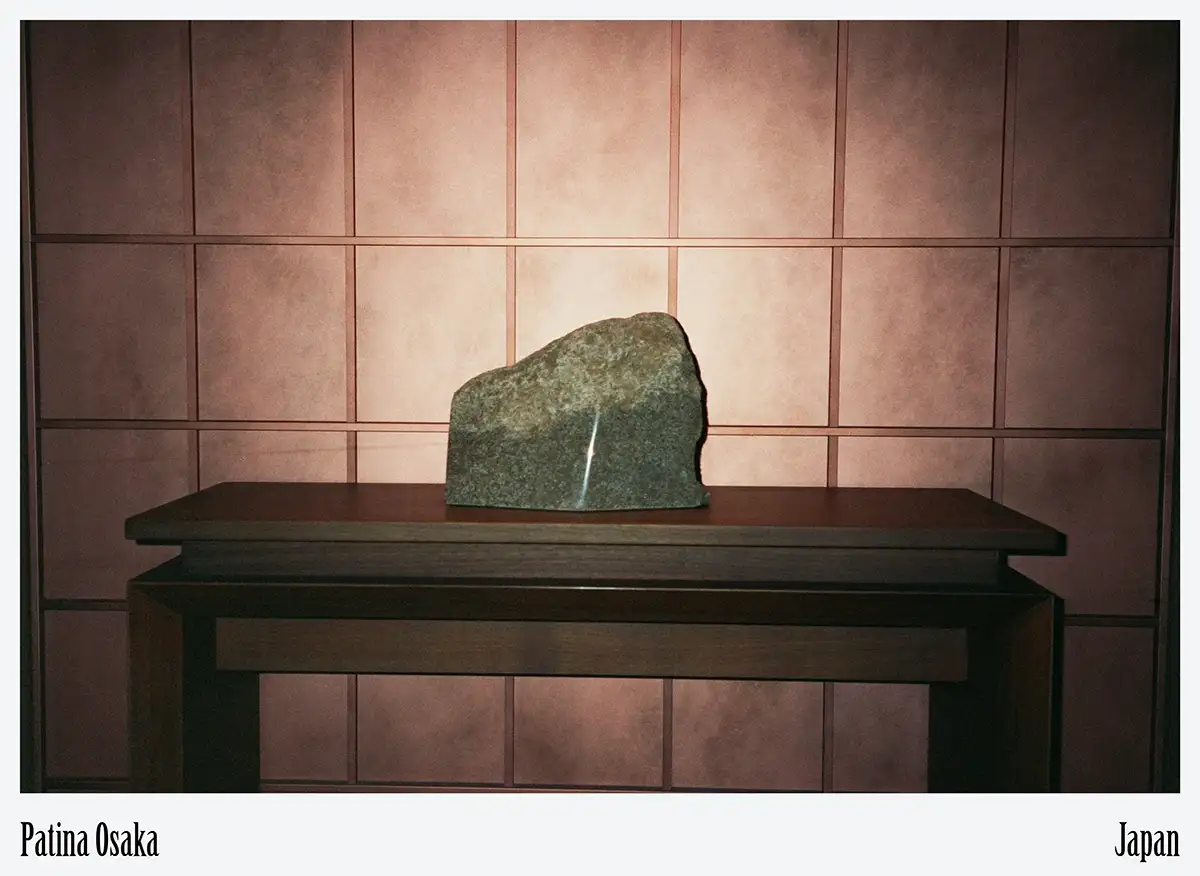
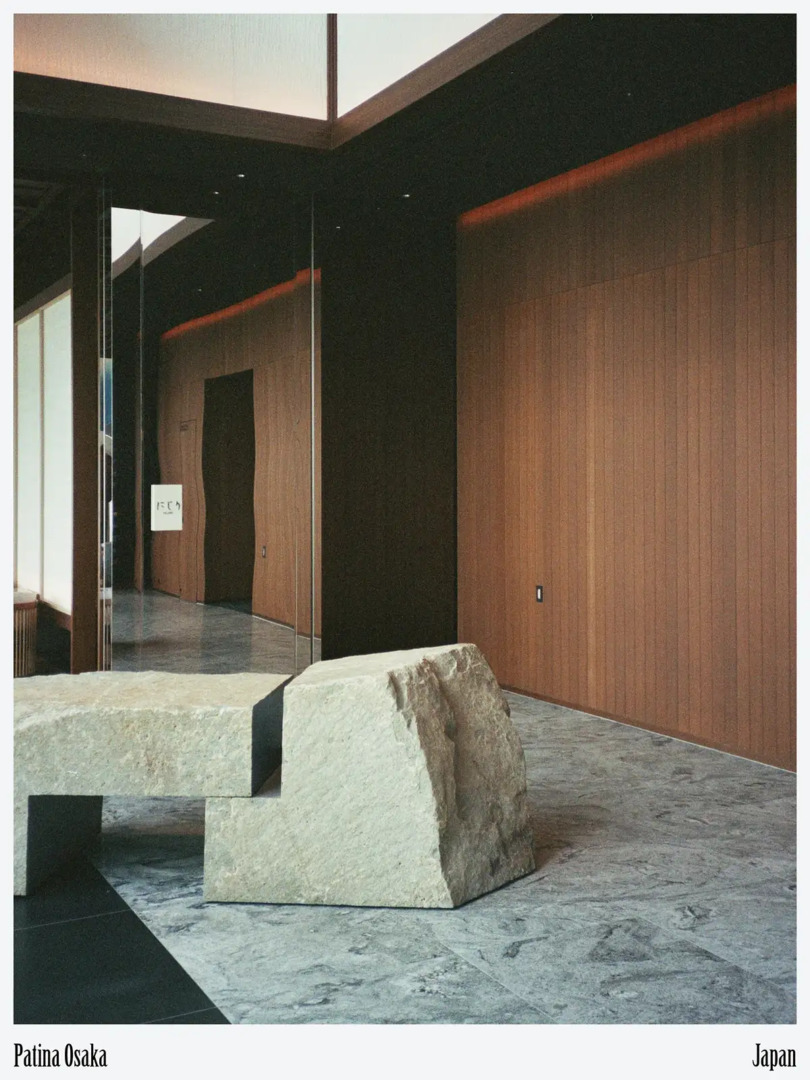
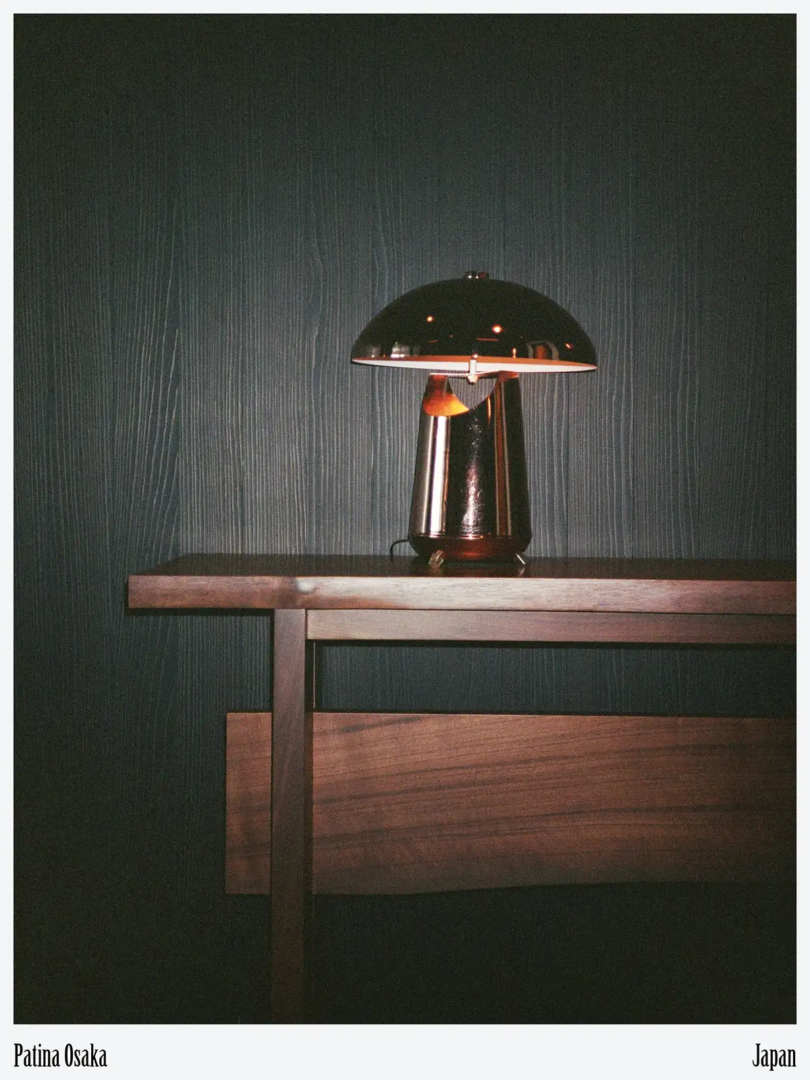
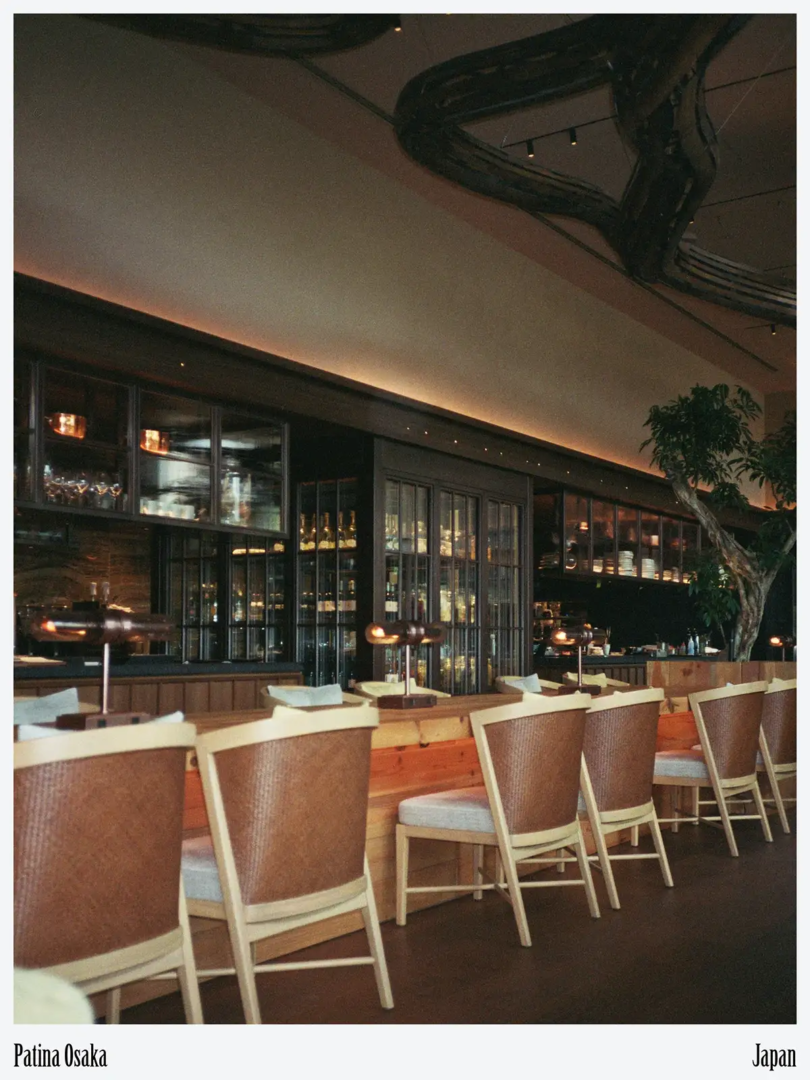
The use of raw materials defines much of the hotel’s spatial logic. Stone, timber and copper reference Osaka Castle without replicating it; they are chosen for the way they interact with the city’s natural conditions. Stone flooring mirrors the weight and granularity of the castle walls, responding in real time to changing daylight. Timber retains visible grain, with surfaces intentionally left irregular to register subtle shifts in humidity and temperature. Copper appears in muted tones, echoing the weathered surface of the castle roof rather than its brighter photographic reproductions.
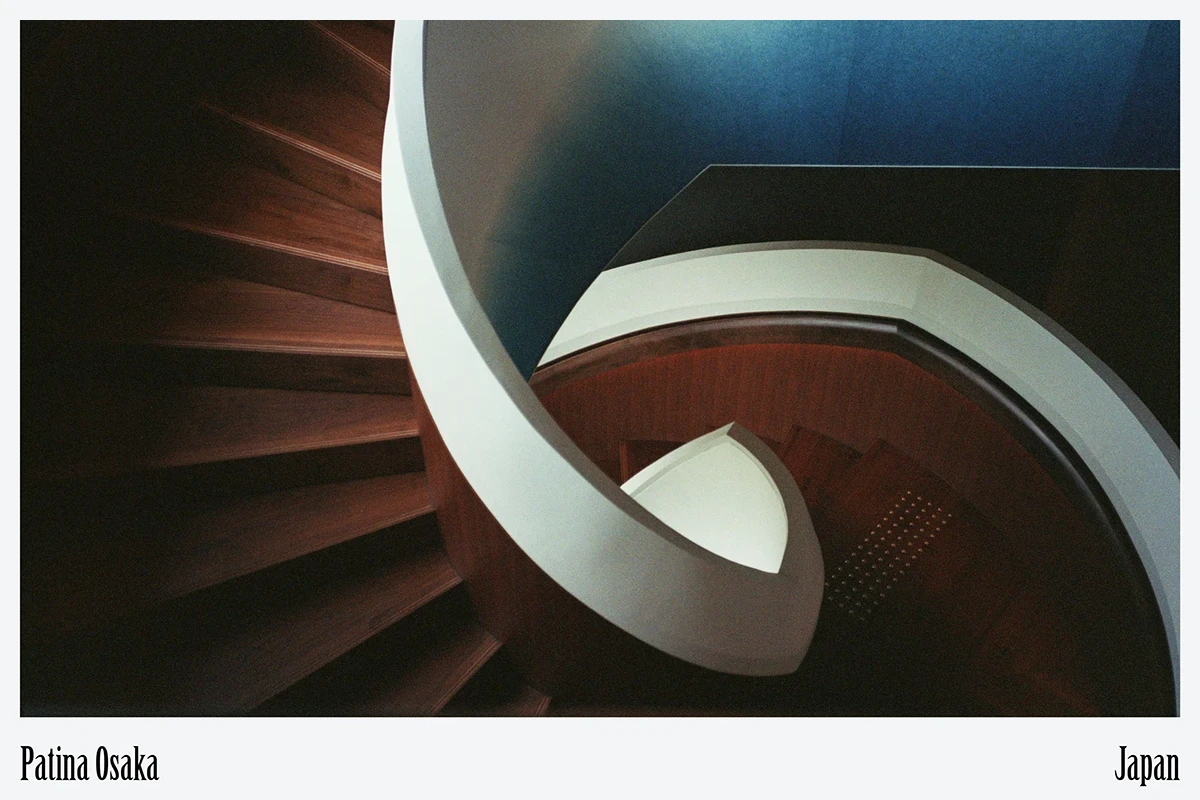
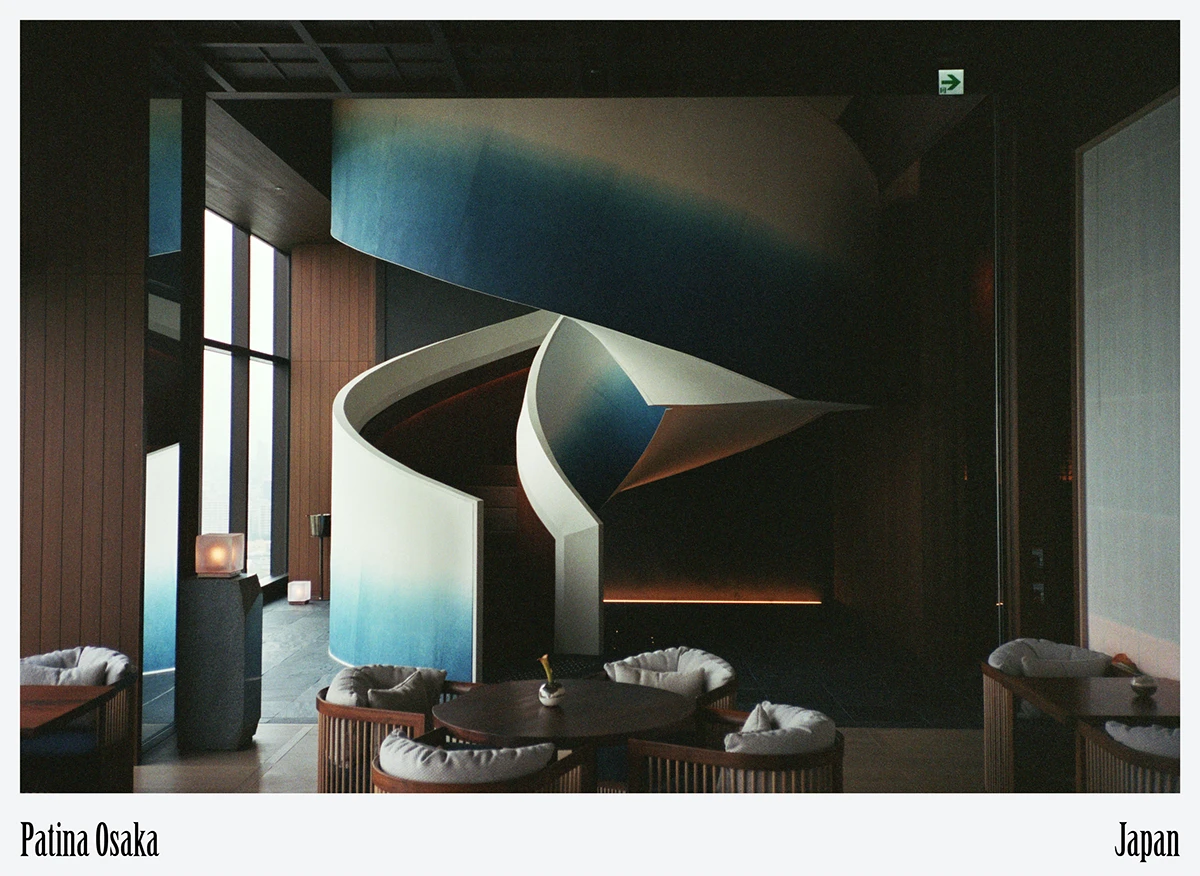
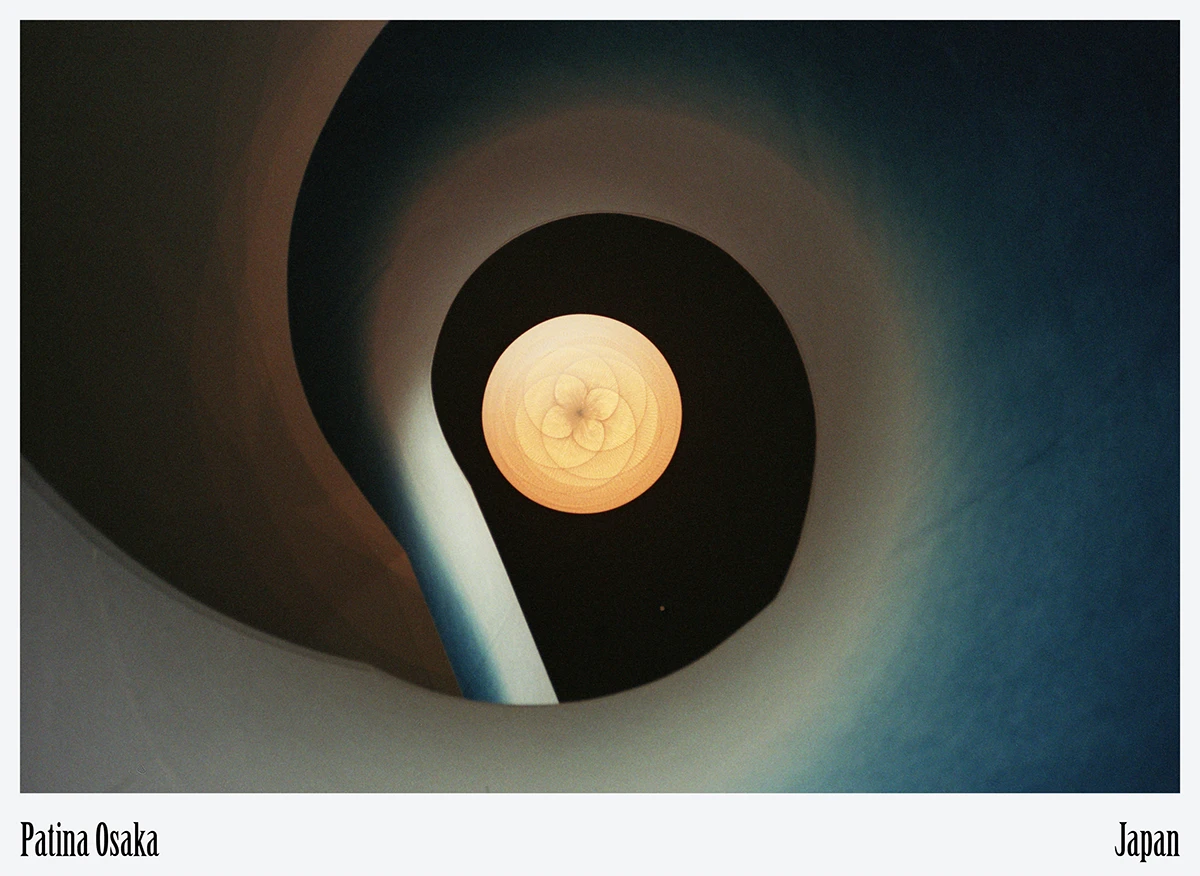
The staircase connecting the nineteenth and twentieth floors exemplifies this material strategy. Designed by Strickland, it is wrapped in washi dyed with Aizome indigo, forming a gradient that moves from white to blue. The structure is both functional and symbolic: as guests ascend, the color intensifies, acting as a chromatic marker that links movement to the passage of time. The staircase absorbs and filters daylight, producing slow transitions in tone. Its presence turns circulation into a tactile and atmospheric experience.
Craft manufacturing as a tool for reading Osaka’s material culture
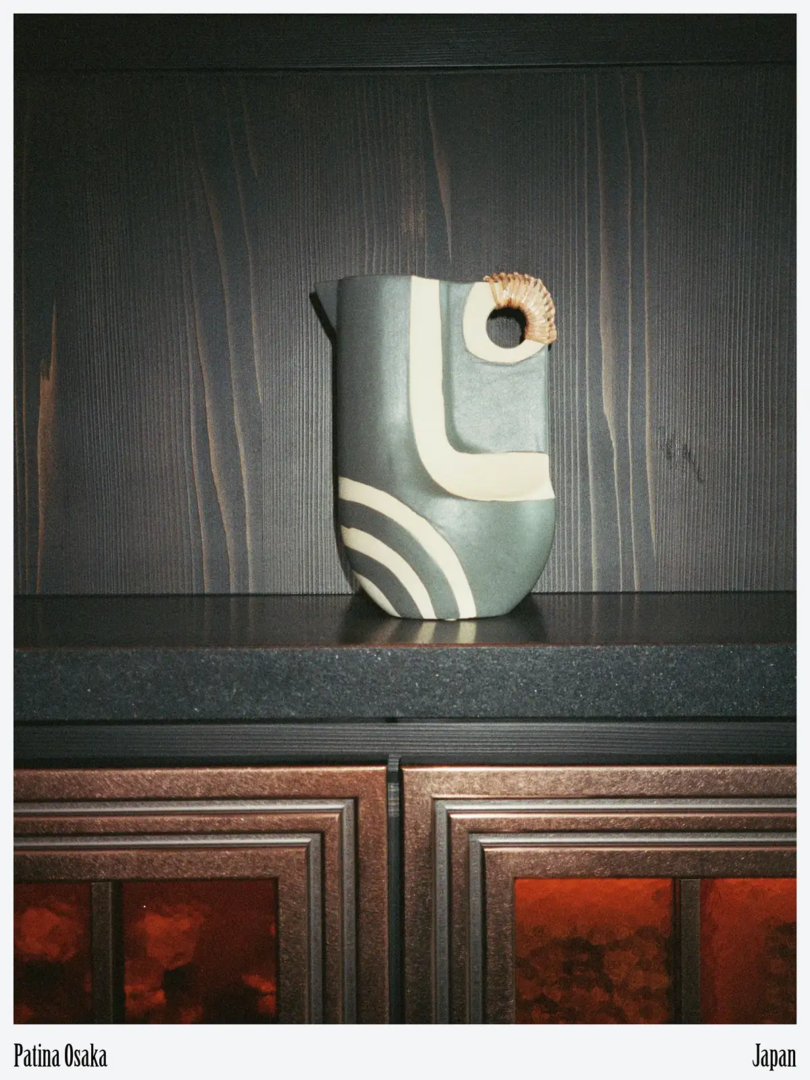
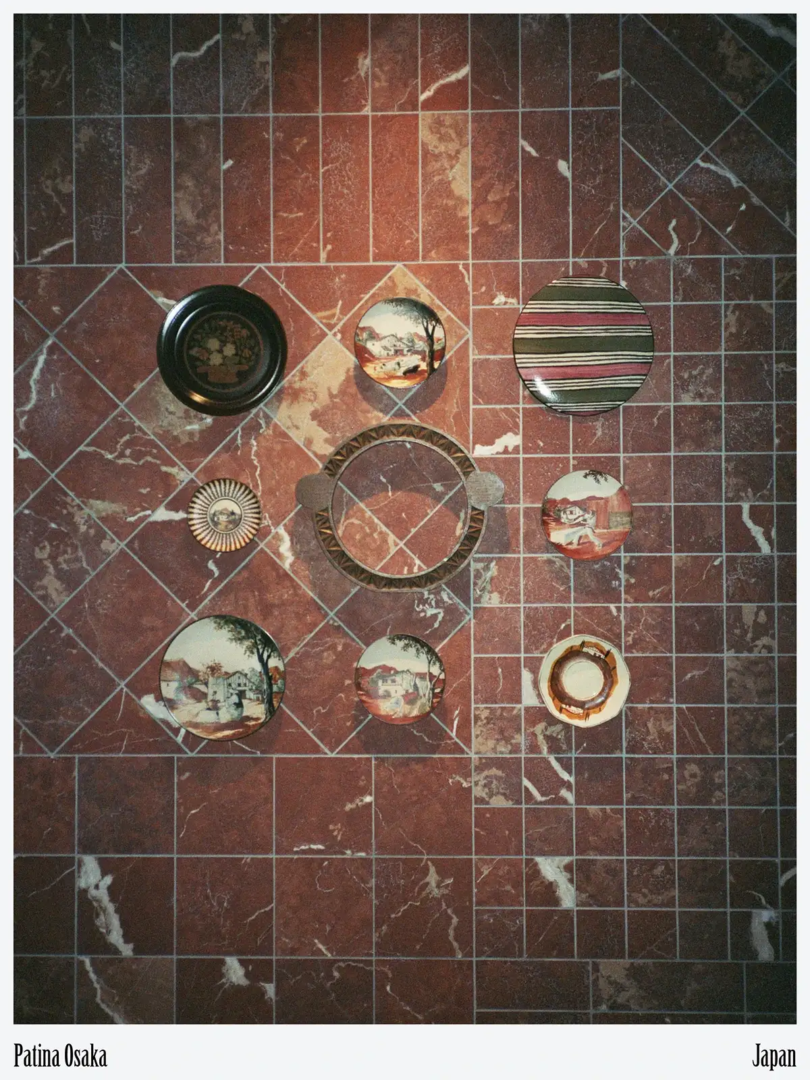
Craft manufacturing informs the hotel’s arts program, connecting contemporary hospitality with Osaka’s historical relationship to trade, ceramics and hand-made objects. Ceramics by Toru Hatta – some fragmented to accommodate ikebana – appear across dining and public areas. Their surfaces show the traces of firing, glaze, and manual intervention, emphasizing the non-uniformity that defines traditional Japanese ceramic practice.
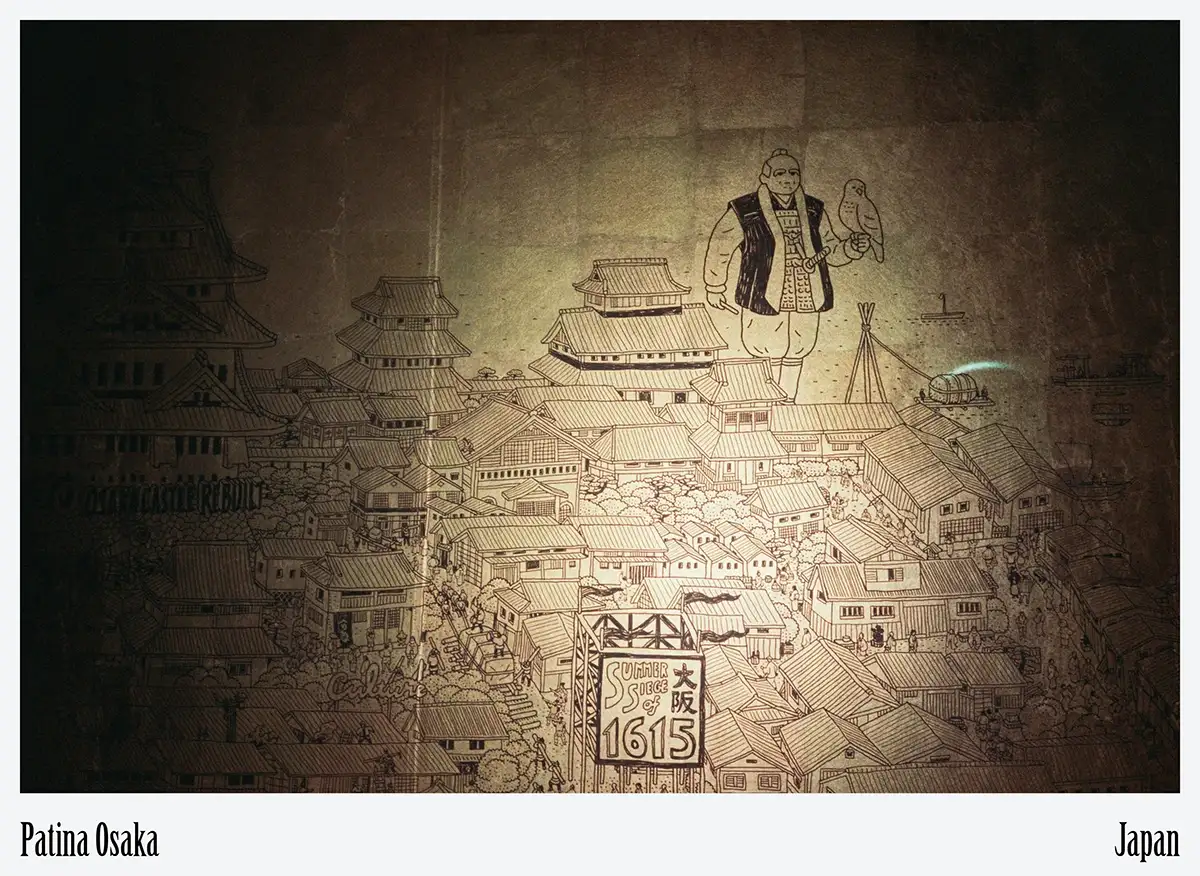
Inside the teppanyaki restaurant, a ten-meter gold-leaf artwork by IC4Design Studio narrates Osaka’s evolution from the imperial court to present day, using the compositional structure of Japanese emakimono picture scrolls. The artwork unfolds horizontally and avoids singular focal points; its linear rhythm mirrors the city’s layered urban form, where historical remnants coexist with modern infrastructure.
Intercultural Art curated further site-specific works, including reclaimed-material sculptures, clay vessels, murals and paper-based installations. These pieces acknowledge the city’s longstanding identity as a manufacturing center – an urban landscape shaped by its craftspeople, merchants and industries. The materials connect the building to this legacy: clay, wood and paper retain the traces of manual production, reflecting Osaka’s broader cultural economy.
Human diversity articulated through analog sound and collective listening practices
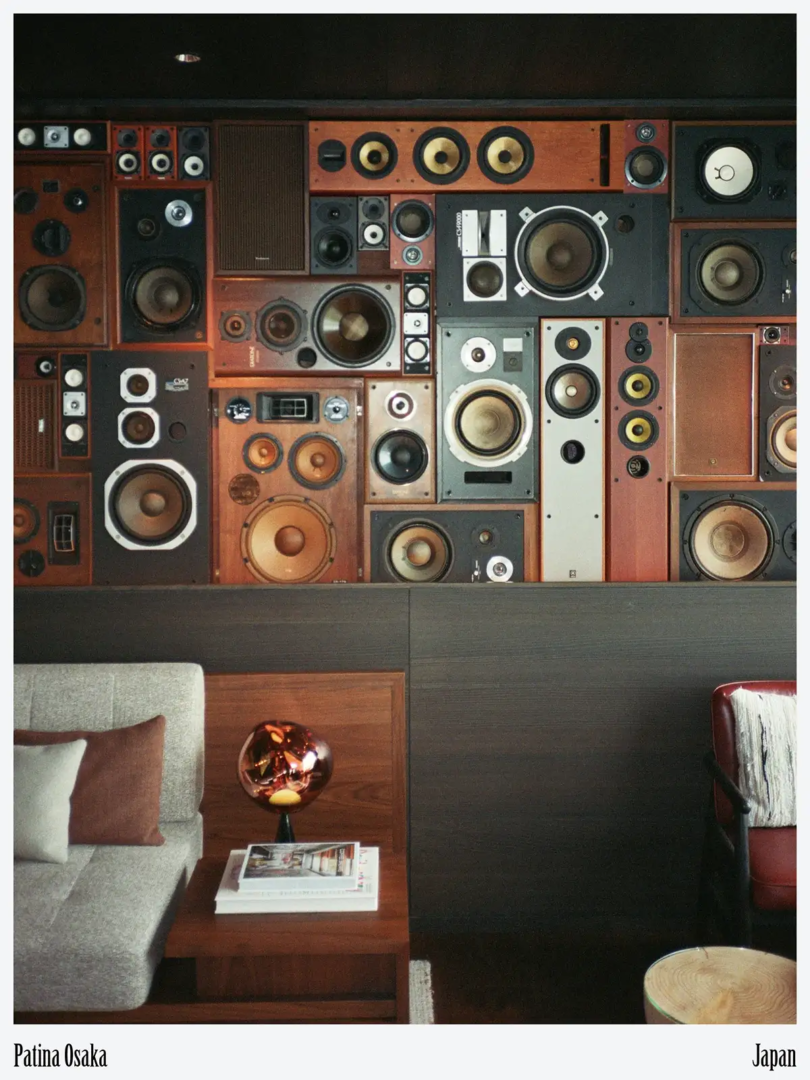
Patina Osaka uses sound as a medium to explore human diversity – bridging subcultures, generations and auditory traditions. A wall of historic loudspeakers, assembled by Intercultural Art, houses a curated vinyl collection selected by a Shinsaibashi-based record specialist active since 2000. His selection spans jazz, city pop, R&B and rock from the 1960s to the 1990s, focusing exclusively on analog-era recordings. These decades represent a shared sonic archive in Osaka: neighborhood record shops, small live houses and local broadcasting shaped communal listening habits that continue to influence the city’s identity.
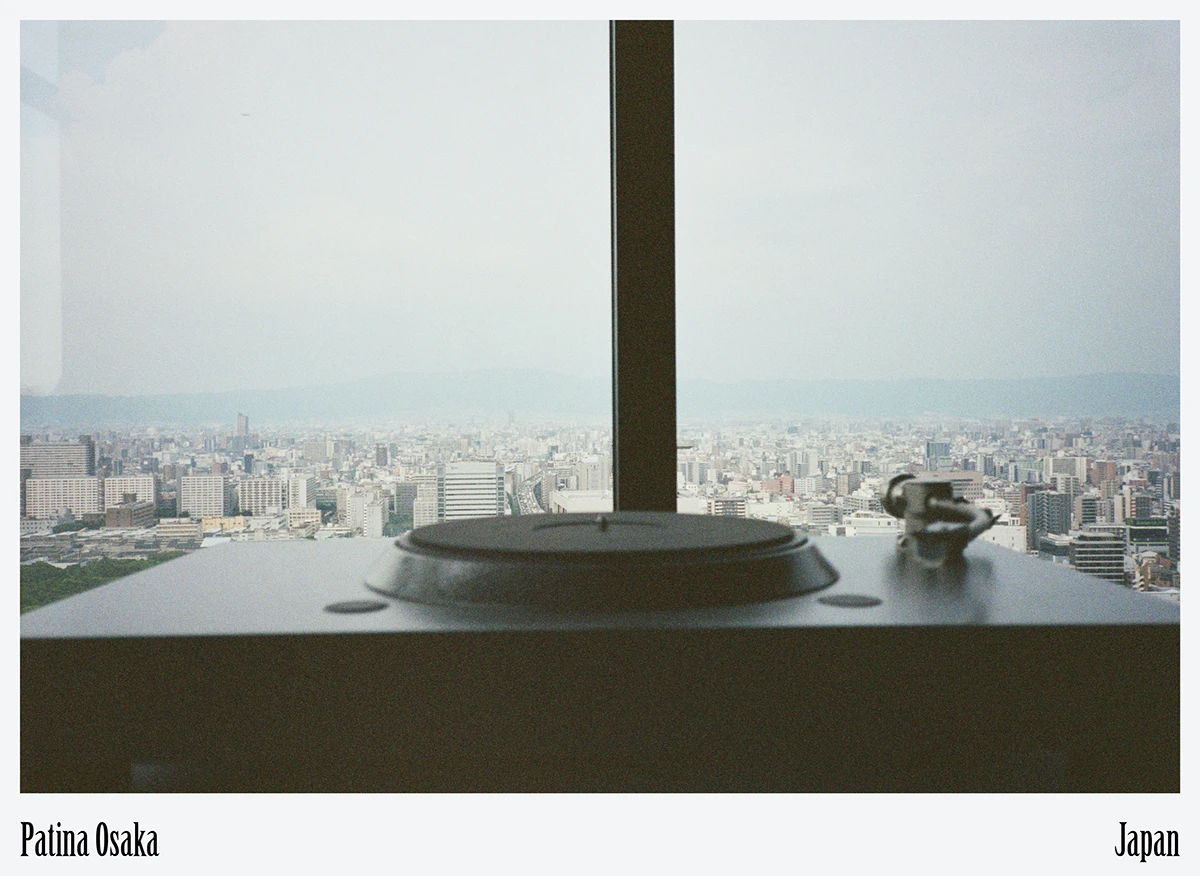
The Listening Room by OJAS – created by sound designer Devon Turnbull – faces west and opens only during the morning. The room is acoustically isolated but visually permeable, allowing guests to observe sunrise over Osaka Castle while listening to curated vinyl soundscapes. Sound becomes a form of mediation between interior and exterior: an encounter with the city filtered through analog audio. The room can be reserved privately, supporting focused listening sessions aligned with Capella’s broader interest in sound as wellness rather than entertainment.
Elsewhere in the hotel, music softens transitions, structures atmosphere and acts as a cultural connector. Sonic programming extends across public areas, creating a cohesive auditory environment that accompanies movement and reinforces the building’s spatial rhythm.
Rooms defined by continuity of materials and a controlled, slow approach to light
Guestrooms follow the same architectural language. Surfaces rely on stone, wood and neutral textiles, avoiding decorative contrasts. Frette provides a hundred percent cotton and satin bedding, with pillowcases and mattress protectors in natural fibers; fillings use white goose down and feathers. Textiles maintain a soft chromatic field that mirrors the materials of the tower, reinforcing visual continuity between private and public spaces.
Light plays a defining role in each room. East-facing rooms capture morning reflections from the castle, revealing soft shadows across timber panels. West-facing rooms follow the city’s evening rhythm as light fades behind the skyline, setting a slower pace within the interior. Bathrooms extend the same palette using stone and washi-textured elements that modulate artificial and natural lighting. The atmosphere remains calm and measured, shaped by material response rather than ornament.
Sustainable travel interpreted through sourcing, cultivation and regional food cycles
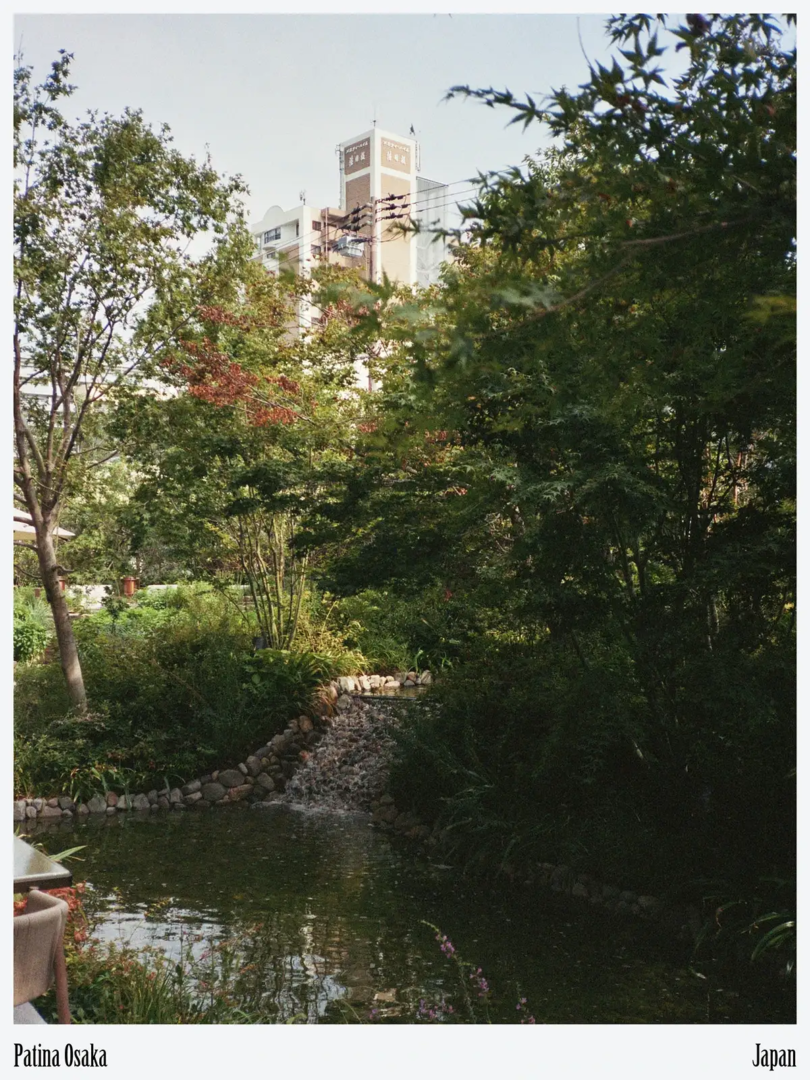
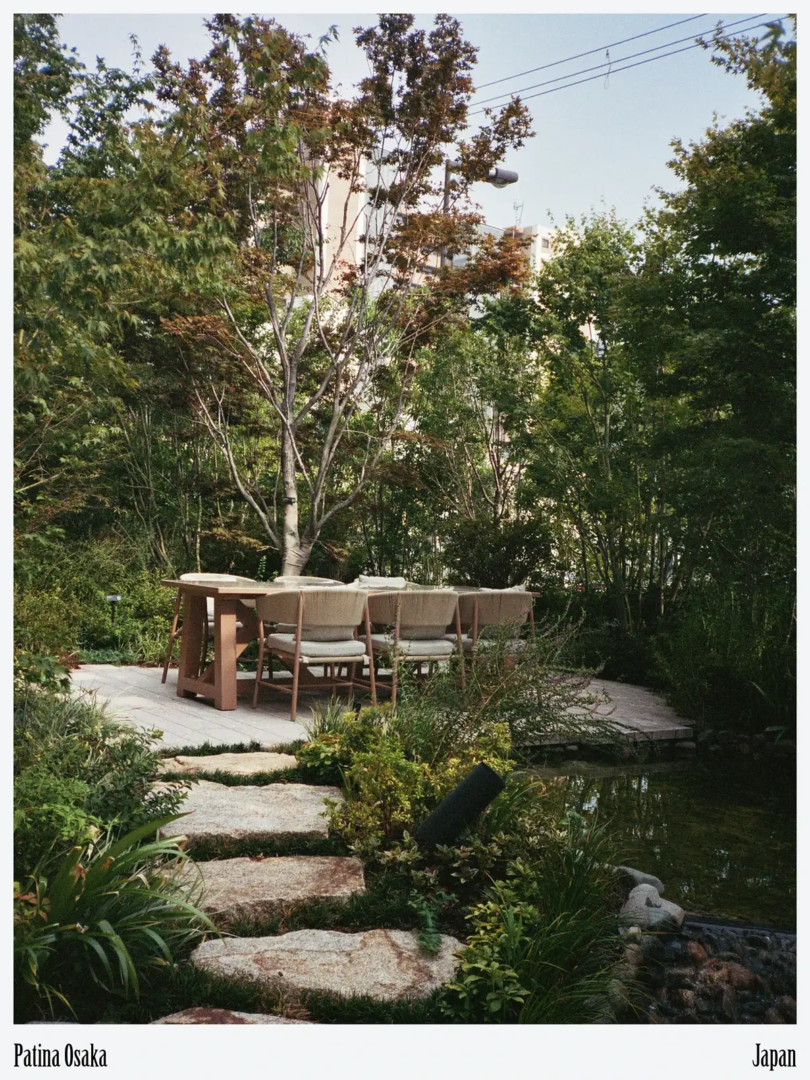
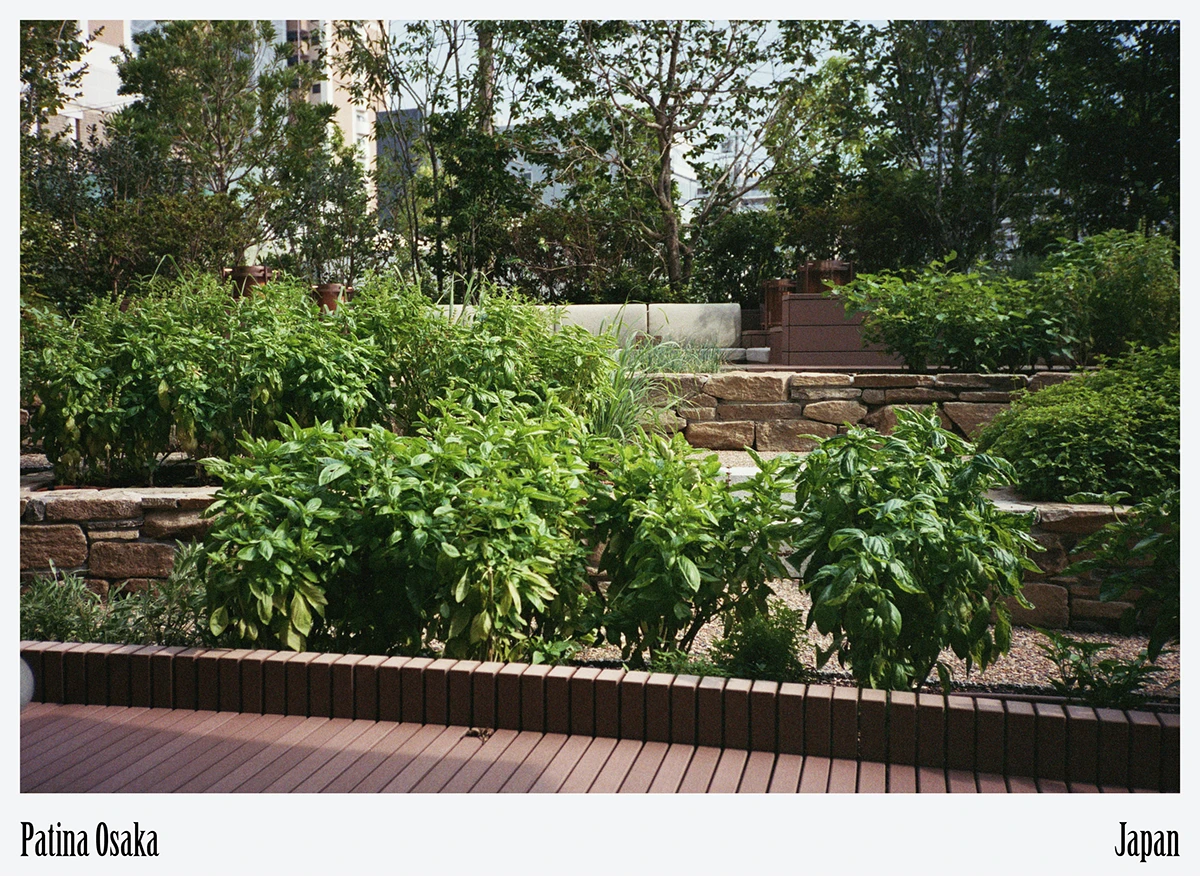
Sustainable travel emerges through the hotel’s approach to food sourcing and production. Restaurants work with seasonal ingredients from Osaka and the Kansai region: vegetables, herbs, and condiments that reflect local agricultural cycles. An on-site urban garden provides additional herbs and small produce, reducing the need for external supply chains and anchoring part of the gastronomic offer to the site itself.
Menus draw from kaiseki principles – seasonality, balance, a narrative progression – without replicating traditional forms. Plant-forward dishes reflect regional climate patterns. Sake pairings highlight distinctions within Kansai’s brewing culture, emphasizing differences in fermentation and water quality across producers.
The culinary program connects the building to Osaka’s marketplaces, small producers and regional landscapes, creating continuity between the hotel and its context.
Expo 1970 and the city’s persistent relationship with modernity
Expo 1970 remains a structural reference in Osaka’s urban identity. Its influence is not reproduced directly within Patina Osaka, but it forms a cultural subtext. The Expo introduced ideas about global exchange, public atmosphere and technology that continue to inform Osaka’s development. The hotel’s analog music programming and subtle retro-modern cues echo these decades without adopting their aesthetics as dominant themes.
The building sits within a constellation of historical layers: the ancient capital at Naniwa-no-Miya, the feudal power symbolized by the castle, the mercantile expansion of the early modern era, and the post-Expo redefinition of Osaka as an international city. Patina Osaka interacts with these layers through orientation, material selection and cultural programming.
Terraces, thresholds and interior landscapes that extend the city’s rhythm
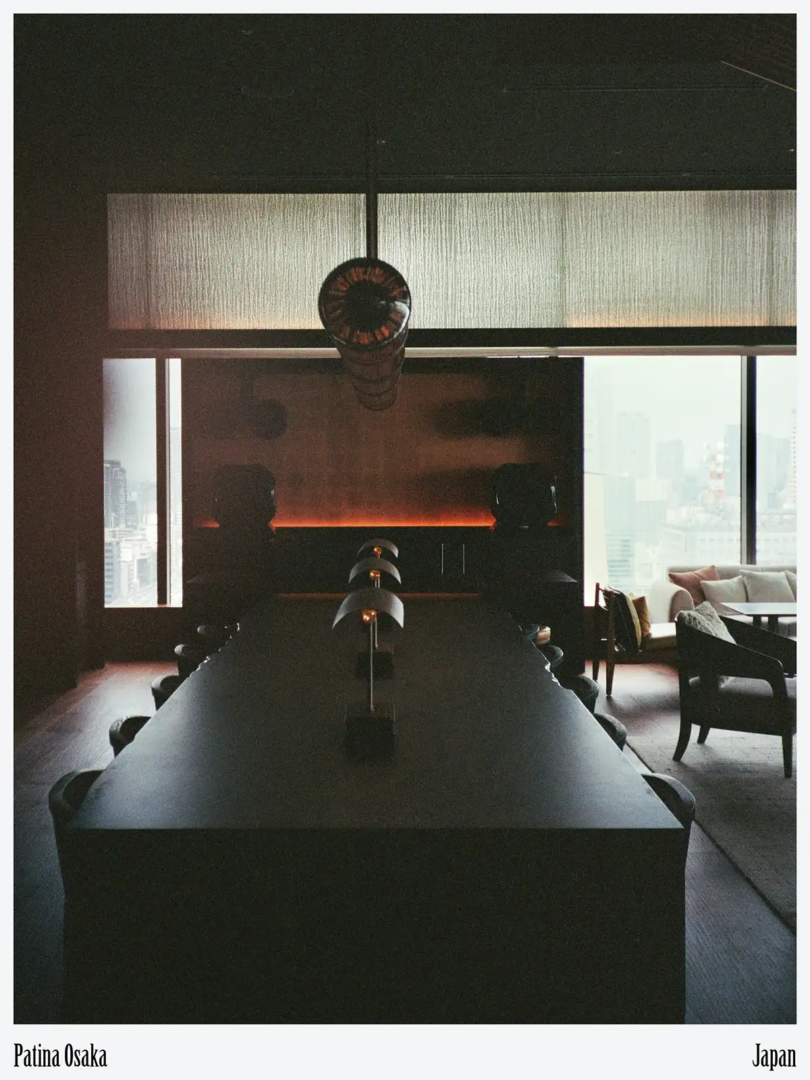
Public interiors use permeability as design strategy. Slatted timber partitions and washi panels create semi-transparent boundaries; terraces open toward Osaka Castle Park; circulation paths maintain visual continuity with the landscape. The result is a sequence of thresholds rather than discrete rooms, reflecting the transitions found within Osaka itself – where dense neighborhoods coexist with open green spaces and waterways.
Lighting design reinforces this condition. Diffused light from washi surfaces softens edges, while natural light evolves across the day, modifying color temperature on stone and timber surfaces. These slow shifts contribute to a spatial rhythm that mirrors the city’s movement patterns.
Patina Osaka
Patina Osaka is a new hospitality project located along the perimeter of Osaka Castle Park. The building, designed by Jun Mitsui & Associates with interiors by Strickland, is oriented to maximize views of the castle and surrounding greenery. Materials, artworks and sound installations reference local craft traditions and the cultural landscape of Osaka. The hotel includes two hundred and twenty-one rooms starting from fifty square meters, an urban garden used for seasonal sourcing, and a dedicated analog listening room by OJAS. Programming focuses on art, music and spatial experiences connected to the city’s historical and contemporary identities.
AloJapan.com