
The Yomiuri Shimbun
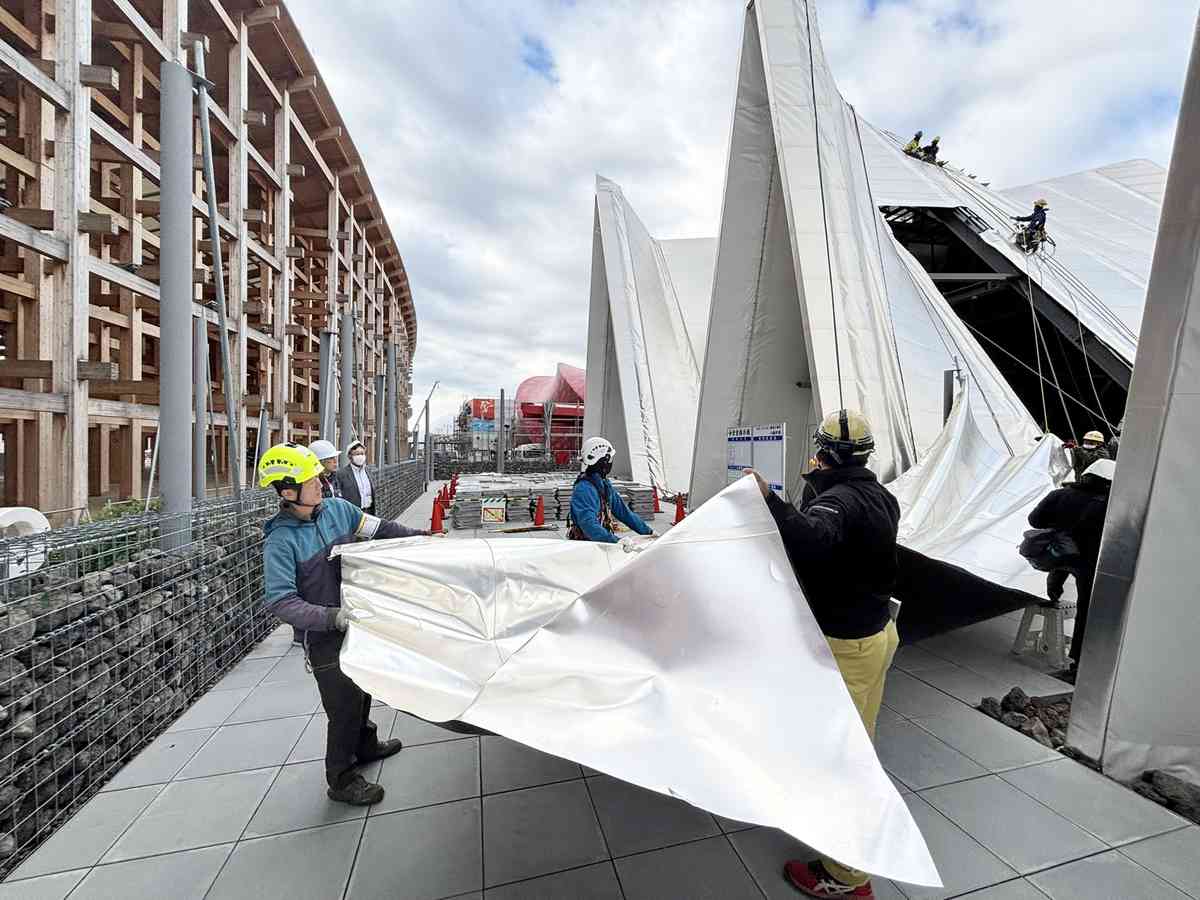
The new radiative cooling material “Space Cool” used as the distinctive outer membrane of the Gas Pavilion at the Osaka-Kansai Expo. After the event, it will be donated to the city of Kurashiki in Okayama Prefecture, where it will be repurposed for local ways to beat the heat.
8:00 JST, December 6, 2025
Drawing a massive circle around the central grounds of the Osaka-Kansai Expo, the majestic wooden structure called the Grand Ring shaped the memories of millions of people who visited the event this year. Now those visitors have gone home, and another circle is becoming part of the Expo’s legacy — the circular economy.
Much of the modern economy is predicated on “mass production, mass consumption and mass disposal.” But the dismantling and reuse of the venue’s structures and materials will serve as a large-scale experiment symbolizing the shift away from this wasteful model. The aim is to help realize a society that is both economically and environmentally sustainable.
The Japan Association for the 2025 World Exposition aims to reuse over 20% of the total materials in the pavilion structures. While nonreusable items, including exhibits, will become waste, the association also aims to recycle 98% of this waste. An association official stated, “Achieving the [recycling] targets is important, but reducing waste in the first place is crucial, and reuse is key to that.”
Notably, some pavilions at this Expo were designed from the construction phase with reuse as a fundamental principle. Disassembly of the exterior of the Pasona Pavilion, which welcomed approximately 2.5 million visitors, began in December. Built with relocation in mind, it will be moved to Awaji Island in Hyogo Prefecture along with the Netherlands Pavilion, which Pasona will take over. Timber from the external walls of the Japan Pavilion will be reused by municipal governments and educational facilities.
Osaka Prefecture’s master plan proposes permanently preserving part of the iconic Grand Ring and repurposing sections of the Luxembourg Pavilion for childcare facilities. Meanwhile, material from the membrane roof that hovered over the Luxembourg Pavilion will be reprocessed into chic designer bags by the eco-conscious Japanese brand Seal in a visible example of “upcycling,” which refers to recycling in which the new product is of greater value than the original one.
However, significant cost challenges remain. Since the pavilions were constructed as “temporary structures,” relocation for their permanent use requires additional work to meet legal requirements, such as fire resistance standards. In addition to transportation costs, careful dismantling for reuse also incurs expenses. According to sources, there have been several cases in which reassessing these costs has led to the revision of initial reuse plans.
Amid this, the Osaka Chamber of Commerce and Industry has begun matching participating countries with small and medium-sized enterprises to reuse building materials and fixtures slated for disposal. The International Horticultural Expo 2027, Yokohama, is a strong candidate to take them on. Temporary construction is feasible, and it offers the advantage of easily inheriting the Expo’s green philosophy. Indeed, reuse is already planned for parts of the Women’s Pavilion, the Panasonic Pavilion, the Mitsubishi Future Pavilion and sections of the Grand Ring.
With the growth of emerging countries, global resource consumption is estimated to more than double by 2060, making the promotion of resource recycling an urgent international issue. Commitment to the United Nation’s Sustainable Development Goals was a criterion in bidding to host the Expo, and the “Green Vision,” which sets reuse targets, was formulated against the backdrop of these international demands. The Osaka-Kansai Expo provided a mechanism to raise visitors’ awareness of sustainability and to form networks and communities connecting companies, organizations and people from different fields. It has also been praised as laying the foundation for further innovation.
Initiatives proceeding after the Expo will influence the planning, operation and dismantling of large-scale events in Japan and around the world, establishing a global standard for sustainable event management that aims for “zero waste.”
While the Grand Ring’s 2-kilometer circumference made it an important circle indeed, the figure “zero” in “zero waste” is an even bigger one, representing a challenge for the future.
Political Pulse appears every Saturday.
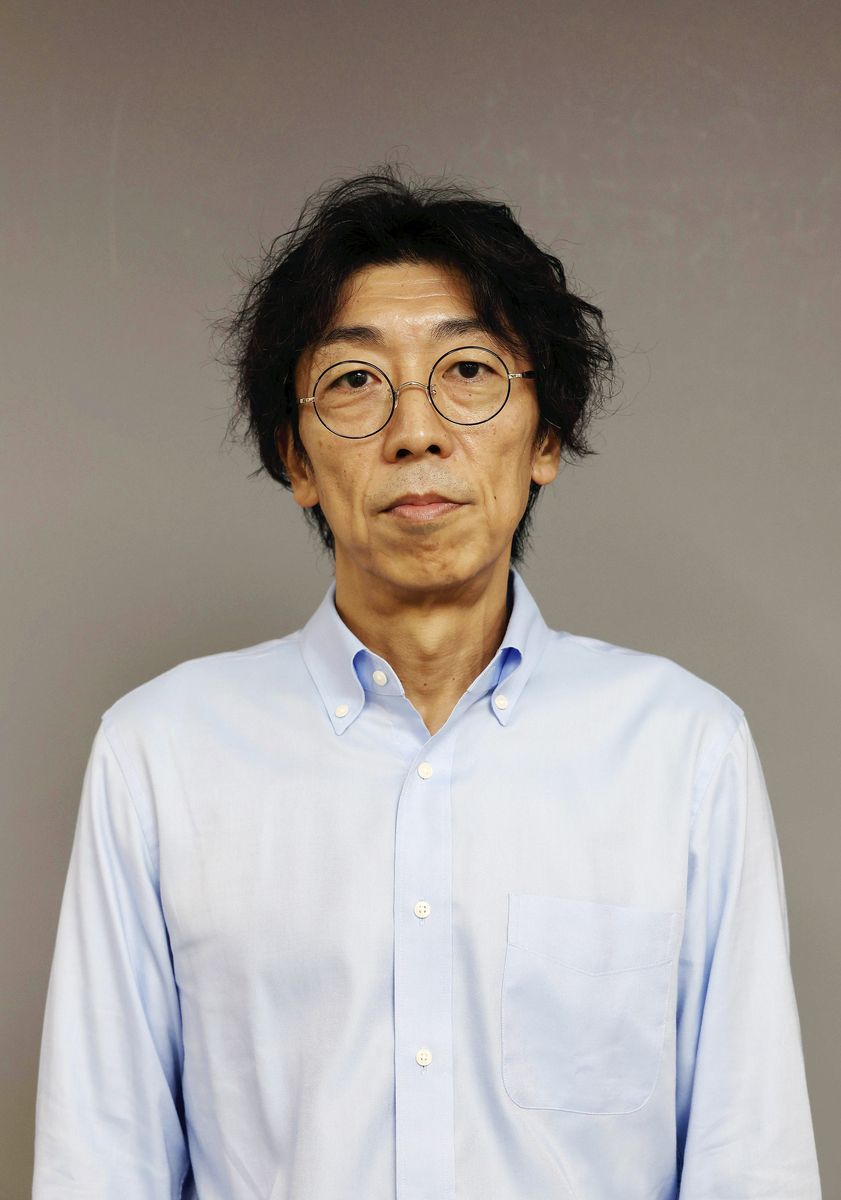
Shingo Sugime
Shingo Sugime is a deputy editor in the Economic News Department of The Yomiuri Shimbun Osaka.
AloJapan.com