
The EU’s new action plan for shoring up its supplies of critical raw materials was published this week, and EU heavyweights are already reaching out to countries to secure their cooperation.
Writ large, Wednesday’s Economic Security Package essentially restated existing EU plans and tools, but Industry Commissioner Stéphane Séjourné’s announcement of the ‘RESourceEU’ action plan contained the new idea of a European Centre for Critical Raw Materials. The centre, when fully operational, would monitor supplies of critical raw materials in Europe, encourage stockpiling and recycling, and help manage projects to diversify supply chains.
Crucial to it working, and the roughly 60 projects the EU already has to diversify its sources of critical raw materials, is buy-in from EU countries and allies alike.
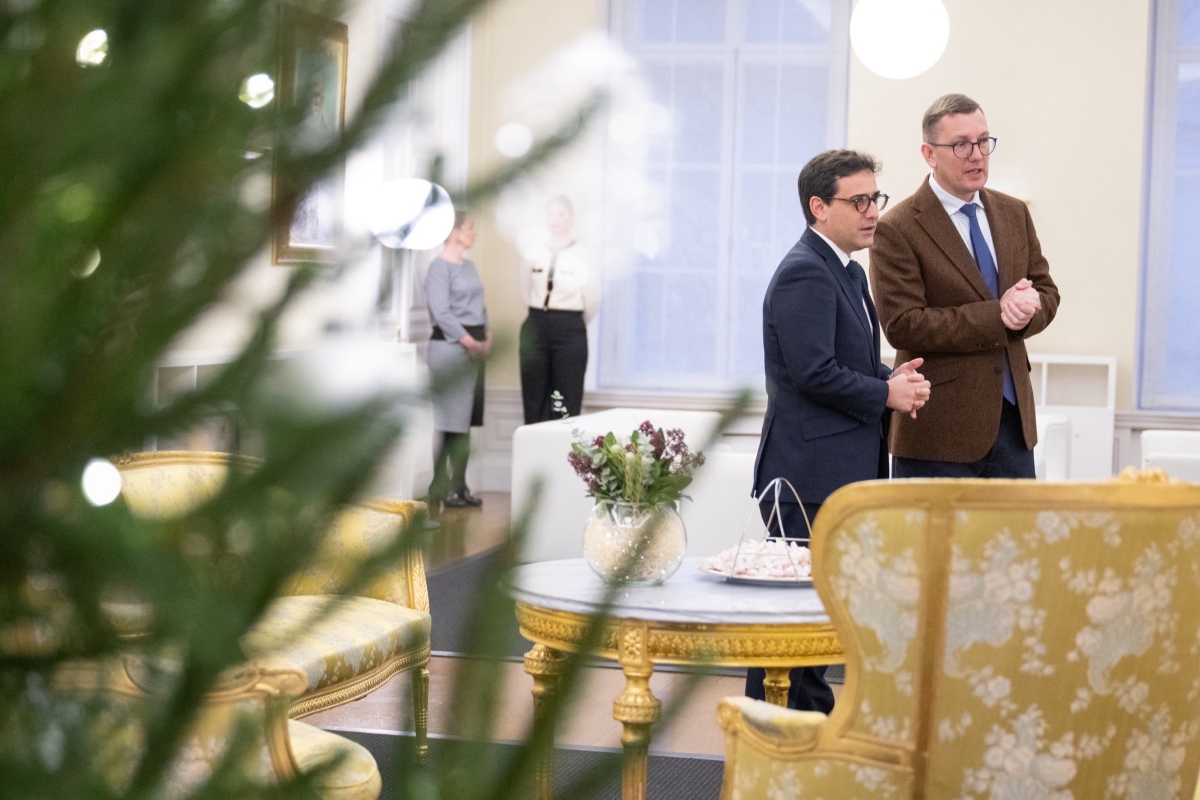
The following day, Séjourné asked Estonian Prime Minister Kristen Michal for “his support to put it into practice with financing and concrete projects.”
“Great cooperation ahead,” was Séjourné’s read on the meeting.
Michal echoed that the pair had a “great discussion,” adding that Estonia already acts as a hub for critical minerals, “and we’re ready to do more.”
An Estonian government spokesperson told Euractiv that Tallinn “definitely has the interest and the capability to operate in the field” but noted that no decision has been made as the wider government has not had time to discuss the plan.
The EU is already scoping out partner countries for their involvement as well. Belén Martínez Carbonell, secretary-general of the European External Action Service spoke with Japan’s deputy foreign minister about the need to “strengthen the supply chains of critical minerals, including rare earths,” according to a Japanese government read-out of the exchange.
Separately, the EU’s delegation to Japan posted on social media on Thursday that “cooperation with trusted partners such as Japan is essential to reduce supply chain risks and overcome vulnerabilities.”
Perhaps unsurprisingly, Carbonell and her Japanese interlocutor “concurred” on this topic. Since Séjourné visited Japan in September, he repeatedly noted that RESourceEU has drawn “inspiration” from Japan. Communications between the Commission’s DG GROW and JOGMEC, Japan’s all-powerful agency for critical raw materials, have intensified since 2023, and JOGMEC has served as template for the proposed European Centre for Critical Raw Materials.
The Commission is mulling new legislative tools to empower the proposed centre to do its job, and expects to make proposals in Q2 2026. In the meantime, the work of finding supporters continues.
(aw)
AloJapan.com