
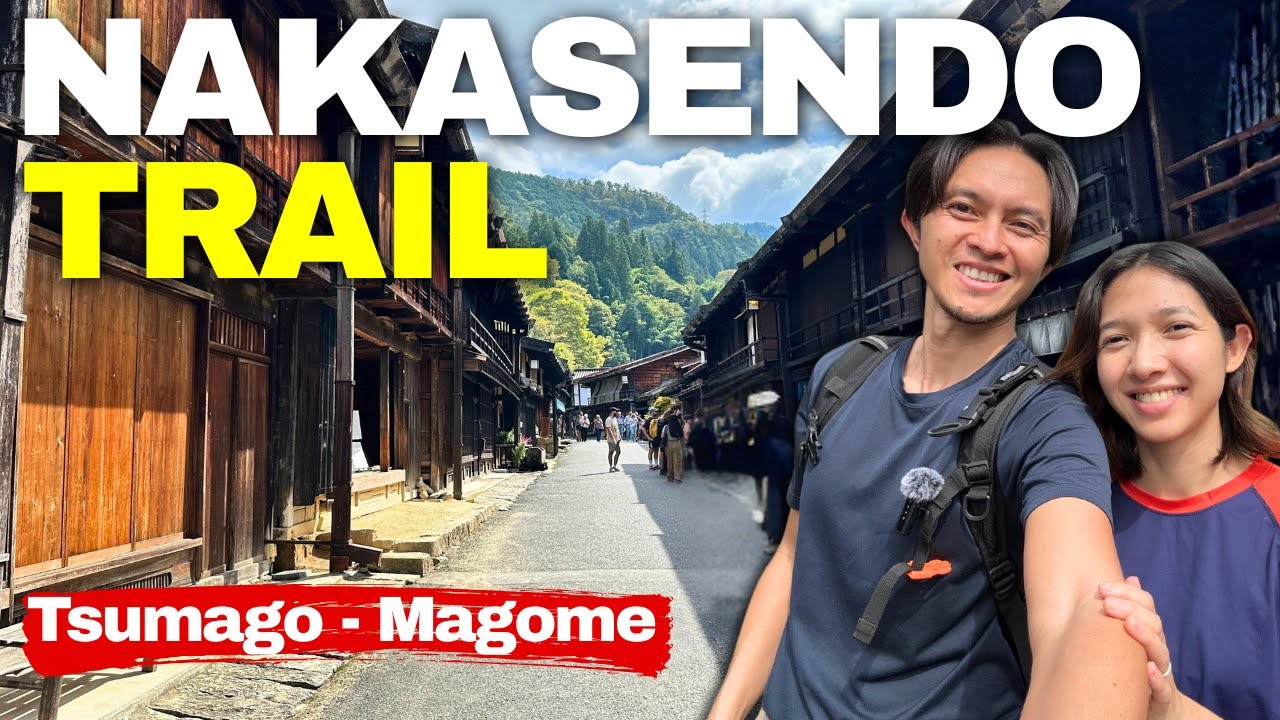
Japan’s Ancient Nakasendo Trail – The Samurai Hike from Tsumago to Magome
Hello guys, welcome to Nakasindo Trail.
This is not just a normal hike. This is a time machine. And today we are taking you to one of the famous
routes here, which is the Tsumago-juku to Magome-juku. We’re going to show you exactly
how to do it, the best direction to walk where to find the hidden waterfalls, how the
luggage storage work, and the must-try local foods. By the end of this video, you’ll
know exactly what to do. Okay, the most common question for
this hike is how do I actually get here? Since the trails in the mountains,
you need a quick travel guide. Here are the three main ways to
reach the Tsumago-Magome area. If you’re coming from Tokyo,
this is the longest journey. You’ll take the Tokaido
Shinkansen to Nagoya station. From Nagoya, you switch the local train
line, which is the JR Shinano Limited Express to Nakatsugawa station. That
entire trip takes about 3 to 4 hours. And if you’re coming from Nagoya,
this is the most common starting point. You take the JR Shinano Limited Express
directly from Nagoya station. It’s about an hour long ride
to Nakatsugawa station. The final stop is Nakatsugawa station.
If you’re heading straight to Magome, you can catch a local bus right
out of the station that goes directly to the Magome Post town.
The ride is about 30 minutes. If you plan to start in Tsumago like us,
you will need one more train stop. You take the local line from
Nakatsugawa station to Nagiso station. From Nagiso, a short bus or a quick taxi will
take you directly into the historic Tsumago-juku. And that brings us to Tsumago-juku.
This is where the magic begins. Ready to step back in time? Hit that like button if
you love ancient history. And let’s get started. Tsumago-juku is famous because it was one of the first towns in Japan to really work hard at preserving its original look. They made rules to keep the power lines
hidden and banned modern buildings. The streets you see now are almost
exactly as they were 300 years ago. Look around us. The whole street is
mostly wood and dark timber and it just has this quiet serious feeling. You know,
these houses aren’t just old looking. They are genuinely built in that traditional
Edo period style. You can see that deep dark brown color everywhere. And
right here on this street, back in the day, travelers were actually required to get off
their horses and walk through the town. Check it out right here. Around this
area, you can see places you can just get into like the house of the Kumagai family. This
is cool because it’s a normal everyday house house from the Edo period and yet this
it’s totally free to go inside. We just stepped in and saw the
simple tools they used and how they set up everything following
their old traditions. It’s a great quick stop to see how the regular
town’s people lived, not just the wealthy lords. Over there is the mom. Before starting the hike, make
sure to check out Honjin Inn. This is where the high ranking officials and travelers rest. You
can check how high ranking officials lived back in the day here, but there’s a fee for 600 yen to
see inside. You can see the huge guest rooms, but pay attention to the roof. You’ll notice small
rocks sitting on top of the tiles. This was done to keep the tiles from flying away when the strong
winds blew down from the Kiso Valley mountains. Okay, you absolutely cannot miss the tourist
information center right here. This place is your one-stop shop for everything.
You can grab your bus tickets here, which is super handy. Plus, you can store
your luggage for only 300 yen or use the awesome service to ship your suitcase to
Magome for between 500 and 1,000 yen. Oh, and if you like collecting stamps, they
have free commemorative stamps you can grab. We just had to take a quick break, so we stopped
at this little tea house called Ebiya. Look around. It’s such a quiet, traditional place. with
these tatami floors and we’re sitting right on cushions at low wooden tables. It feels so
calm and homey. The amazing thing is that this shop is run by elderly women who were so
incredibly kind and welcoming to us. Wow. We just ordered the Kurikinton matcha
set and the Mame daifuku matcha set. The matcha is so smooth and rich,
and the sweets pair perfectly. Good news, we paid around 1,500 yen for
everything. And yes, they accept credit cards here. This is the perfect simple stop before
we get back on the Nakasendo Trail. Tsumago is full of souvenir shops, but
don’t worry too much about your wallet. Most of the larger restaurants and
the shops here actually accept cards and online payments. Just bring extra
cash for the small local souvenir shops. So, we are going to start our
hiking now at 12:20 p.m. And let’s see how long it takes
us to cover everything. So, this whole trail is about 8 km.
And the best part is you seriously don’t have to worry about getting lost like
ever. They have these signs everywhere in both Japanese and English. It’s super simple,
you know. It’s already so relaxing out here. Never in Japan. This is very disrespectful.
No, not just in Japan. Anywhere. Wait, there’s a cat. Okay, so the walk from Tsumago to Magome
is considered the easier direction as it involves like less uphill climbing
than the other way around. So, the path is constantly
changing which we love. One minute we’re on an actual
road, the next we’re over a dirt path, and then we’re walking on these cool ancient cobblestones.
It’s just so peaceful. We’re walking past these beautiful rivers, old wooden houses, guest houses,
and just stunning nature everywhere. And then once you start getting deeper
into the forest, you’re just surrounded by these huge cypress and cedar trees. Like
you’re literally walking in a green tunnel. Wow, it’s beautiful. And also there’s this cool
little mountain viewpoint. So, see these bells? Ring it. That was loud. Yeah.
So, this is a national park and sometimes bears wander around. So, you ring them as
strong as you could to scare them away. Second bell. So halfway through you’ll find a couple of
waterfalls. Um there are two waterfalls here. The Odaki waterfall and
the Medaki waterfall. The “O” for Odaki means male and
the “Me” for Medaki means female. So, this is a good spot to just
relax and cool down for a bit. Okay, so we messed up a little here. So, we
went up those stairs and it just leads to the main road. Skip them. Just head back to the
waterfall entrance. That’s the right way to continue the beautiful trail. Seriously,
stick to the trail. It’s way better. So, we’re halfway through the walk and
mostly um so far it has been like flat, a little uphill and a gentle downhill. And
overall, it’s a doable hike. It’s an easy hike. And here’s a little tip for you guys.
Definitely bring snacks and water. Okay, more cool sights. We’re back on this nice
dirt path with more of those amazing cedar trees and this small gentle river running alongside us.
We just came up on this giant sawara cypress tree. It’s one of the five sacred trees of Kiso. And
they think it’s like 300 years old. That’s insane. Honestly, the walk is just
so incredibly peaceful. Like, there are some parts where
there’s barely anyone around. Look, there it is. The free tea house. Look. This is such a cool
stop, you guys. This is a really old tea house.
And this is what it looks like inside. So, we have made it to this tea house.
They offer free tea here. Hot and cold tea for everyone. Yes. Yeah, you can rest,
here. Wash your hands, use the toilet. Okay, before you leave, you got to do this. Make sure
you leave a nice message in their guest book. And outside there’s this school board with
all these little country flags. Find yours and mark where you’re from. I saw there’s
only one count from Brazil and I’m the third person from the Philippines. So,
it’s cool to see where everyone’s coming from. As we’re finally leaving the forest
part, we’re seeing more of those beautiful old houses. And
look, another shy, cute little cat. And then we walk through this small,
beautiful bamboo forest. And man, the mountain views are just incredible
right now. We’re so lucky with the weather, too. It’s been bright, but not too
hot, which is perfect for hiking. Yeah. So, I think this is the end of the the
forest path. And once you see the rooftop, you’ll know you’re
in Magome. Yeah. So, we have
made it to Magome. Feels different than Tsumago
because it’s on a hill, steep, it’s high, and Tsumago
is more of a flat area. Magome is just really impressive.
You can feel right away it has more activity and livelier
atmosphere than Tsumago. Wow, look at this view. As we walk down, you get
this amazing, beautiful view of the mountains over the rooftops. And if you time it right, you
can even catch a beautiful sunset right here. The street itself is so cool. You’re walking
past those perfectly preserved old wooden houses lined with those water
wheels, little local shops, and places to eat. There are so many souvenir shops
here. They’ve got all these unique traditional Japanese
crafts and local snacks. And look what we just
found. A cat chilling on a rack, totally asleep. What a great quiet
way to end this trip here in Magome. And that’s the finish line, guys. We
made it. The samurai trail is complete. That took us about 4 hours of walking
in total, plus all our little stops. Okay, serious big tip for you guys. If you want
to do this trail, never start from Magome. It is a total uphill climb right out of the
gate. And honestly, you will probably hate it. Trust us. Start from Tsumago. It’s
the way to go for the best experience. So, that’s our Nakasendo journey. This walk was
a perfect day trip and truly a highlight for our time in Japan. If you love history and beautiful
nature, definitely put the Nakasendo Trail on your list. Thank you so much for walking the samurai
route with us. If you found this video helpful, please hit that subscribe button. We
are a small channel and every single subscriber really helps
us keep making these videos. Thanks again and we’ll see
you in the next video.
Step back in time on the Nakasendo Trail Japan! 🥾 This 8km samurai hike from Tsumago to Magome is one of the most beautiful and historic walks in the country — a perfect day trip from Kyoto or Tokyo.
In this video, we hike the preserved section of the ancient route that once connected Edo (Tokyo) to Kyoto, showing you exactly what to expect — from the breathtaking Edo-period villages to the peaceful forest paths of the Kiso Valley.
Highlights include:
🏯 Exploring the perfectly preserved post town of Tsumago-juku
🌲 Walking serene forest trails that feel truly “off the beaten path”
💦 Visiting Odaki and Medaki waterfalls (O = male, Me = female!)
🔔 Ringing the iconic bear bells along the trail
🍵 Stopping at the free tea house rest stop
🏔️ Reaching Magome, a hilltop village with incredible mountain views
We also cover logistics: how to send your luggage, catch the local bus, and which direction (Tsumago → Magome or reverse) is easiest.
Whether you’re planning a Japan itinerary or looking for the best hikes in Japan, the Nakasendo Trail is an unforgettable experience. Don’t forget to SUBSCRIBE for more Japan travel guides and vlogs! 🇯🇵✨
11 Comments
I loved this place! It’s like a time travel
Awesome shots!
Valeu!
Valeu!
😮😮😮
Exelente video
Everything I've read says to go the opposite direction, from Magome to Tsumago because there is less uphill in that direction. I'm confused.
I was in Mongolia earlier this year. We stopped over in Hong Kong. Next time we hope to stop in Japan.
すぐ近くに住んでるんだけど💧
I watched many videos about the Nakasendo Trail and never saw a Brazilian marking our flag! Feliz de ver uma brasileira!!! Ano que vem, estarei aí!
Thank younfor sharing this video – I ak excitednto do thisntrail soon ☺️