
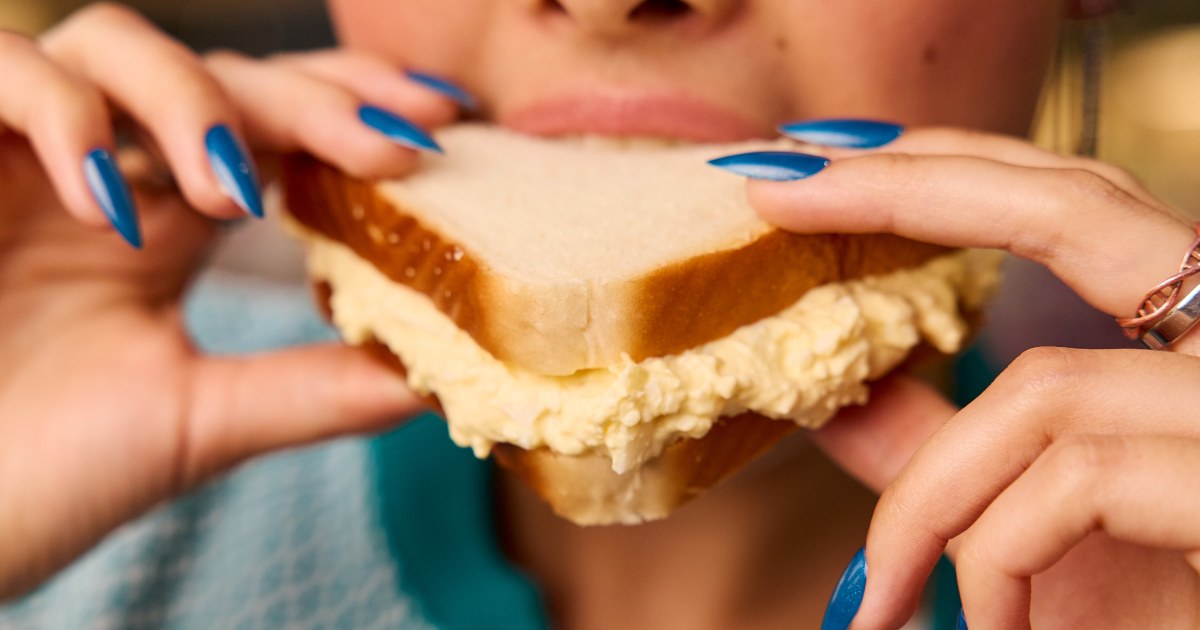
One of the best things I ate on my honeymoon was an egg salad sandwich (tamago sando) from a convenience store. Yes, really.
But it wasn’t just any convenience store. It was a konbini. It was a 7-Eleven in Japan.
The egg salad is creamy, umami and tangy, while the milk bread (shokupan) is pillowy-soft and sweet. In other words, it’s perfect. And, for a long time now, it’s been a go-to snack for locals as well as a must-try item for tourists.
And those of us on the U.S. mainland have long wondered: Why isn’t the food at 7-Elevens here anything like it is in Japan or Hawaii?
As Americans have become increasingly curious about konbini cuisine, 7-Eleven has started to shift its strategy. In 2024, it began “evolving the fresh food assortment” in its stores, introducing items like Mangonada doughnuts with Tajín, barbecue pork sliders, chicken curry bowls and everything breakfast sandwiches.
And now, the king of konbini foods — the egg salad sandwich — is available nationwide at participating 7-Eleven, Speedway and Stripes locations.
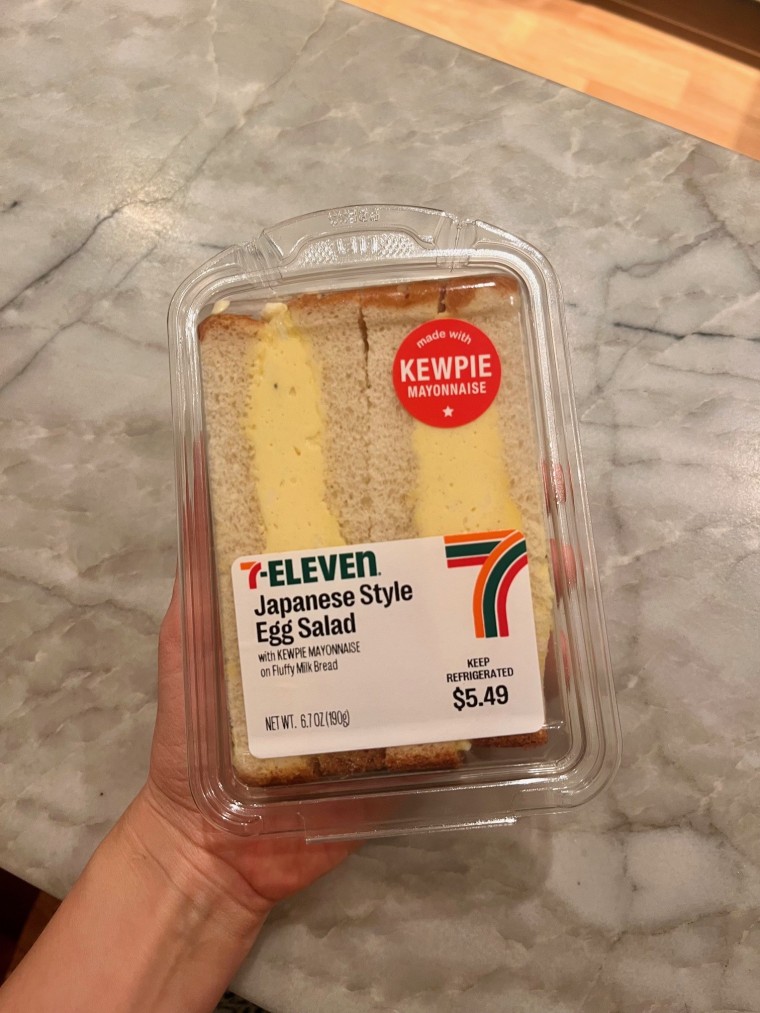 7-Eleven’s Japanese-style egg salad sandwich in the U.S.Emi Boscamp
But many tamago sando enthusiasts, including myself, are skeptical of this rollout. Could it really be the same? We can’t have Japanese-style Kit Kats here, so why would this be any different?
A 7-Eleven spokesperson tells me this sandwich is a “result of extensive collaboration” with Warabeya, a fresh-food manufacturer and supplier that was chosen “based on their original support of Seven-Eleven Japan and 7-Eleven Hawaii.”
After testing “multiple iterations,” experimenting with different egg ratios and Japanese mayos, 7-Eleven landed on Kewpie for a “version that best resembled the iconic Japanese sandwich.”
As for the bread, 7-Eleven says it “worked with several bakeries over the course of more than six months” to get the airy texture just right.
But, to be clear, the stateside sandwich is “not identical” to the Japanese one “due to differences in locally sourced ingredients,” says the spokesperson.
In order to maintain the quality and consistency of the product at scale, 7-Eleven says it relies on a network of local commissaries and bakeries that follow strict food safety protocols and routine audits.
How Does It Compare to the Original?
Right off the bat, I notice a red flag: It has a crust.
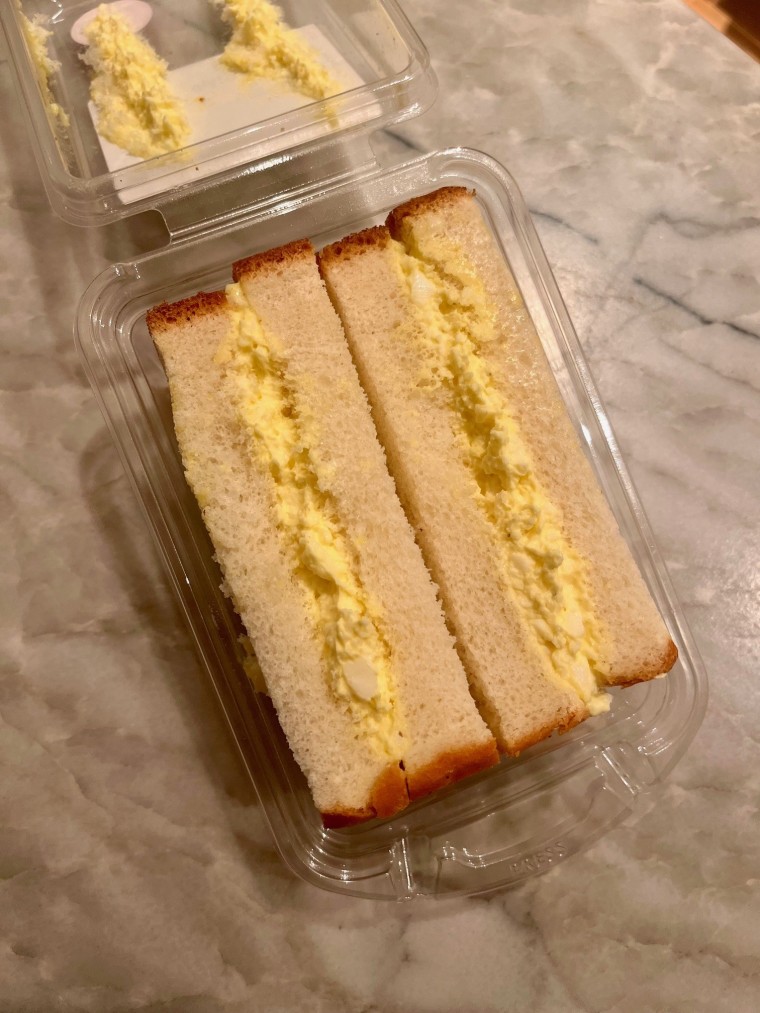 7-Eleven’s Japanese-style egg salad sandwich in the U.S.Emi Boscamp
A defining feature of the 7-Eleven tamago sandos in Japan is that they are crustless. See this photo I took of a couple sandos (including a strawberry one!) in Tokyo a couple years back:
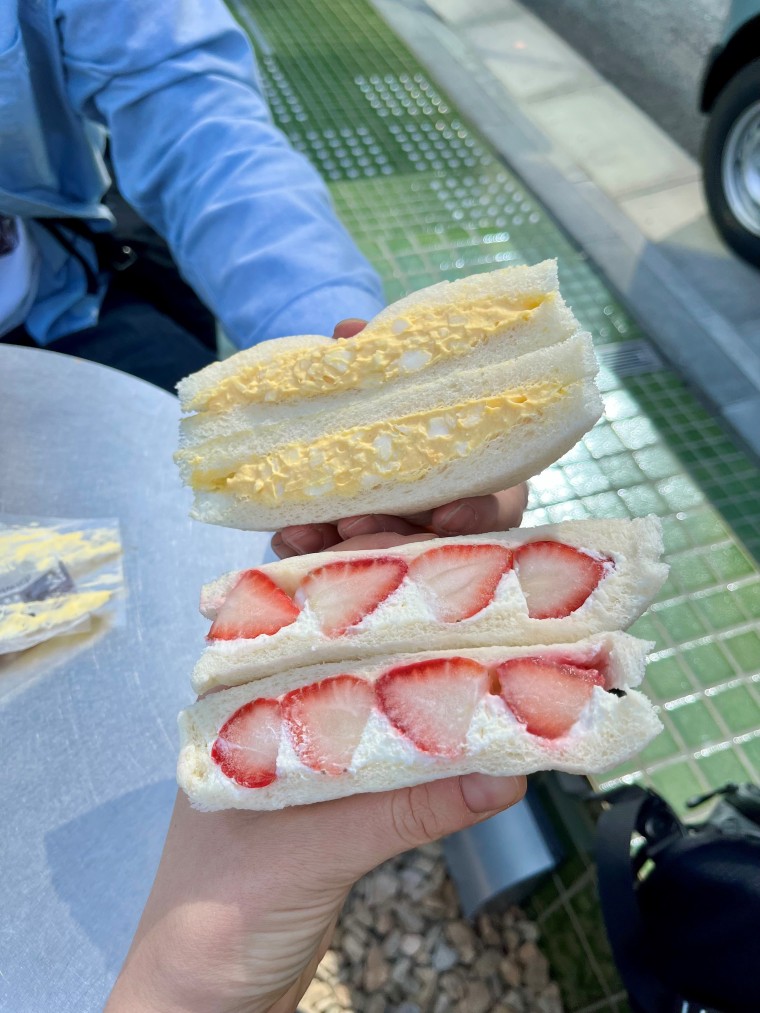 7-Eleven’s famous sandos in Japan.Emi Boscamp
“The key differentiation is that we chose to keep the crust to ensure consistency, freshness and quality,” the 7-Eleven spokesperson tells me. “Maintaining the crust helps protect the bread’s texture and flavor throughout its shelf life.”
I remain skeptical.
The next thing I notice is that the egg salad-to-bread ratio is off — there is not enough egg salad. The mixture should practically be exploding out of its shokupan confines, but instead, it’s neatly contained between the two slices.
That’s two strikes.
I take a bite. Fortunately, there will be no more strikes. It tastes like a tamago sando from 7-Eleven in Japan (as long as you avoid the crust).
Despite the ratios being off, both the egg salad and the bread taste and feel right. They’re creamy and fluffy, respectively.
I am so glad they used Kewpie mayo because that’s the key to the Japanese egg salad. Kewpie only uses egg yolks, which makes it richer, a blend of mutiple vinegars for a complex tanginess, and MSG for that unmistakeable umami flavor.
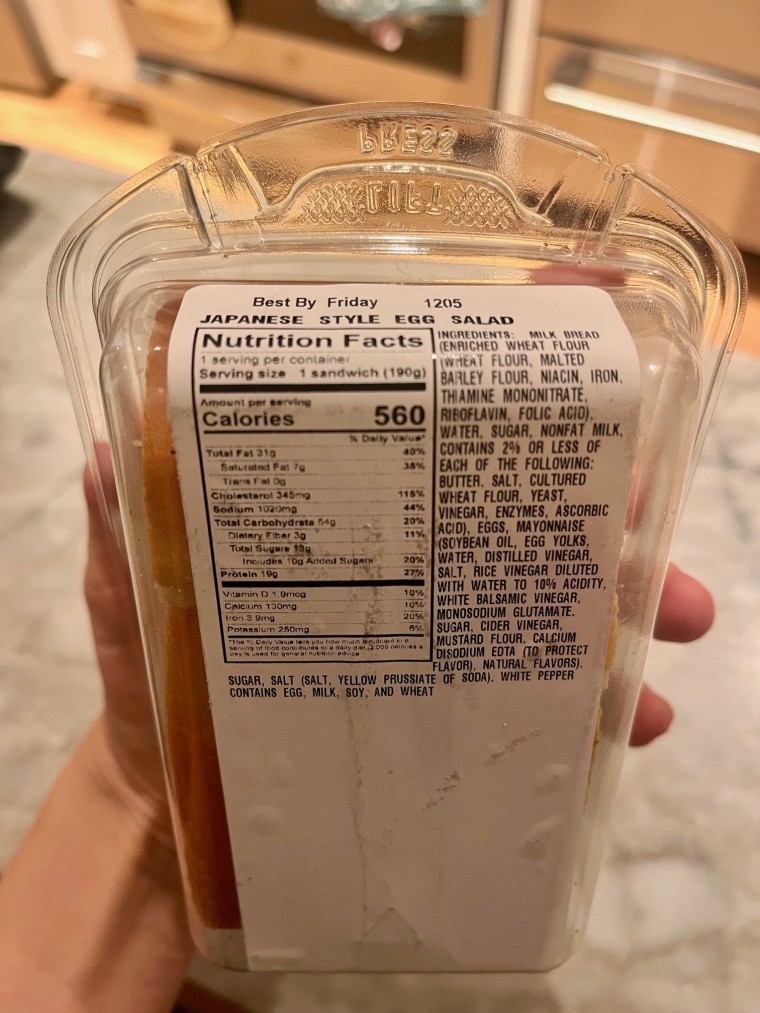 7-Eleven’s Japanese-style egg salad sandwich’s nutrition facts and ingredients.Emi Boscamp
As for the bread, my husband, who is constantly baking bread — including shokupan — says, “It’s fluffy. It’s got a good mouthfeel. It’s not too dense — well, it’s a little dense by the crust, but the crust needs to get cut off. It’s got a nice, sweetness to it with that little creamy undertone.”
All in all, we’re surprised by how successful it is in its emulation of konbini fare.
They just need to up the amount of egg salad, cut off the crusts and, if possible, lower the price (it’s selling for $5.49 in the U.S. versus $2 or less in Japan).
My dad’s solution?
“Buy 2. Open them up. Take the 2 halves that the egg salad goes to and combine them,” he texted me. “Perfecto!”
But that’d set you back $12 for what would ultimately end up being one sandwich.
It’s the price we pay for authenticity, I guess.
AloJapan.com