
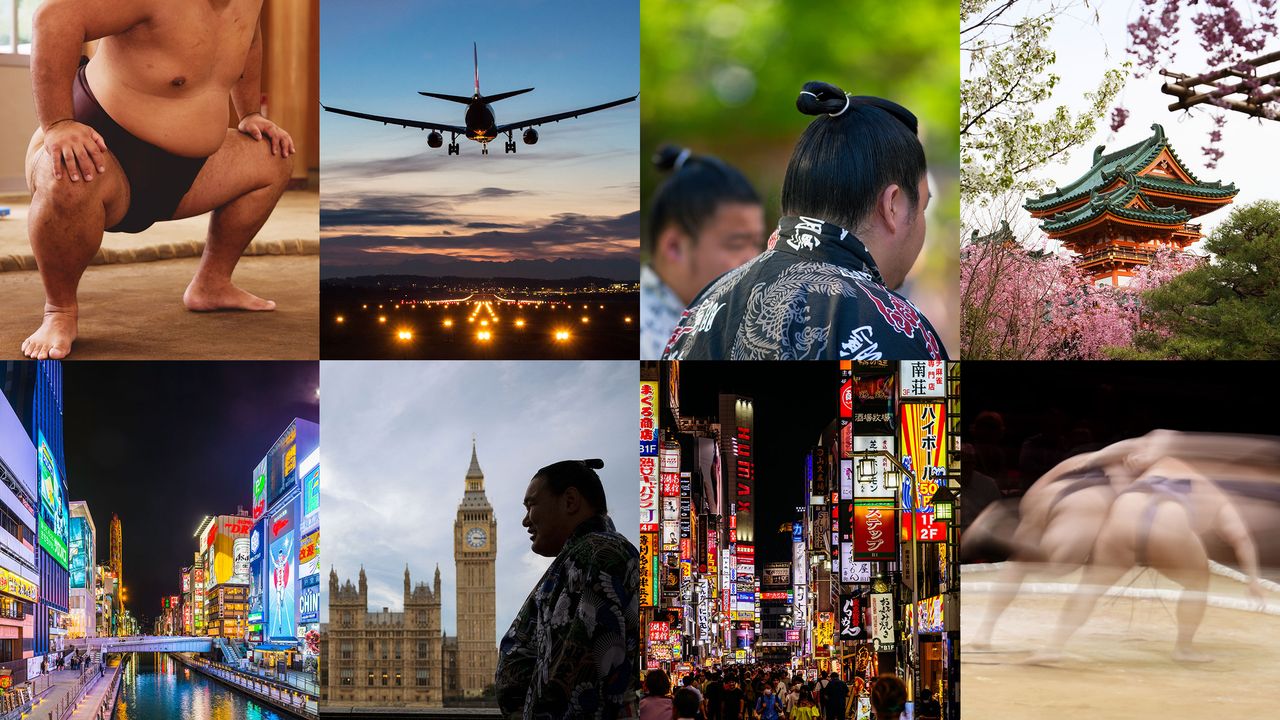
When the Grand Sumo Tournament arrived in London this October, the city reacted as if a global pop star had touched down. For five days, the Royal Albert Hall transformed into a dohyō (sumo ring), alive with roaring crowds. It was a collision of worlds: ancient Japanese ritual unfolding in a Victorian concert hall usually reserved for symphony orchestras.
Sumo’s first visit to London in 34 years sparked an electric response. Tickets disappeared almost immediately; social media feeds flooded with viral clips of rikishi wrestlers cycling on Lime bikes and selfies snapped outside Buckingham Palace; and suddenly Britain had discovered a new sporting obsession.
But beyond the spectacle, something more interesting happened: fans began planning trips to Japan explicitly to experience sumo in its homeland. What started as a novelty became a catalyst for travel.
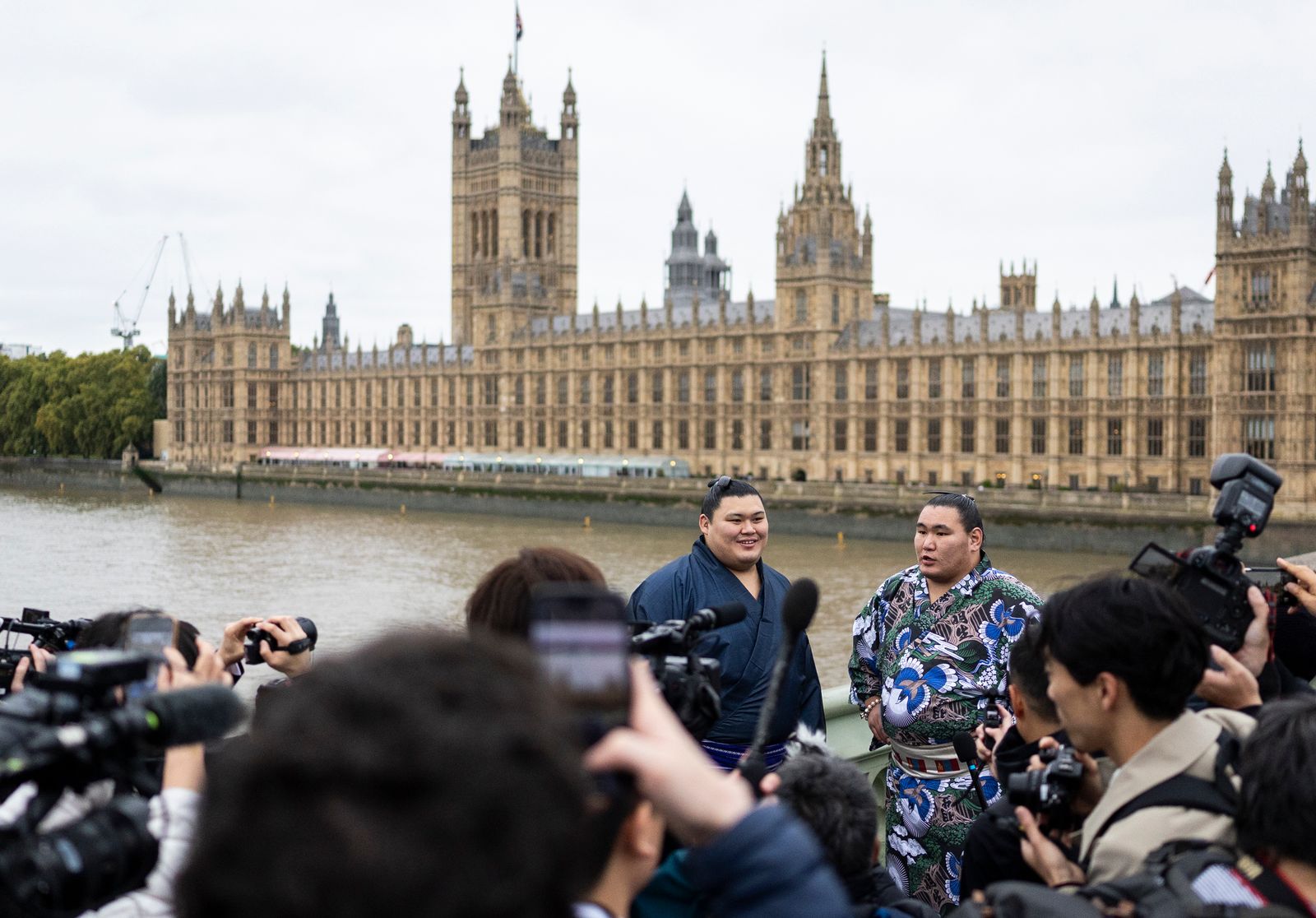
Visiting wrestlers Onosato and Hoshoryu spoke to the media near the Houses of Parliament during a tour of central London.
Getty ImagesFrom viral moment to travel motivation
Sports tourism has exploded in recent years—from cricket fans turning New York into a temporary Mumbai during the T20 World Cup, to Formula 1 followers building holidays around race weekends. Expedia’s latest annual trend report has named “Fan Voyage” as a defining travel trend—a move away from generic spectator sports and toward deeply local, culturally expressive athletic traditions. For Gen Z and Millennial travelers especially, the draw isn’t the scoreboard but the ceremony, the atmosphere, and the chance to feel part of a community. Think Muay Thai in Bangkok, curling in Canada—and now, increasingly, sumo wrestling in Japan.
For many British travelers, the London tournament planted the seed.
AloJapan.com