
After over a decade of a policy of minimizing nuclear power usage, Japan has switched to encouraging the operation of its existing plants to meet growing power demand, including from AI data centers.
AI Power Demand Pushing Nuclear Restarts
The number 6 reactor at Tokyo Electric Power Company’s Kashiwazaki-Kariwa Nuclear Power Station is set to become the company’s first reactor to resume operations after being shut down following the 2011 Great East Japan Earthquake and subsequent Fukushima Daiichi Nuclear Power Station accident. On November 21, Niigata Governor Hanazumi Hideyo approved the restart, and if inspections go smoothly, it could be in action within this fiscal year (up through the end of March 2026).
With demand for electricity expected to rise due to factors including the construction of more data centers to power generative AI services, the government stated in its basic energy plan, approved by the cabinet in February, that it would make maximum use of Japan’s existing nuclear power plants. It set a goal of increasing nuclear power from its current level of supplying less than 10% of total energy to around 20% by fiscal 2040.
Since the 2011 disaster, only 14 of the existing 36 nuclear power reactors (including those under construction) have restarted. In eastern Japan, only the number 2 reactor at Tōhoku Electric Power Company’s Onagawa Nuclear Power Station is operating.
In August, the government announced that it would expand financial support for local authorities in the vicinity of nuclear power plants from those within a 10-kilometer radius to those up to 30 kilometers away. At the Niigata prefectural assembly in October, it was also stated that the national government would cover all costs of building evacuation routes from Kashiwazaki-Kariwa Nuclear Power Station. Meanwhile, TEPCO announced that it would contribute ¥100 billion to encourage the creation of new enterprises and jobs. The Niigata prefectural government approved these moves and accepted the restart of the plant.
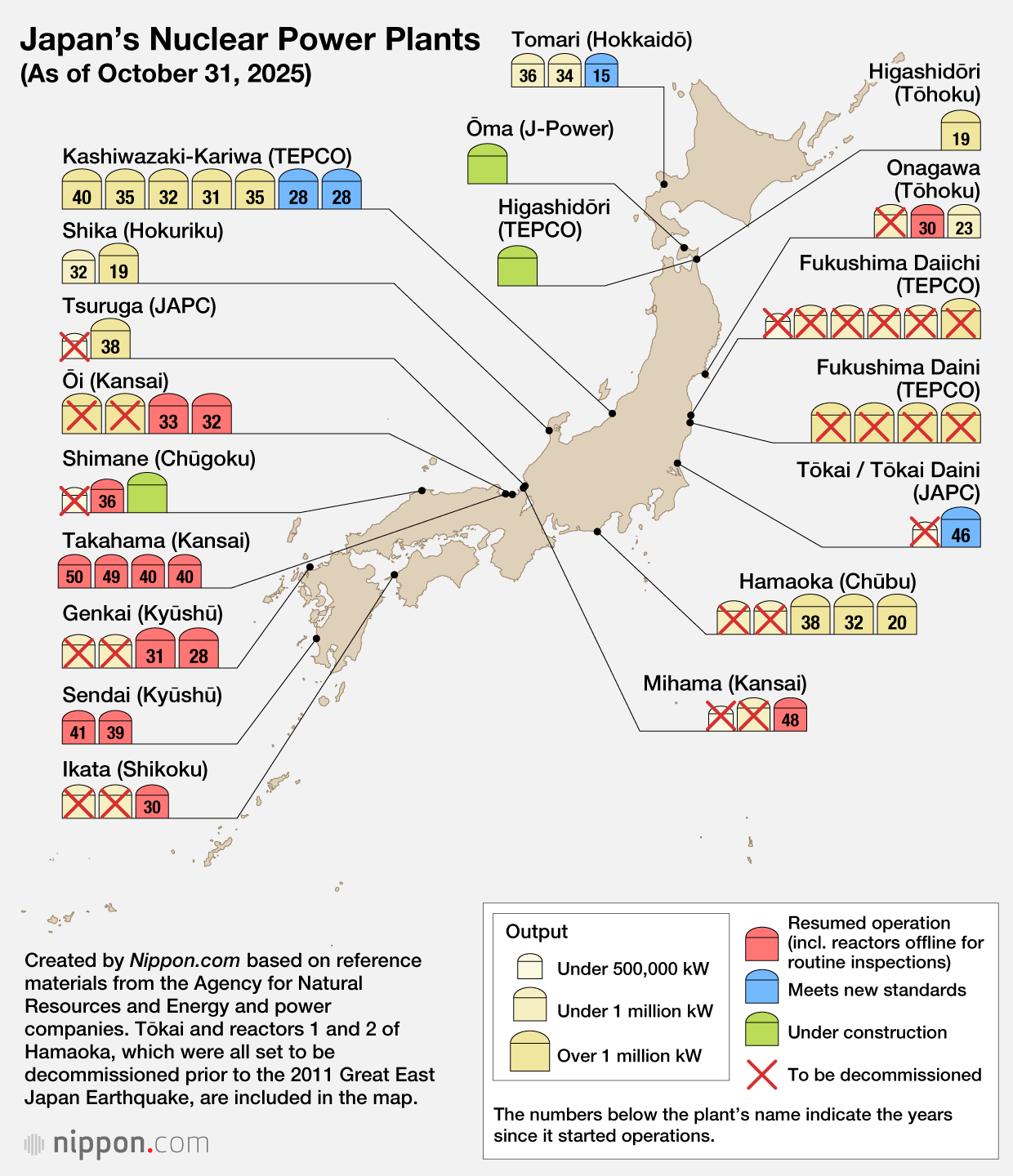
Nuclear Power Plants: Major Developments Since the Great East Japan Earthquake
November 2025 Niigata Governor Hanazumi Hideyo approves the restart of TEPCO’s Kashiwazaki-Kariwa Nuclear Power Station, which is expected to resume operation within the fiscal year, at earliest. It will become the first active TEPCO nuclear plant since the 2011 Fukushima nuclear accident.
February 2025 The government approves a new basic energy plan. This removes a phrase about minimizing dependence on nuclear power, which had been in the document since 2014, instead stating an intention to make the maximum use of existing plants.
December 2024 The number 2 reactor at Shimane Nuclear Power Station (Chūgoku Electric Power Company) resumes operation.
October 2024 The number 2 reactor at Onagawa Nuclear Power Station (Tōhoku Electric Power Company) resumes operation. It is the first plant in eastern Japan to restart after the 2011 Great Eastern Japan Earthquake.
October 2024 The Nuclear Regulation Authority approves Kansai Electric Power Company’s plans to continue operating Takahama Nuclear Power Station in Fukui Prefecture, Japan’s oldest nuclear plant, which will have been in use for 50 years in November 2024. It is the first time for a plant more than 50 years old to receive approval to operate under the present system.
September 2023 Restart of the number 2 reactor at Takahama Nuclear Power Station (Kansai Electric Power Company).
August 2023 Start of the release of treated water containing radioactive tritium that had accumulated at the number 1 reactor of Fukushima Daiichi Nuclear Power Station.
July 2023 The number 1 reactor at Takahama Nuclear Power Station resumes operation after a 12-year hiatus.
May 2023 The GX Decarbonization Power Supply bill is enacted. In order to ensure stable power supply and achieve decarbonization, significant changes are made to the safety regulations stipulating that the operating period for reactors is “40 years in principle and a maximum of 60 years,” making it possible for them to operate for periods of longer than 60 years.
June 2021 Mihama Nuclear Power Station (Kansai Electric Power Company) restarts operation for the first time since being shut down for routine inspection a decade before. At 44 years since it began operation, it is the first nuclear plant to restart despite being more than 40 years old.
November 2020 Miyagi Governor Murai Yoshihiro gives approval for Onagawa Nuclear Power Station (Tōhoku Electric Power Company) to resume operation. This is the first approval for a boiling water reactor, the same type as those at the Fukushima Daiichi plant stricken by the 2011 accident. Tōhoku Electric Power Company aims to start operation after fiscal 2020.
July 2018 The cabinet approves the fifth energy basic plan, with the intention to have nuclear power account for 20%–22% of power generation in 2030.
March/June 2018 The number 3 and number 4 reactors at Genkai Nuclear Power Station (Kyūshū Electric Power Company) resume operation.
March/May 2018 The number 3 and number 4 reactors at Ōi Nuclear Power Station resume operation.
August 2016 The number 3 reactor at Ikata Nuclear Power Station (Shikoku Electric Power Company) resumes operation.
January/February 2016 The number 3 and number 4 reactors at Takahama Nuclear Power Station (Kansai Electric Power Company) resume operation.
August/October 2015 The number 1 and number 2 reactors at Sendai Nuclear Power Station (Kyūshū Electric Power Company) resume operation. These are the first restarts since the introduction of the new standards and follow almost two years without nuclear power in Japan.
April 2014 The cabinet approves the fourth energy basic plan, positioning nuclear power plants as an important base-load power source, while also pledging to reduce dependency on nuclear power as much as possible by introducing renewable energy.
July 2013 New regulatory standards relating to natural disasters and terrorist attacks introduced for nuclear power plants.
September 2012 Nuclear Regulation Authority established.
July 2012 The number 3 and number 4 reactors at Ōi Nuclear Power Station (Kansai Electric Power Company) resume operation, ending a 2-month period of no nuclear power generation in Japan.
June 2012 The operating period of nuclear power plants is limited to 40 years in principle.
May 2012 Tomari Nuclear Power Station (Hokkaidō Electric Power Company) suspends operation of its number 3 reactor. For the first time in 42 years there are no nuclear power plants operating within Japan.
March 2011 The Great East Japan Earthquake and TEPCO Fukushima Daiichi Nuclear Power Station accident take place.
Data Sources
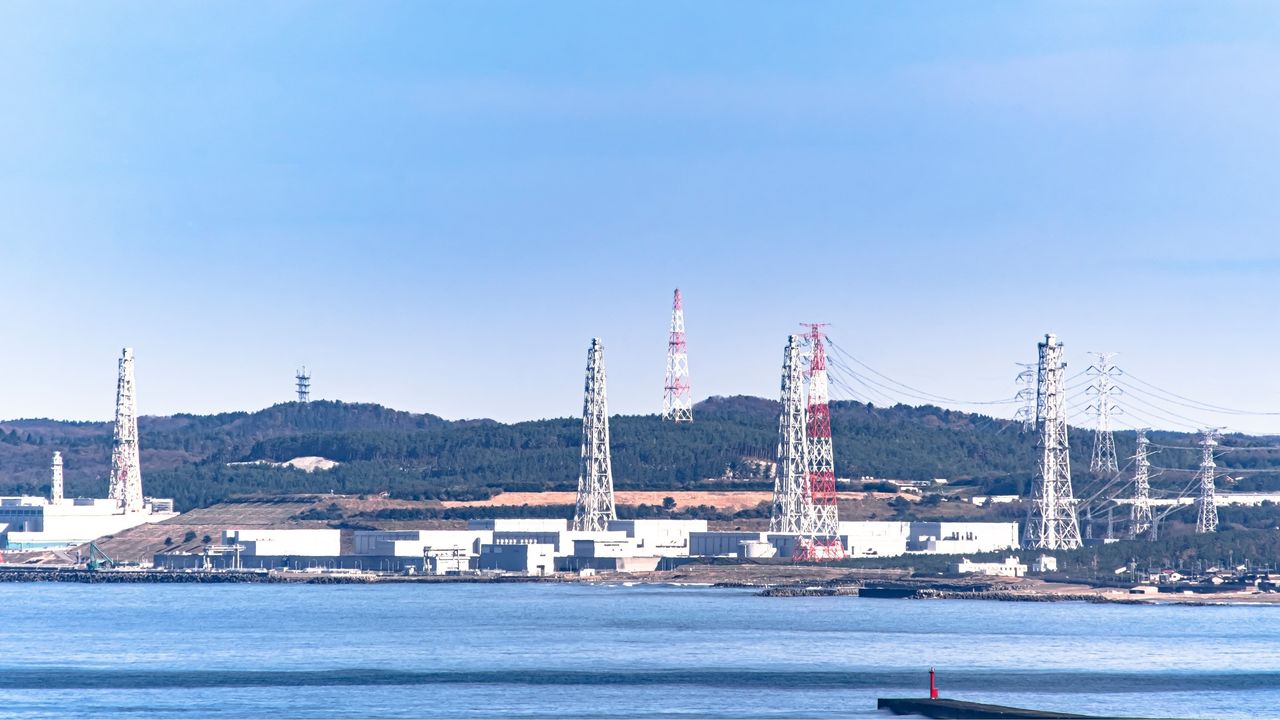
(Translated from Japanese. Banner photo: Kashiwazaki-Kariwa Nuclear Power Station in Niigata Prefecture. © Pixta.)
AloJapan.com