
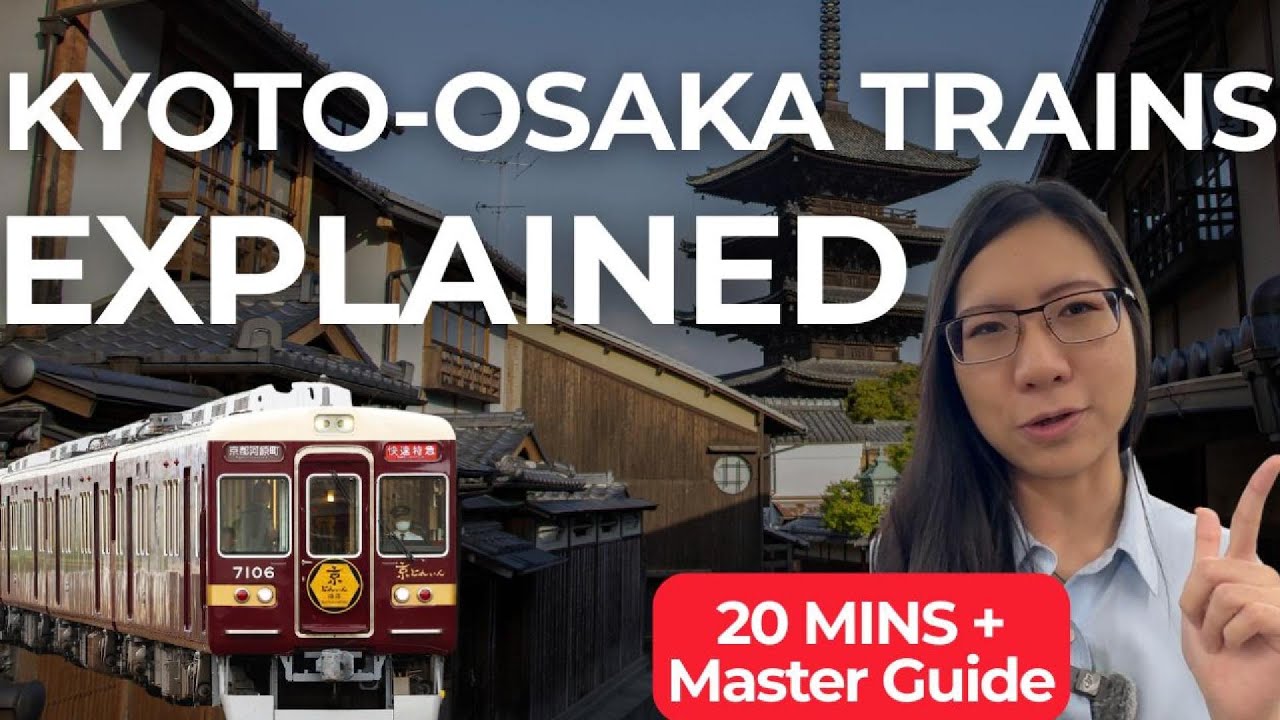
Kyoto–Osaka Trains/Gateways Explained | Ultimate Guide to save your time in “Kansai” area
Most people think getting around Osaka. Kyoto is simple until they actually arrive and they find out Osaka station isn’t even a stop for a bullet train and has a bigger underground than Shinjuku which misleads first timers. Kyoto station not even close to the temples and shrines you want to see. But that’s when the confusion begins. Plus, this is a train map for the Kai region, which includes Kyoto and Osaka. Another confusing spaghetti if you seen the one from Tokyo. But don’t worry, this video is to save you from those exact frustrations and time wasting. We’ll get you the right choice for a destination. Let’s go. [Music] Before we jump into discussions, you need to ask yourself, which gateway are you coming from to get to Kai? Here’s one master map, six gateways. Let’s break them down and you’ll thank yourself for checking this. Is it from Osaka, Kyoto, or from Coobe? This is because hopping on the Shinkansen to Kyoto or Osaka is not always the best option. So, let’s break down these other better options to get to your Kai city of choice. Watching Mount Fuji from the bullet train on the way might be on your bucket list. However, you can also get a glance of Mount Fuji from Tokyo to Osaka flights, which could be totally quicker to get to your final destination, especially when you visit Osaka or Coobe first. International direct flights to Kansa airport or Coobe airport or domestic flights from Hanib or Narita to Osaka Itami airport might be the best option. As mentioned, unlike Kyoto station, which accommodates Shin Kansen, it actually arrives at Shin Osaka station, not at Osaka station, which is the main downtown hub in Osaka. Shin Osaka station is about 5 minutes, one station away by local JR train from Osaka station or 6 minutes by Osaka Metro Midsuji line, the red line. If you are in a hurry, Osaka airport might be the best gateway, especially when you visit Osaka directly from Haneda airport after international flights. Given the flight from Tokyo to Osaka takes less than half compared to when you travel to Osaka by Shin Kansen from Tokyo or Shinagawa. Many experienced travelers or local businessmen from Tokyo prefer flying to Itami because it’s faster, if there are no delays, and a bit cheaper than the Shinkansen, even when you fly with Gel or Anna. And of course, Kai airport has lots of good connections to other cities, especially Asian cities. We’ll also cover how to get to Osaka from these two airports to the city later because that knowledge saves your time. Lastly, if you’re heading to Coobe first, keep in mind that even the Shinkansen doesn’t stop right in the city center. The closest bullet train stop is Shin Coobe, which is up on a hill about 5 minutes by subway or taxi from Sanomia, Coobe’s downtown. That’s why Coobe airport might be a good connection even from Tokyo. Also, because it’s only a one train ride away from Coobe Sanomia and Coobe airport, it provides good access to Himeiji Castle and Fukusaki, a town of Yokai with lots of local monster monuments. Plus, Kobe airport accommodates international flights from other Asian cities like Shanghai and Seoul. Okay, lastly, let’s look how to travel from the gateways to the main spots on Kansai. Because depending on where you land, Kansai airport, Itami, or even Shin Osaka station, your route to the city can be very different. The most common choice from Kansai International Airport to Osaka Station or Kyoto station is a JR Haduka Limited Express. It takes about 15 minutes to Osaka station and 75 minutes to Kyoto. comfortable with reserved seats and some space for luggage. If you get lucky, you can say hi to Hello Kipi on the train car. If you want to save money to Osaka station, you can also take the airport express called Kangu Kaisoku, but it takes 15 minutes extra. But if your hotel is at the southern part of Osaka city like Namba, doi or shin Imamya, then you should take the Nangai Rapid. The Nangai Rapid is the stylish blue train that runs directly to Namba in 40 minutes. In case you need to carry lots of luggages to these areas, the airport liin bus is your best choice because there are limited spaces in Haduka or airport express. If you’re coming by Shinkansen from Tokyo to Osaka, you’ll arrive at Shin Osaka station. From here, take the JR Kobe line just one stop away to JR Osaka station or transfer for the Midsuji subway line bound for Namba and Tinsaiashi about 15 minutes total. Again, Itami airport is the favorite for experienced travelers from Tokyo given as the biggest of Osaka’s domestic hubs to other cities. The easiest way is the airport limosine bus to Osaka Omea. It takes about 25 to 30 minutes with direct service to major hotels and train stations. That’s way better than traveling from Kai airport. That is why Itami is a local favorite. By bus, you can also travel to Osakan, Kyoto, Coobe, Universal Studios, Ns destinations, while you can use Wi-Fi on board. You can also use Sika and Ioka for payments. to Osaka Umeda. You can also take Osaka Monreal and then hop on Hanku train at Hotu Gik station. But you might feel the connections are a bit troublesome unless you are an Osaka local. So our recommendation is to take buses. Now we are going to move on to the basics to grasp useful inter and inner city transportations. [Music] So before we dive into the details, the concept region has seven major railway companies that connects the cities. JR West, Hanku, Khan, Hansin, Kintatsu, Nangai, and Osaka Metro. Looks confusing, right? But don’t worry because we’ll make sure to explain everything to you in simple terms yet in detail. JR West which covers the whole of Kai and the Chugoku region even from Fukui to Okayama and Hiroshima. Hungu known for its maroon colored trains covering northern Osaka including Mino. Famous for its beautiful waterfall, the mountain side of Coobe and western to central Kyoto area. This train is also known as a highclass locals favorite, but it still offers a reasonable fair. Kihan that runs between northern Osaka to east side of Kyoto’s Camo River. Suppose you’re a first timer to Kyoto or Osaka. Then you take this train because this takes you to Fushimi Inari, a shrine known as the thousand to gates, Shimizu Gojo, a few minutes away from Kiomizua and Guon Shijou, where you can see lots of Michael Hansen which runs between Osaka Umeda to Coobe or Osaka Namba to the bay side of Coobe. If you’re bored with touristy side of Kansai, take this train because it takes you to the street side of Osaka and Coobe which you’ll definitely love. At Osaka Namba, this directly connects with Kintatsu. That means you can travel from Coobe to N by just the one train ride via Osaka Namba. So, as you can probably see, Kintatu has long reached between Osaka, Kyoto, Nada, N, and Aagoya. If you want to taste the deep beauty of Kansai, such as Isaiah Shrine or Asuka, the oldest capital in Japan, you should buy the Kintasu Rail Pass. The Kai region is packed with tourists, especially in Osaka and Kyoto. So, these traditional attractions offer you a great getaway from the city to taste the calm sight of Kansai. Nangai connects between Kansai airport and southern Osaka such as Namba and Shin Imamia. If you want to taste the life as a traditional monk in Koasan, this is the one to take too. Now you might be wondering why is there such a vast train system in this region which is not even Tokyo. So before we explain the tips for intercity transports, let me explain just a little bit of why. So as some experienced Japan travelers know, the Kai region is actually known as the Kingdom of Private Railways. In fact, Kansai is where Japan’s private railways were born. Starting with the Hungi Railway, which opened in 1907 as Japan’s very first private commuter line. Back then, these private railways didn’t just build train lines. They built entire communities, department stores, housing, even amusement parks, all developed along their routes to attract passengers, which pushed up Osaka to the biggest city in Japan around 1925. Yes, Osaka was bigger than Tokyo. That’s why today companies like Hanky, Hansin, Khan, Kintatsu, and Nangai still run parallel to JR. each connecting slightly different parts of Kansai and locals embrace those varieties. Okay, then let’s get into the real tips and then break them down by cities. Once you get inside Kyoto, Osaka or Coobe and when you just want to move quickly between cities, Jerro’s special rapid service called Shin Kaisoku links those three cities in under an hour. So normally you don’t actually take the shink consen from Kyoto Shinosaka and Shin Kobe. I mean you can and it’s actually faster but people generally don’t do that. This is because Shin Kaisku is more handy and cheaper than Shinkansen which she don’t have in Tokyo. This is what Osaka locals would say. It’s surprisingly frequent and covered by the Japan Rail Pass. No extra fees for the special express. That’s a bargain price that no one talks about. Indeed, it’s one of the most efficient commuter routes in Japan and is probably local favorite pick as Osaka locals tend to be impatient. However, when your destination is only a specific sightseeing spot, that’s when the private railways could become unbeatable. So, let’s break down by cities which trains are the best for you to hop around efficiently. [Music] First, between Osaka and Kyoto. This is the most important part in this video since lots of travelers choose to stay in Osaka to avoid expensive accommodations in peak seasons. and three trains connect Kyoto and Osaka. As mentioned before, the VR special rapid service is the fastest as it takes about just 30 minutes from Osaka station to Kyoto station and trains depart every 15 minutes. If you are going between Kyoto and Coobe, JR Special Rapid Service is also the best pick. It’s just an hour ride without a transfer. But remember, since Kyoto station is at the southern edge of downtown Kyoto, great for Shinkansen connections, it’s not so close to attractions such as Gon or Adashyama except Kyoto Tower. So once you step out of Jerro Kyoto station, you’re expected to use buses or metros, which we’ll talk about later in this video. If your destination is around Gon Kio Mizadura Temple or Eastern Kyoto in general, then Khan Line is a smoother ride from Osaka. It takes about 50 minutes from Osaka’s Yoduya Bashi station which is one station away from Osaka Umeda to Kyodo’s Gillion Shijou right by the famous Kamogawa River. You can hop on to Khan also from Kyobashi station which is the eastern hub of Osaka city. And if you prefer visiting Arashyama or stay at Kawamachi Kyoto’s downtown shopping district, take the Hanky line from Osaka Omea station. It’s scenic, inexpensive, and drops you right near Guillion and Ishki Market. And you don’t want to miss this. On weekends, you can hop on Kyo Train Galaku, which is a train that has a Japanese garden inside. And that’s why Hanky is the fanciest Osaka Kyodo connection. Next, Osaka to Nada. So, lots of travelers like to do a day trip to Nada from Osaka. If you’re staying in the southern downtown of Osaka city such as Namba, the Kintatsu line is the most convenient because it takes you directly to Kintetsu Nara station just a few minutes walk from Toai Temple and Nara Park where you can say hi to deers. If you are staying around Osaka station, Tenoji or Shin Imamia, JR is a better option because JR runs a train called the Yamatoji rapid departing from Osaka station through the Osaka loop line connecting stations like Osaka station, Chin Imamia, Tenoji and all the way to Janara Station. However, note that JR Nara station is slightly far away from Nar’s main attractions compared with Kintatsu Nara station. Between Kyoto and N, you have similar choices. Kintetsu or JR Jr. Kyoto and Kintatsu Kyoto stations are right next to each other. But if you want a day trip to Nar from Kyoto, Kintatsu is the better choice. My recommendation is the Kintatsu Limited Express because it is the most comfortable with reserved seats and modern interiors. JR also operates the Nar line from Kyoto, a slower local route that passes through Fushimi Inari. Or if you want to visit Uji, a massive matcha town, JR is a better choice. For Osaka to Coobe, the JR Special Rapid Service is once again your fastest choice out of three choices with 25 minutes to Sanomia, the heart of Coobe from Osaka. And if you keep on board the same line, you’ll reach Kimi and his world famous castle in about an hour. If you’re coming to Coobe from Osaka Namba or if you for cheaper fair and less transits, the Hanchin line is absolutely your greatest option. It connects Osaka number directly to Coobe Sanomia. So Hanchin line gives the most local street vibes in Osaka. Why? Because it runs right next to the Hunchin Tiger’s home stadium called Koshen which is the sacred place for Japanese sports fans. Plus this train line directly connects Nara with Coobe as well as to Osaka Umeda station which is right next to JR Osaka station. So if you are based in Osaka and are to hop between Osaka, Coobe and Nada via Amagasaki, use the Hunchin line. Well, that’s an unspoken tip. You can also take Hungu, but this is basically locals commute train. So it’s not recommended for first timers because it doesn’t offer the fastest access to major touristy destinations between Osaka and Coobe. However, Hungu covers Kansai’s most well-off areas, especially between Osaka and Coobe, so everything is extra gorgeous. So, if you want to see how Kansai Madams or Kai gentleman’s lives look like, hopping on Hungu is a good idea, every single Kai local would say Hungu is a rich person’s vehicle. So whether you’re visiting temples, tasting coobe beef, or heading to the sea, understanding these intercity roots will help you save time and see more of what Kansai truly has to offer. [Music] So most travelers arrive at Kyoto Station by Shinkansen from Tokyo. And yes, Kyoto station is huge. But I’m sure this isn’t your final destination. So, here’s a quick guide to help you find your way through the destination. Kyodo station has two main exits. Kalasuma exit. This is the main front of the station. You’ll find city buses, hotels, and the central shopping area. Make sure you get off at this exit unless you are a taxi user. Hachi exit. So, this is the southside. is quieter and connects to airport buses, taxi stands, and shopping malls like AOT. Plus, if you need to drop your luggage into a coin locker, you’ll get the best chance to find vacant lockers here. If you’re heading to Niju Castle or Adashiamyama, take the JR Sunin line from Kyoto station. It’s quick and direct. So, remember Kasuma exit for buses and city access, Hachi Jojo for airport buses and taxis. Once you understand these two exits, Kyoto becomes a lot easier to explore. For destinations like Higashiyama or northern Kyoto, go down to the Kyoto subway through the underground passage. The Karasuma line will take you straight to the city center. It’s better than taking the bus from Kyoto station as buses are overloaded most of the time. Okay, as you may know, Osaka is the kitchen of Japan and has lots to see. So, when you travel around Osaka, there are two train lines you’ll use the most. The Osaka Metro Midsuji line and the Jer Osaka loop line. First, the Midsuji line. This red subway line that goes to northern Osaka all the way to Sakai City is basically Osaka’s main artery. It connects all the city’s hot spots in one straight line. Mino where the Katsuoji the most popular temple and famous waterfall in Osaka is located. Shin Osaka the Shinkansen station Osaka umemed Shin Saiibashi Namba and Tenoji. If you only remember one line in Osaka, this should be it. Go. If you’re booking hotels for your first visit to Osaka, stick to the area alongside this line to save your time. Also, the JR Osaka loop line is another important one. It’s a circular train route like the JR Yamanote in Tokyo, connecting major spots like Osaka station, Tenma, the food alley, Suduashi, Osaka’s biggest Korean town, where you can get intense smells of Korean barbecues, even in the train station. Osaka Castle Park, Henoji, and connections to Universal Studios Japan. Remember, when you go to Universal Studios Japan, you need to get a transfer at Nishikujo Station. Great tip, if you stay at Universal Studios Japan, but when you have extra time, you can actually take this boat to Chaposa, the lowest mountain in Japan, which is right next to the Taupan. From Chakimo, it takes only 2 minutes and is for free. So, this is Tempo Zen, the lowest mountain in Japan. specifically is 4.53 m. We’re not kidding. Lastly, don’t ever ever get into Osaka underground if you are a first- timer to Osaka. Why? Because this underground is bigger than Shinjuku. Instead, take a pedestrian bridge. I’ll save you the time and confusion. [Music] So that’s concise train system in a nutshell. JR for the backbone, private railways for spot-on transfers for sightseeing and subways inside the cities. We have used one of JR West’s special passes for this trip. You can see that Jaw West and companies like Kintatsu, Hungu, and Kihan offer special package tickets for tourists. The ticket I have used from JR also covers the express trains including Haduka, Konotoi, Kinosaki and Hashidate. [Music] Those trains go to the northern side of Kyoto and Hyugo including Kinosaki onsen where you can enjoy tattoo friendly onsen hopping and Amano Hashidate scenery. Kuroshio that goes to Wakayama with his nice beach and the famous Nachi waterfall. Thunderbird that goes to Kanazawa. Super Hakuto that goes all the way to Toto. Again, if you are visiting Kyoto or Osaka, that means you’ll be able to enjoy the depth of these regions, too. You can travel to those cities with an IC card such as Sika, Ioka, or Pasmo like Tokyo. So, don’t forget to grab a card or download the app when you embark to Japan. Share this video with your friend if you thought this was helpful. And don’t forget to hit the subscribe button.
Getting around Kyoto, Osaka, or even going to Nara, and to Kobe can be confusing—even for smart and experienced travelers.This video is your 20-minute master guide to navigate Japan’s most complex railway ecosystem.
Whether you’re coming from Kyoto Station from Tokyo, Kansai Airport (KIX), Itami Airport (ITM), Kobe Airport (UKB), Shin-Osaka, or traveling between cities like Kyoto ↔ Osaka / Osaka ↔ Nara / Osaka ↔ Kobe, this guide will help you pick the fastest, cheapest, and easiest routes.
If you want to save time, avoid mistakes, and travel Kansai with confidence, this video is for you.
What You’ll Learn (Chapters)
0:00 – Why trains in Kyoto & Osaka confuse many travelers
1:02 – Key Gateways: How to choose your entry point (KIX / Itami / Kobe / Shin-Osaka)
6:37 – Kyoto–Osaka Basics: 7 major railway companies you must know
9:16 – Why Kansai is called “The Kingdom of Railways”
11:48 – Inter-city guide: Fastest routes between major cities
11:56 – Osaka ↔ Kyoto explained
13:48 – Osaka ↔ Nara explained
14:43 – Kyoto ↔ Nara explained
15:20 – Osaka ↔ Kobe explained
17:11 – Inner-Kyoto Basics: Which exit to use? How to reach your destination?
18:43 – Inner-Osaka Basics: Remember two key line (Midosuji Line & Osaka Loop Line)
20:57 – Advanced Tips: Going beyond Kansai (Wakayama / Mie / Kinosaki / Amanohashidate / Tottori)
🚄 This Video Covers:
JR West Special Rapid (Shin-Kaisoku) as a key tip to save your time
Hankyu, Keihan, Hanshin, Kintetsu, Nankai, Osaka Metro
Shinkansen realities: Shin-Osaka ≠ Osaka Station, Shin-Kobe ≠ Kobe Sannomiya
Best routes for Kyoto, Osaka, Nara, Kobe
Hidden gems like Kyo-Train Garaku, Kintetsu Aoniyoshi, Rapi:t, and more
Why Kansai private railways are legendary
How to avoid tourist traps & confusing station layouts
The simplest way to choose trains like a local
Who this guide is for:
✔ First-time visitors to Japan
✔ Travelers planning Kyoto + Osaka in the same trip
✔ People trying to avoid crowds and long transfers
✔ Anyone who wants a clean, simple explanation of Kyoto, Osaka, Nara, Kobe rail network
🔔 Subscribe for weekly Japan travel guides and insider advice:
📱 Follow us for quick tips & reels:
Instagram: / https://www.instagram.com/travelsmartjapan/
TikTok: https://linktr.ee/Travelsmartjapan
🌏 Book our private tour: https://linktr.ee/Travelsmartjapan
#KyotoTrain #osakatrip #JapanTravelTips #TravelSmartJapan #WomenWhoTravel
AloJapan.com