
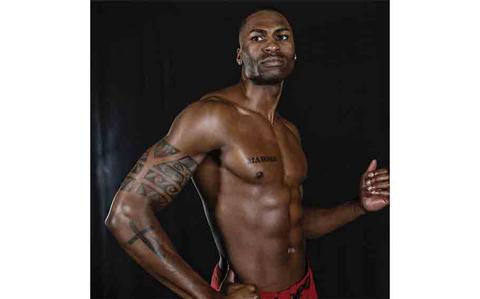
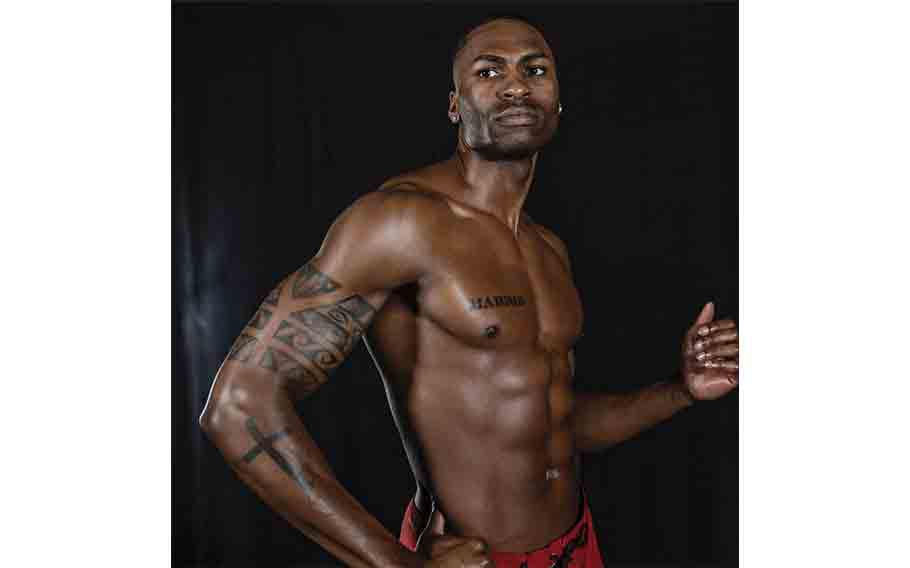
Julius DeAndre Harris (Photo by Luis Samayoa/Stripes Okinawa)
Julius DeAndre Harris is soldier and bodybuilder who I first met in Advanced Individual Training at Fort Meade, Md., right before COVID-19. Soon after, we were both stationed in South Korea and stayed in contact ever since. I reached out to him to get his take on tattoos and if there was any stigma about them in the world of bodybuilding.
Q. How has the military influenced your views on body image, tattoos and self-discipline?
A. I believe in the idea of getting tattoos as a representation of who you are or what you’ve been through. A lot of my tattoo’s kind of tell a story about me. My compass tattoo on my forearm shows that I am always on a journey and follow a different path set before me. The wings on my wrist speak to my free-spiritidness and that I’m someone who likes to take off whenever and wherever. And quite possibility my favorite tattoo is my ring finger tattoo. My spouse and I have matching anniversary tattoos, and they just symbolize our love for one another. It’s cutesy, but I love it.
Q. What made you get into bodybuilding?
A. I had always taken pride in how I looked and was constantly on the search for new ways to keep my body active. I just fell in love with the thought of being on stage and having people cheer for me – it was as close to being famous as I figure I would get!
Q. Do you hesitate to get tattoos when it comes to bodybuilding?
A. I think the military is ahead of its time when it comes to combining professionalism and tattoos. I got my first tattoo back in 2014, before I joined the military, and was told to be careful getting multiple tattoos or getting them in places that are visible to employers because it might affect your ability to move upwards in the corporate ladder. I think that is why I subconsciously got my first tattoo on my back, so that potential jobs would not see it (something I totally regret). But the military has always led with proficiency and capability. Tattoos aren’t the topic of discussion when it comes to leading, training or mentoring. Tattoos don’t hinder a person’s ability to fight and win the nation’s wars. And frankly, tattoos aren’t something that are seen as an issue when it comes to being a leader in the Army. Of course, there are one-off’s that certainly have no place in the military – tattoos that are distasteful and crude don’t belong – but for the most part, they are just an extension of people’s passion and help in the humanizing aspect that behind and outside the uniform, we are people.
Q. Do you feel like there is a stigma in body building when it comes to tattoos?
A. When it comes to bodybuilding and physique competitions, I feel as though the stigma of tattoos is also changing. Since I have only been competing since 2020, I don’t really know how it was beforehand. So far, no one has given me negative thoughts or comments about the tattoos, but I believe with all the tanning spray that competitors use, no one really cares what tattoos you have.
Q. What advice do you have for others in the military or inspiring bodybuilders?
A. Get the tattoos that you want and don’t let anyone hinder you from doing so. Depending on the tattoo, it shouldn’t affect how you are as a leader or how well you do on the stage! Treat every task (or competition) with the same amount of energy and effort and let your tattoos speak about your character outside the office (or stage).
Q. Any last thoughts?
A. Tattoos can be a beautiful form of expression for one’s personality. I hope that we continue the trend of not labeling or judging others by the tattoos they get or even the placement of them. A person’s level of professionalism should be dictated by their actions, and someone’s physique should be judged by a panel of reputable physical experts. Everything outside those realms should be up to you to decide.
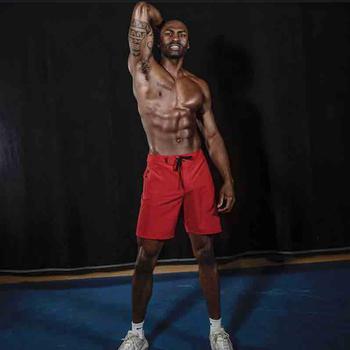
Julius DeAndre Harris (Photo by Luis Samayoa/Stripes Japan)
AloJapan.com