
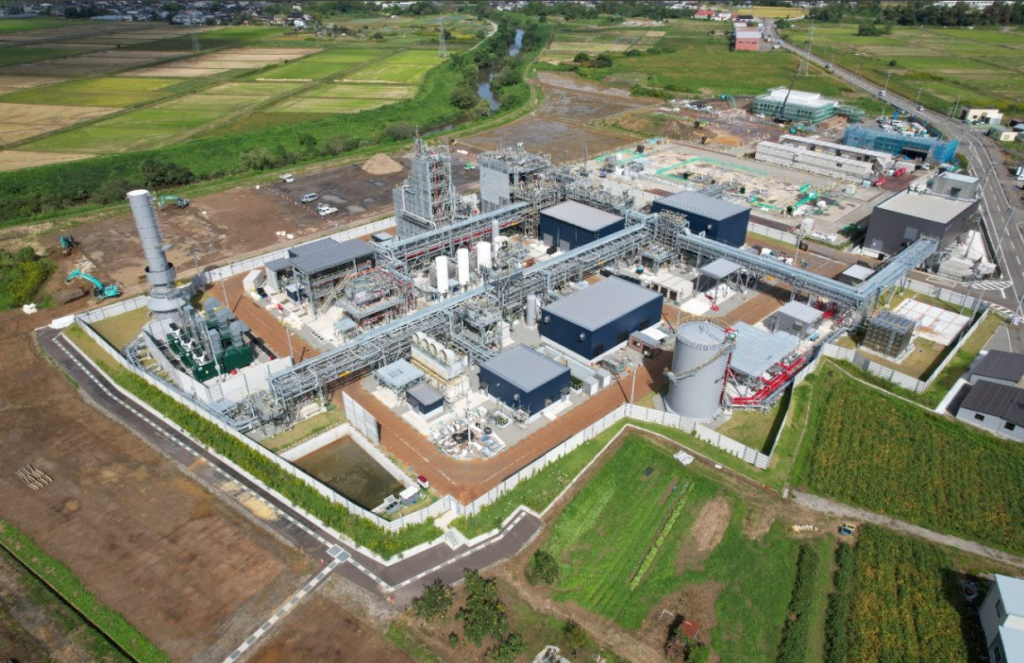
INPEX has inaugurated its Kashiwazaki Hydrogen Park in Niigata Prefecture, marking a major milestone in Japan’s effort to build out low-carbon hydrogen and ammonia supply chains.
The facility represents one of the country’s most advanced demonstrations of blue hydrogen production paired with full carbon capture, utilization and storage (CCUS), built around a “local production for local consumption” model.
Located in the city of Kashiwazaki, the complex brings together several key components: a blue hydrogen and ammonia demonstration plant, a natural gas gathering station, and a power generation unit that feeds electricity directly into the local grid. The feedstock is natural gas sourced from the Minami-Nagaoka field, one of Japan’s most productive reservoirs.
“Soil carbon credits should stay in the food value | RSS.com
A defining feature of the project is its end-to-end carbon management. CO2 released during hydrogen and ammonia production is captured and injected into depleted geological formations in the Higashi-Kashiwazaki field.
The effort supports broader CCUS development in Japan by generating new data on underground storage capacity, reservoir behavior, and long-term operability.
Relevant: Inpex Advances Bonaparte Offshore CCS Project With Pre-FEED Launch
Part of the hydrogen produced on-site is converted into ammonia using an innovative low-pressure, low-temperature synthesis process.
This ammonia is then distributed within Niigata Prefecture, while the electricity generated at the facility supplies customers connected to the local grid. Together, the components demonstrate the feasibility of a low-emission, regionally anchored hydrogen-ammonia value chain.
Building Japan’s Domestic Hydrogen Ecosystem
The initiative benefits from support by NEDO, which is subsidizing the blue hydrogen and ammonia production elements. JOGMEC is also playing a role through its research into CO2 storage potential, contributing technical insights to Japan’s emerging CCUS sector.
Kashiwazaki Hydrogen Park forms a central pillar of INPEX Vision 2035, the company’s strategy to shift toward low-carbon and renewable energy solutions while maintaining domestic energy security. The demonstration phase runs through 2025, with INPEX considering extensions under its own funding once government subsidies conclude.
The project underscores Japan’s accelerating push to scale homegrown hydrogen production, boost CCUS capability, and support regional decarbonization pathways, while providing a blueprint for future integrated hydrogen hubs across the country.
Read more: Kawasaki Heavy Industries Completes One Of Japan’s Largest DAC Pilots
AloJapan.com