
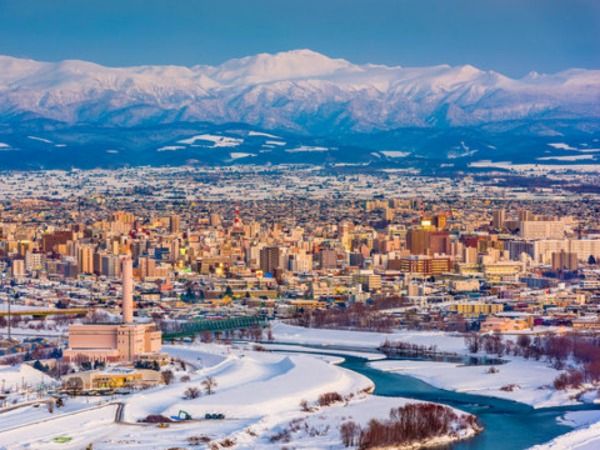
The Governor of Japan’s Hokkaido prefecture, Naomichi Suzuki, has given notice that his region wants to pursue a license to operate an integrated resort with a casino facility. This was in a statement on Friday and represents a new direction taken by the prefecture as it awaits word from the national government to initiate a new round of IR applications. The governor said that Hokkaido would further develop its approach to the IR initiative, considering the changes happening in the tourism landscape due to the global pandemic.
A Second Chance After Stepping Back
Hokkaido’s relation with the IR policy has been complicated. The prefecture previously weighed entering an application process in the first round but pulled out of contention in late 2019 before that round had even started. With new opportunities on the horizon, Hokkaido is positioning itself differently: Governor Suzuki stated that his prefecture intends to “establish a revised version of the Basic stance on IR of Hokkaido prefecture and a Hokkaido-style IR concept.” This new concept, he explained, would take full advantage of the unique characteristics distinguishing Hokkaido from other regions.
A City Positioned for Opportunity
Tomakomai, the port city on Hokkaido’s central south coast, has emerged as a prime candidate to serve as the proposed IR location of the prefecture. Such positioning reflects strategic planning on behalf of regional officials who see the geographical and economic advantages of this port city as fitting well with such a massive development project.
Building on Draft Plans and Learning from Others
While Hokkaido has already put together a draft outline of its revised basic IR concept, this framework has yet to be disclosed to the public. The governor also indicated that the prefecture’s updated approach will integrate key lessons learned from the district development plans that other local governments submitted during the nation’s first application round. By learning from what was successful and not in prior proposals, Hokkaido aims to build a far more persuasive and reasonable application.
Adapting to a Changed World
Governor Suzuki emphasized that Hokkaido’s revised IR policy would take into serious consideration the dramatic changes that have taken place in the international IR landscape since the pandemic, including the way operations of international IR operators, tourism trends, and MICE markets have changed in the post-COVID world. The national government has identified MICE as a means of securing higher-spending international visitors to Japan.
A Comprehensive and Thoughtful Approach
The governor then went ahead to outline a number of key factors that will form the basis of Hokkaido’s consideration. These include the proper functions and scale of an IR facility, the expected direction and magnitude of economic benefits, strategies for maintaining sustainable long-term operations, current issues surrounding gambling addiction, and environmental factors regarding facility construction. By weighing these elements, Hokkaido tries to show serious consideration both for potentially large benefits and genuinely valid concerns with such a big project.
Hokkaido’s Path Forward into a Competitive Landscape
Governor Suzuki also acknowledged that Hokkaido’s refreshed position would review pros and cons for IRs in light of the ways in which Hokkaido’s locational environment fundamentally contrasts with major metropolitan centers such as Osaka. This kind of contextual awareness suggests that the prefecture recognizes it needs to develop a bid unlike the likely first-round winner: Osaka’s MGM Osaka partnership between MGM Resorts International and Japan’s Orix Corp.
The governor said Hokkaido would promptly assemble an expert panel consisting of scholars and experts in order to perform comprehensive deliberations. The panel would take into account the findings of Hokkaido’s 2018 expert panel, as well as study the Osaka IR case study. Governor Suzuki vowed to continue to hold consultations with municipalities and other related organizations, promising to report on the prefecture’s deliberation progress to the Hokkaido Prefectural Assembly at each stage of development. The revised basic stance would eventually form the basis for the governor’s decision on whether or not Hokkaido will submit an IR District Development Plan to national authorities.
Preparing for Competition
Hokkaido enters this potential second round with a clearer vision and strategic preparation than during the first application cycle, though significant competition and uncertainty remain about future application timelines and the national government’s intentions.
Source: GGR Asia
AloJapan.com