
To begin, could you share your thoughts on tourism in Japan—how it has evolved over time and what continues to draw visitors?
Japan has always attracted travelers with its rich culture, deep history, and incredible regional diversity. This appeal remains strong even after more than 150 years of modernization. When we speak of Japanese culture, I sometimes wonder whether it can truly be described as a single, unified culture. In my view, it’s defined by two key complexities. First, the intermingling of old and new—ancient traditions coexist seamlessly with cutting-edge modernity. Second, there’s a fusion of Eastern and Western influences that has shaped a distinctly Japanese aesthetic and identity.
Back in the 1990s, Professor Samuel Huntington of Harvard University published a well-known work titled The Clash of Civilizations, in which he divided the world into nine major civilizations. Interestingly, Japan was the only country designated as a standalone civilization—a testament to the uniqueness of Japanese culture and society. I believe that this distinctiveness is something many overseas visitors intuitively feel when they come here, and it’s perhaps one of the reasons we see so many returning guests. Each prefecture in Japan, despite being relatively small, carries its own distinct culture and flavor. That diversity—combined with our ability to present it in an accessible, welcoming manner—may be what continues to captivate international travelers.
Looking ahead, the Japanese government has announced an ambitious goal of welcoming 60 million international visitors by 2030, with projected tourism-related expenditures reaching ¥15 trillion annually. What role does your hotel group envision playing in this growing tourism landscape?
It’s true that Japan’s tourism sector is aiming for exponential growth. Our role, as a hotel group with a long-standing history, is to create authentic, memorable experiences that align with the values and expectations of modern travelers. Both Shiba Park Hotel and our Tokyo property share a common philosophy: while they are relatively small in scale, they offer a warm, intimate atmosphere and a calm, homelike setting. This sense of “being at home away from home,” combined with subtle but meaningful cultural touches, is at the core of what we offer.
Each hotel also presents Japanese culture in its own unique way. At Shiba Park Hotel, we curate exhibitions from a library of over 1,500 pieces of art and cultural materials, displaying them throughout the hotel—including lounges and public spaces—to create a rich, immersive environment. Guests can enjoy cultural tea experiences or participate in workshops such as kintsugi, the traditional art of repairing ceramics with gold, which beautifully reflects the Japanese philosophy of embracing imperfections.
At Park Hotel Tokyo, we’ve taken a different approach. There, the entire guest experience revolves around art. We invite contemporary Japanese artists to create “Artist Rooms”—fully realized, original art installations where guests can stay and feel as though they are a part of the artwork itself. The idea is that our guests become part of a living, creative narrative during their stay.
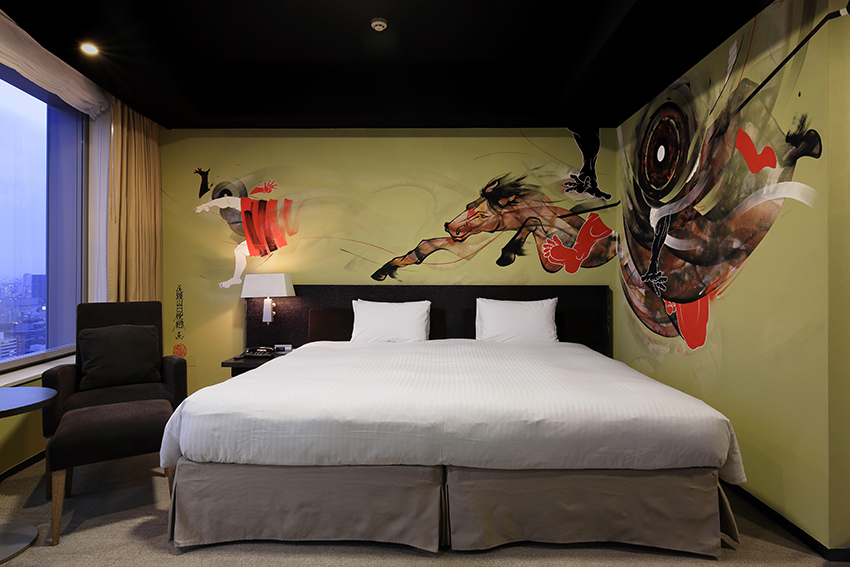
Park Hotel Tokyo Artist Room Kabuki
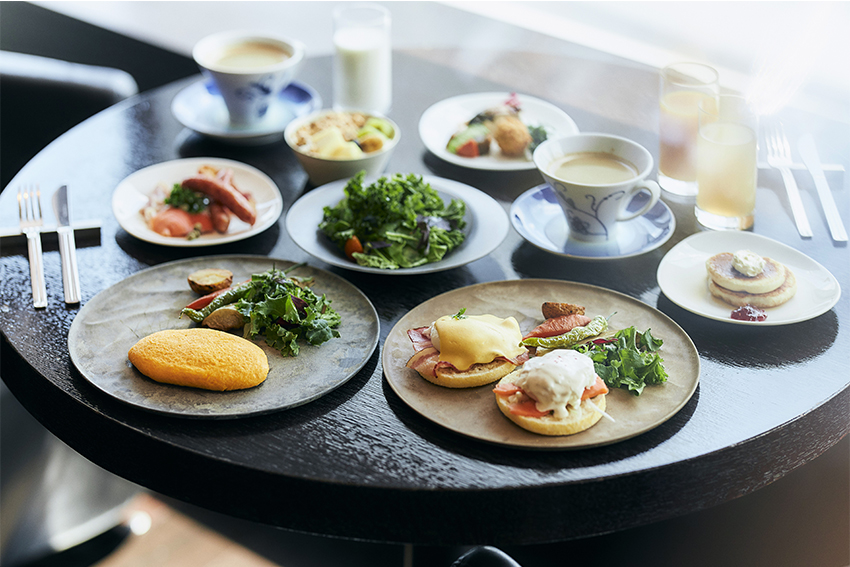
Park Hotel Tokyo breakfast
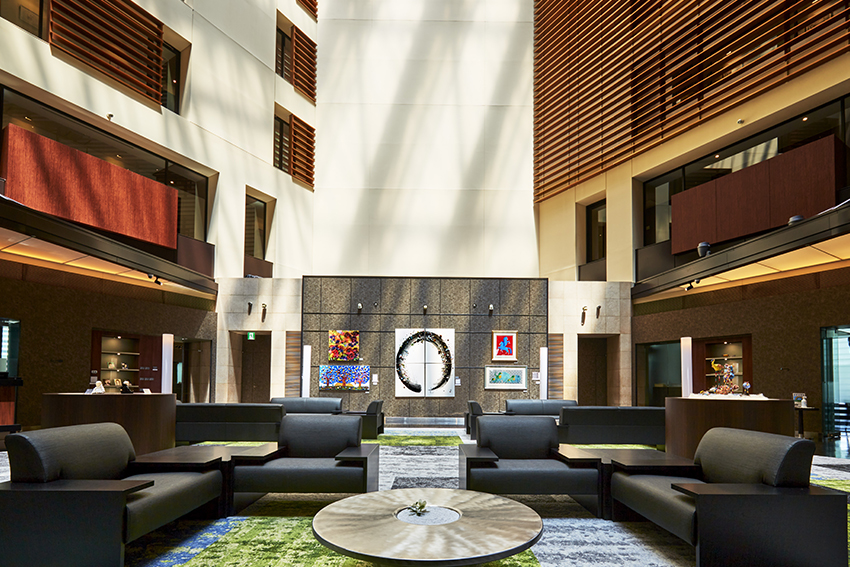
Park Hotel Tokyo art exhibition Atrium
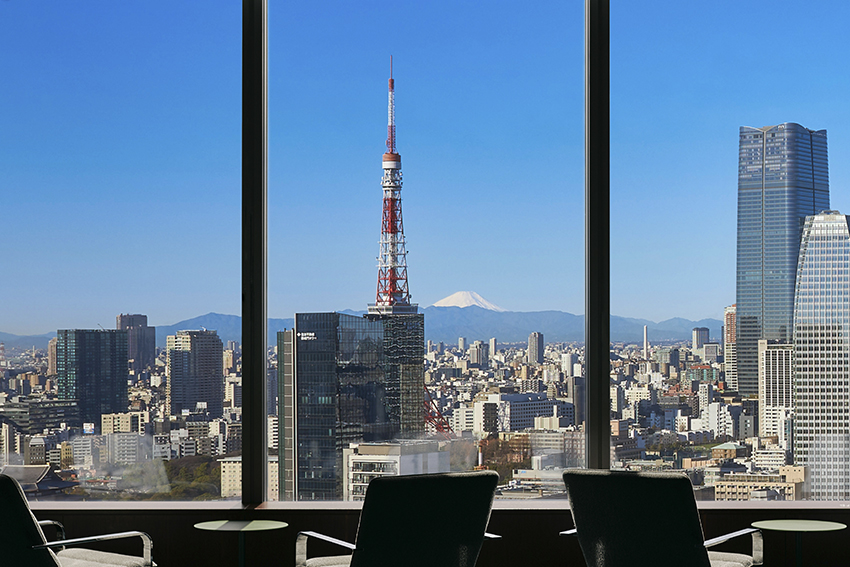
Park Hotel Tokyo Atrium
Previous Next
What has been the most memorable or impactful guest experience created through these initiatives? And are there plans to introduce new cultural programs in the near future?
That’s a difficult question to answer definitively, as we haven’t conducted formal research on which experience resonates most with guests. However, based on anecdotal feedback and general sentiment, I would say that what truly stays with people is the overall atmosphere—the feeling they get while staying with us. It’s not necessarily any one program or activity, but rather the cumulative sense that they are part of something meaningful and reflective of Japanese culture. The kintsugi and tea ceremony workshops, for example, only take place once every week or two, so it’s a rare and intimate opportunity. Yet, even those limited engagements contribute to an overall ambiance where guests feel deeply connected to the cultural spirit of Japan.
Going forward, we plan to continue developing programs that allow guests not just to observe, but to participate in and internalize the essence of Japanese aesthetics and hospitality.
Let’s talk about communication and accessibility. A study last year found that nearly 20% of foreign tourists experienced anxiety due to language barriers. How is your hotel addressing this issue to ensure a smoother experience for international visitors?
We have a three-pronged approach to tackling the language barrier. First, English proficiency is a mandatory requirement during recruitment. This has been our policy even before I joined the company. Second, we provide ongoing language training for staff, which has been a core part of our employee development strategy for many years. Since joining the RIHGA Royal Hotel Group, we’ve been able to leverage their excellent training programs as well—including specialized language instruction—which further strengthens our team’s communication skills.
Third, we’ve embraced international diversity in staffing. Especially at Park Hotel Tokyo, we’ve welcomed employees from around the world, including the UK, U.S., Italy, Spain, Lithuania, Nepal, China, and Hong Kong, among others. While visa regulations mean some of them can only stay for four to five years, their presence contributes significantly to a multicultural, multilingual environment that benefits our guests. This international staffing model, coupled with robust training and clear hiring standards, has allowed us to offer a comfortable and reassuring experience for travelers from all over the world.
Have you set specific targets for inbound tourism? And do you plan to shift your primary target markets in the future?
At present, we don’t have specific numerical targets for inbound guests. However, we are in the process of finalizing a new four-year midterm business plan, which we aim to complete by the end of this year. That said, we do not intend to change our core target markets.
For both hotels, our main markets continue to be North America, Europe, and Oceania. In fact, last year, approximately 95% of our guests were international visitors, and about 70–80% of them came from those three regions. This has been consistent for many years, and we have no intention of changing that focus. That said, forecasting exact inbound ratios is extremely difficult. Frankly, after COVID, we never imagined inbound would bounce back to 90% or more so quickly. The hospitality industry is inherently volatile—what we might call a “fluid business”—so setting hard numerical goals can be risky and, in my experience, often unrealistic. Rather than chasing numbers, we focus on maintaining clarity and consistency in our target direction.
Your hotel has a long history dating back to 1948. Could you share a bit about your origins, and how you’ve navigated major shifts in Japan’s economy and society over the decades?
Our hotel was originally one of eight facilities established during the postwar era under the guidance of GHQ and the Japanese government. These were commercial hotels aimed at supporting Japan’s economic recovery by accommodating foreign visitors. That’s where our story began. Over the decades, we’ve weathered many ups and downs—from economic recessions to natural disasters like the Great East Japan Earthquake, and of course, the COVID-19 pandemic.
After the earthquake, our operations—being based on lease arrangements—needed to recover quickly. At that point, our management team redefined the hotel’s identity. We spent a year in serious discussion and decided to create a clear and distinctive concept rooted in art. That led to the transformation of Park Hotel Tokyo into a cultural and artistic hub. Later, during the COVID crisis, we applied a similar philosophy to Shiba Park Hotel, rebranding it as a “Library Hotel.” The smaller scale of the property gave us the flexibility to create a bold, focused concept that allowed us to bounce back again. That ability to adapt—always through a cultural lens—is something we take pride in.
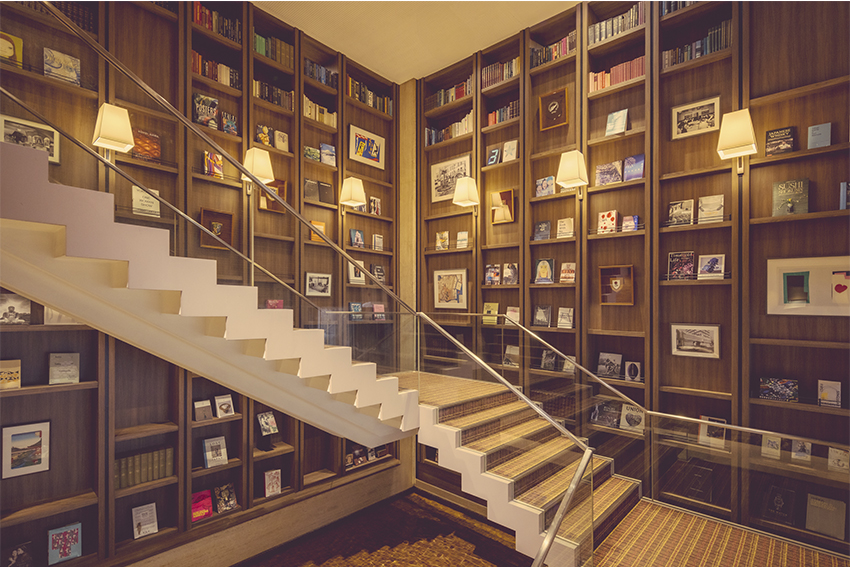
Shiba Park Hotel central staircase
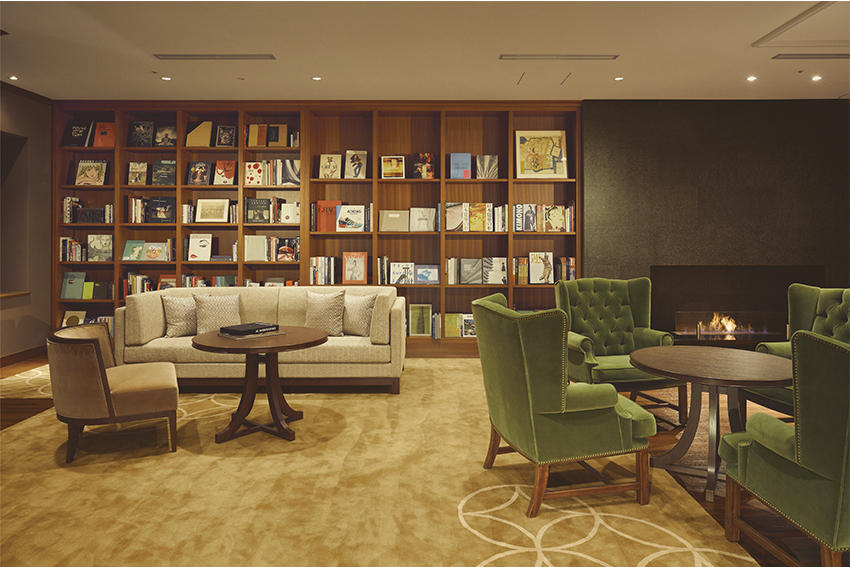
Shiba Park Hotel library lounge
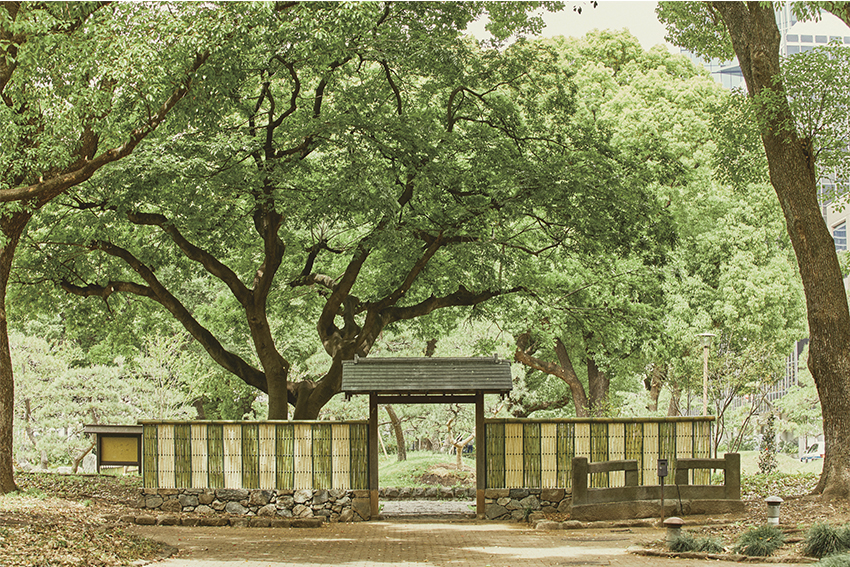
Shiba Park Hotel neiborhood park
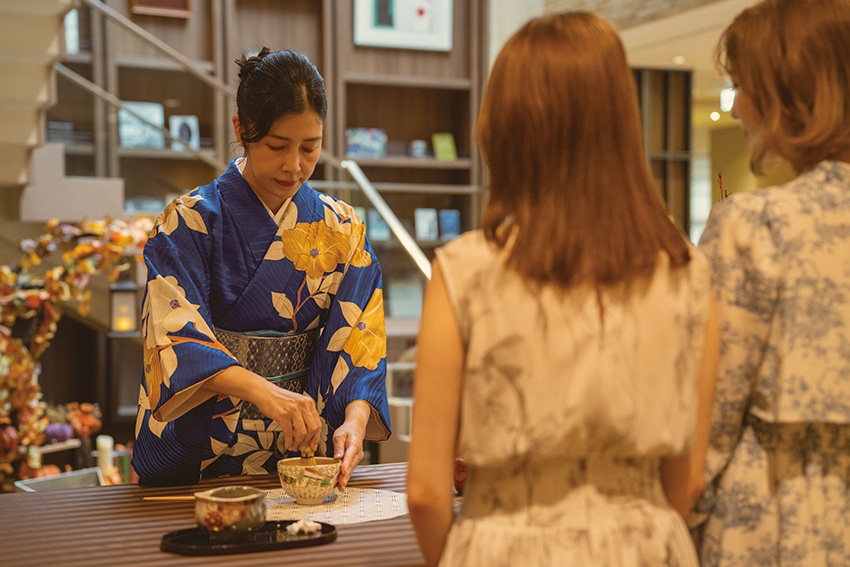
Shiba Park Hotel Tea ceremony
Previous Next
In November 2024, the RIHGA Royal Hotel Group officially took on the operating role for Shiba Park Hotel and others. Since our last interview in July, how has that relationship evolved, and what does it mean for your business?
Becoming part of the RIHGA Royal Hotel ecosystem is a significant development. Moving forward, decisions regarding partnerships, including overseas OTAs (Online Travel Agencies), are no longer made solely by our management but in consultation with RIHGA. That said, one of our current challenges is reducing our reliance on OTAs, which currently account for 70–80% of our bookings. We’re now focusing on strengthening our presence in GDS (Global Distribution Systems), and we’re in the process of joining major consortia such as AMEX’s GBT.
To support this effort, we’ve engaged a sales representative agency—commonly known as a REP—to act on our behalf in key international markets. This agency has offices in major cities like New York, London, Paris, Berlin, and Rome. The goal is to build direct relationships with travel agents in North America and Europe, moving away from dependence on OTAs. We call this strategy “OBA”—Original Booking Agent—and it’s something we’re actively developing. So, while we are not seeking exclusive overseas partnerships, we are taking concrete steps to diversify and strengthen our global marketing channels.
One final question. Before you hand over the reins to the next generation, what is the one thing you most want to accomplish?
Now that we’re part of the RIHGA Royal Group, I see my final mission as creating the right environment for this alliance to flourish. That means ensuring that the collaboration proceeds smoothly, both operationally and culturally, beyond this year and into the future. To be honest, I’ve stayed in this role perhaps longer than I should have. I’m hanging on by a thread, so to speak. But my hope is that when I eventually pass the baton, I do so with confidence—knowing that the foundation for sustainable growth and global success is firmly in place.
For more information, visit their website at: https://www.shibaparkhotel.com/
AloJapan.com