
Visiting Largest Railway Museum in Japan
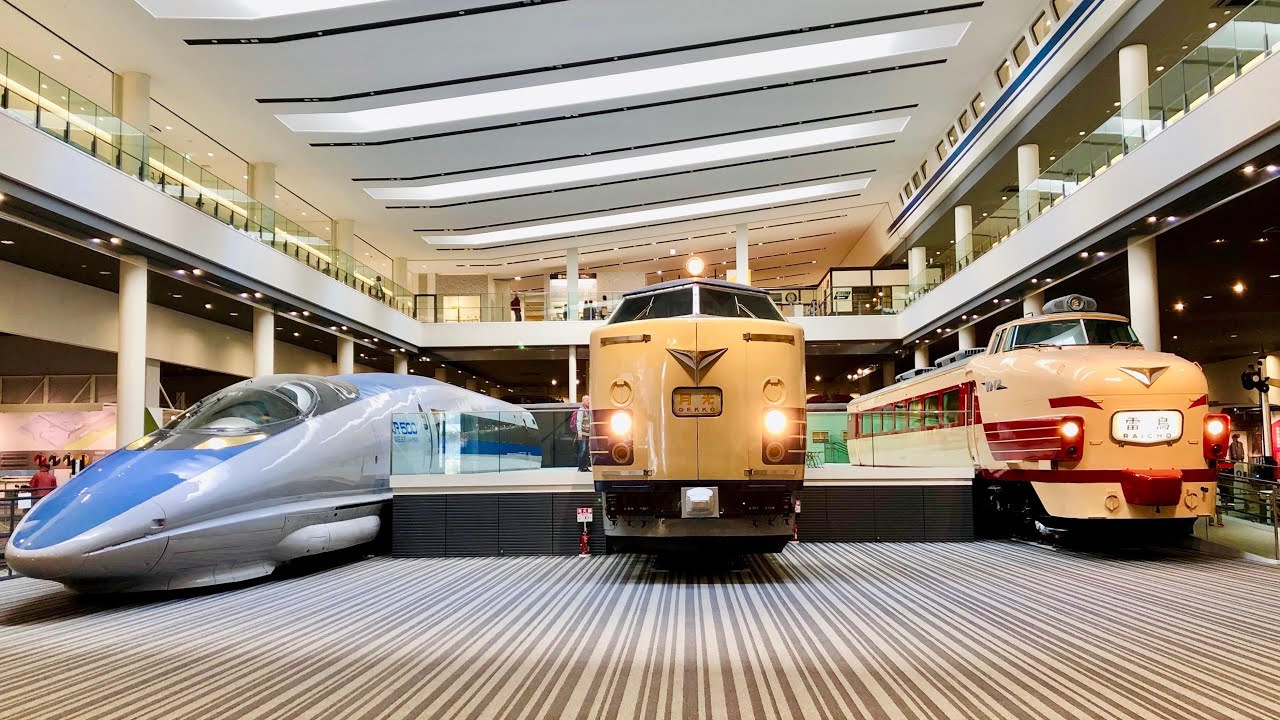
What’s in this video? Japan’s largest railway kingdom!!! We’re visiting Kyoto’s Railway Museum! Please watch until the end! Hello from Umekoji Kyoto-nishi Station. The Kyoto Railway Museum is located right after you exit the station. It opened in 2016. It is the second largest railway museum in Japan in terms of exhibition area. Admission is 1,500 yen (10 USD) per adult. Enter. A train welcomes you . Let’s go further in, passing by the long-distance train, Kuha No. 86. This is a 0-series Shinkansen, manufactured in 1964. It’s wrapped in a wrapping commemorating the 60th anniversary of Shin-Osaka Station. The first floor of the main building is the “Experience Zone,” where you can enjoy railway dioramas and more. The second floor is the “Exhibition Zone,” where historical railway vehicles are on display. The third floor appears to be an observation deck. We immediately went inside and saw a huge crowd! Apparently, it can attract as many as 5,000 visitors on weekends and holidays. This museum displays JR West’s most iconic trains, including the 500 Series Shinkansen, a sleeper express train, and the bonnet-style 489 Series. This is a popular photo spot. What’s that sound? A railroad crossing and barrier are recreated. Learn about safety here. This is a steam locomotive imported from England in 1881 for use on steeply graded tracks. This is the successor to the 0 Series Shinkansen. It’s decorated to commemorate the 50th anniversary of the Sanyo Shinkansen. This is Japan’s first large DC electric locomotive, manufactured in 1928. This is the train used as a crew car for the first container express, the “Takara. ” This is the “Raicho,” a bonnet-style train that connected the Kinki and Hokuriku regions. A sign states, “As this is a cultural property, you cannot enter the train interior.” Here, various headmarks from various trains are on display. Headmarks cover the entire wall. The exhibition area, known as “Showa Station,” recreates the station building from the 1950s to 1970s. In this retro atmosphere, you can experience life around the station back then, with a nostalgic candy store and round mailboxes. The manned ticket gates of the time. Most are now mechanical, right? A timetable is also reproduced. Apparently , there was also a public message board back then. Passing through the manned ticket gates, you arrive at the train platform. Here, you can learn about the mechanics of train wheels. You can see them up close. What’s this? It’s called a pantograph. Did you know? A pantograph is a current collector attached to the roof of a train to collect electricity from the overhead wires on the tracks. This is a mockup of a train. You can press the emergency button, which is normally off-limits, with all your might! This is an electric locomotive that pulled high-speed freight trains. There’s a certain entrance underneath this train. Let’s go inside. You can see the railway structure from below. Go through the tunnel to another floor. This is the simulator experience area, which is very popular with children. There’s a realistic driver’s seat. There’s an exhibit of railroad ties. There are also various other exhibits. Here are various crossing gate signals. Take a look at the exhibits outside as well. The dining car of the Twilight Express sleeper express train is on display. This is a bento shop. The Kyoto Railway Museum also has a restaurant. Let’s head to the second floor of the main building. This is the railway diorama exhibition area. The diorama operates nine times a day. This diorama is 30 meters wide and 10 meters deep, and the view of the train cars and scenery changes dramatically depending on your vantage point. Find your own perfect vantage point! Trains from various regions, eras, and companies are running here. Dining car meals are on display. I’m hungry. There’s also a Hello Kitty Shinkansen Kitty on display. There are also displays of containers and old railways. Station ticket gates? Here, too, there are displays of station ticket gates. There’s also a ticket counter. You can see the back of the ticket machine, which is usually not visible. Experience the perspective of a station employee at a ticket gate. A station employee’s nap room. Thank you for your hard work. This is the driving simulator corner, which is very popular with children. A 10-minute experience costs 100 yen (0.6 USD). Reservations are required. Let’s go see the exhibits outside. There’s a large roundabout railway shed. There’s a square, and in the distance you can see the steam locomotive. It’s incredibly impressive, puffing smoke. The steam locomotive runs five or six times a day. It blasts its loud whistle and says goodbye! The experience costs 300 yen (2.0 USD) for adults and 100 yen (0.6 USD) for children. There’s a sign warning of the steam locomotive’s smoke. It might stain your clothes. Next, let’s take a look at the roundabout railway shed. Twenty steam locomotives are preserved and on display here. The steam locomotive is now used exclusively by the Imperial Family to commemorate the change of era. There’s a large hole directly above the steam locomotive’s chimney. This hole is designed to vent the smoke. Take your time and spend two hours here. You’ll have a wonderful time making some wonderful memories! If you enjoyed the video, please give it a thumbs up and subscribe. Thank you for watching until the end!
Thank you for watching.
Please subscribe to channel.
Kyoto Railway Museum
#japan
#travel
#japantravel
AloJapan.com