
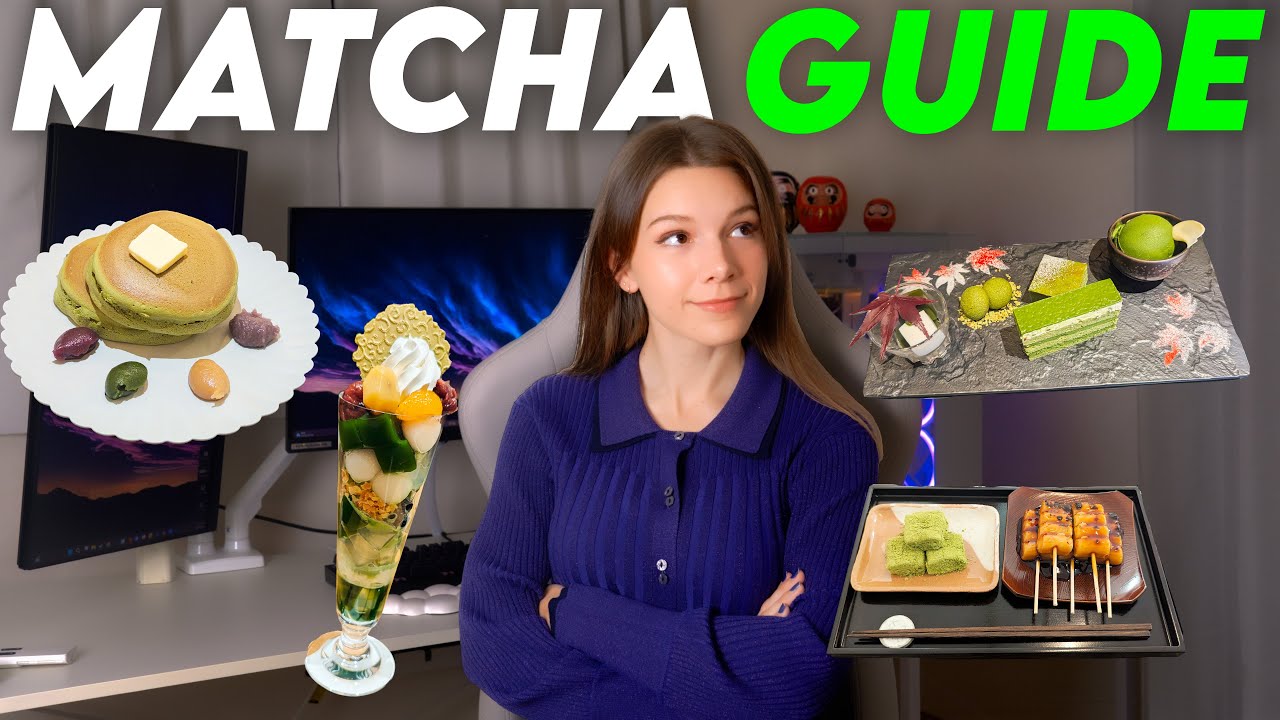
BEFORE You Visit Japan: The Matcha Guide! 🍵🍃(Plus Kyoto Recommendations!)
Everyone knows matcha as that bright green latte or fancy dessert, but in Kyoto, matcha is a whole culture. Hi everyone, it’s Abby from Pctor. I’m a photographer and guide in Japan. You can see more about us here. And in this video, we’re exploring Kyoto through its matcha desserts while I break down the basics of matcha in a way that will finally make sense. But first, what is matcha and should you try it? So, when I talk to people who aren’t very familiar with matcha, which tends to be most people, um I actually start by recommending ice cream or parfets, this is because a lot of first- timers go straight to a tea ceremony. Then they try a bowl of pure matcha there and then they come to me like, I don’t think it’s for me. And honestly, I get it because the matcha you drink in a tea ceremony is literally just pure matcha powder whisked with hot water. There’s no sugar, there’s no milk, there’s nothing. um yummy. Uh to soften it, you’re just getting the full punch, the bitterness, uh the grassiness, and the umami. Um it’s kind of like starting your coffee journey with straight black espresso. So maybe that’s like the real way, but it’s also the strongest way and probably not the easiest place to begin. Uh, matcha itself is just shader grown green tea that is then steamed, dried, and stone mil into a super fine powder. Uh, you drink the whole leaf and so it has a much deeper flavor than regular green tea. It’s going to be richer, more bitter, more intense. And that’s why ceremonial matcha is so special, but also why it can kind of surprise people on their first try. So, let’s start with something easy like Itto Kuimon’s Matcha Parfait. This is one of the ones you’ve probably seen all over the internet. It is tall. It is dramatic. And honestly, it tastes just as good as it looks. Choto has a really big parfait culture. And matcha parfets here usually pack in a bunch of different textures. So, inside you’ll usually find things like koicha level matcha ice cream. Koicha means thick tea, so it is stronger and more concentrated. If you ever see usucha, that’s thin tea, which is lighter and uses less matcha. Um, also things like matcha jellies, soft shiraama moji, sweet red bean, whipped cream, um, some kind of like matcha cookie, of course, corn flakes because it’s a parfait, and sometimes chiffon cake or seasonal toppings. Parfes in Japan aren’t just desserts. They’re more like little flavor towers. And each layer is there to balance the bitterness, the sweetness, and the texture so you don’t burn out on just one flavor. And honestly, this is why I recommend parfets over soft serve if you’re new to matcha or even if you’re not. Um because there’s so much going on that it’s easy to enjoy, even if you’re not used to matcha’s bitterness yet. And I wanted to start with Ittoon specifically because they’re one of the most trusted matcha brands around here. They’re originally based in Uji and they’ve been doing tea for generations and they actually care about the flavor, not just the color or trends. So when I see their name on a dessert or something, I know it’s going to be legit. So since we’re already talking about Ittoimon, let’s talk a little bit about Uji because this is where Kyoto’s matcha story really begins. So Uji is a small area just south of Chyoto and it’s basically the birthplace of high quality matcha in Japan. The geography is perfect. It has rolling hills, has morning mist from the Uji River and just the right temperature swings. And tea farmers figured this out centuries ago. So by the 1300s, UT had already become famous. During the samurai era, shoguns basically looked at UT and said, “Yep, this is the good stuff.” and they gave it special protection. So the techniques that you see today like shading the tea plants before harvest, those were perfected in uji and even the imperial family used uji matcha for their ceremonies. Um side note though, if you see something today that says uji matcha on it, I’ll note that this doesn’t guarantee that it was actually grown in Uji. In fact, it was probably grown in one of the cities around Uji rather than in it. The definition of uji matcha means matcha grown in one of four prefectures. And that would be Choto, Nara, Shiga, and Mia. And then it’s going to be processed by tea growers in Choto Prefecture using that original Uji method. So this is another reason why it’s good to find reputable brands rather than just buying whatever. Another fun fact, um you don’t have to go all the way to Uji to try good Uji Matcha. Most of the cafes in Kyoto are going to use uji matcha anyway. So even if you’re eating a parfait in Gon or grabbing a dessert in Arashyama, chances are you’re already tasting uji matcha. Next up is bread espresso in Arashiamyama garden. This cafe is known for blending Italian desserts with Japanese flavors and their matcha tiramisu is such a good example of that done right. You get layers of mascapone, sponge cake, and then a really generous dusting of bright, vibrant uji matcha on top. What I love about this dessert is how balanced it is. The cream really softens the bitterness of the matcha, so it’s perfect for people who want something delicious without jumping straight into super intense matcha. Um, also the cafe itself is super cute. There’s a few other Insta famous matcha tiramisu around Choto, but in my opinion, this one is the best. Next, we’re stopping by Juvenel in Gon. And this place is best known for their matcha fondue. So, you get a little tray of little sweets and fruit and a cup of warm, thick matcha sauce for dipping. It’s got a very strong matcha flavor. It’s very rich, um, grassy and aromatic. This is also a perfect moment to explain why matcha tastes the way it does. So, matcha’s unique flavor starts before it’s even harvested. Tea farmers will cover the fields with large black nets for about 20 to 30 days before picking. This shading technique is called oya sibby and it completely changes the chemistry of the leaves. So, when the plants are shaded, they produce moreine which gives matcha its natural sweetness and umami. They produce less kakans which is the compound that makes regular green tea taste bitter. And then the chlorophyll levels increase giving high quality matcha that bright vibrant green color. And because matcha is then stonemilled into a powder and you drink the entire leaf, all of that concentrated flavor stays in the final cup unlike regular green tea where the leaves are removed. So, what I’m saying is when you enjoy this fondue, you’re tasting the sweetness, the umami, the aroma, and even that gentle bitterness. All the things that make real matcha matcha, but in a way that’s fun and approachable. Our next stop is Gong Kitagawa Hambe. And this place is great if you want to try several different flavors at once. Instead of choosing one dessert, you can get a whole little platter, kind of like a tea flavored dessert flight. I ordered both the matcha set and the hojicha set. So, let me show you what’s inside. The matcha plate comes with things like matcha and milk jelly, matcha cookies, a layered matcha cake, matcha cheesecake, and matcha ice cream. And what I like about this set is that every item uses matcha differently. So, some are creamy, some are chewy, and some are cake, which is always a win. Um, you really get to taste how matcha works across different textures, not just in one big dessert that maybe you do or don’t like. And then there’s the Hoji Cha set, which honestly looks just as fancy. And this one comes with the Hojicha version of the same sweets. So, Hoji Cha does not get nearly enough attention as it should. Um, it is so delicious. And Hojicha is actually still green tea. The difference is that the leaves are roasted at a high temperature. So, roasted green tea and this roasting changes everything. The bitterness almost disappears. Um, it becomes warm, nutty and almost like caramelike and the caffeine level drops a lot. So, it’s very gentle to drink. Um, so tasting this matcha set in the Hojicha set side by side is actually really fun because you can immediately feel the contrast. And fun fact about hojicha, um it was invented in Kyoto in the 1920s as a way to roast leftover tea stems and imperfect leaves and it ended up creating a whole new category of tea. It is also my Japanese husband’s favorite. So while Kithagawa Hambe isn’t doing like tea ceremonies or anything formal, these plates are a great way to experience two sides of Kyoto’s tea culture. And that would be the green and grassy world of Matcha and the warm and roasted world of Hoji Cha all in one place. And honestly, they’re just really pretty. Next, we’re stopping by Umezono Cafe and Gallery. And I love this place. The original Umezono was founded in 1854, but this cafe version feels fresh and minimal, kind of like a modern art gallery for Wagashi. So, let’s start with the matcha hotcakes. These are thick, fluffy Kai style hot cakes. They’re not American pancakes. Um, the batter absorbs the matcha like a sponge. So, the flavor is very clean and smooth, and the very, very subtle bitterness works perfectly with butter and syrup, as well as the four different sauces that they provide for you to try as well. I really like the raspberry sauce, although um, as a true southern American, um, butter is always a home run for me. Then there was also the matzo water mochi which came with mitochangi is one of the most interesting desserts you can try in Kyoto and it’s my personal recommendation. So traditional wab mochi is made from actual wabi starch which is extremely expensive and rare. For that reason most places use potato starch instead but high quality shops like Umezono keep that really silky stretchy almost cloudlike texture. Kyoto’s dessert culture has always balanced bitterness and sweetness. Um, in tea ceremonies, your matcha is always going to be served with little wagashi sweets. And Umezono’s hot cakes and wabochi are perfect examples of how Kyoto keeps that balance alive in modern cafes. So, now that we’ve eaten our way through half of Kyoto, let’s talk about what matcha actually is and what you should buy to take home. So, real matcha isn’t just green tea powder. When you buy matcha powder, you also will want to buy a bowl and a whisk and then learn how to whisk it properly. Alternatively, you can buy the powder if you think you will want to bake with it. And there’s a lot of good information online about baking with it. Um, however, here’s the honest truth. Most people should probably not buy ceremonial matcha to take home. It expires quickly. It clumps easily. And if you don’t whisk it the right way, it can taste unexpectedly bitter. So for about 95% of people, I actually recommend a matcha style green tea powder that mixes instantly with water. So no whisking, no technique needed. You can literally just shake it in a bottle or mix it with a fork or whatever and it tastes clean and refreshing. You can get these with or without sugar. And the one I recommend is this. It is easy. It is beginner friendly and it still gives you that nice tea flavor without any of the hassle. Though mine is from Ittoon, you’ll find similar products across Choto. So that’s it for today’s matcha adventure in Kyoto. I hope this gave you a better idea of how rich Choto’s tea culture is and maybe even helped you figure out which matcha dessert or desserts to try when you visit. Don’t forget to like and subscribe and I’ll see you guys in the next video.
Think you know matcha? Kyoto is about to change your mind.
I’m trying the city’s best matcha sweets and breaking down how to taste, choose, and enjoy real matcha (even at home) — all without spoiling what happens in the video.
If you’re planning a Kyoto trip — or you just love matcha — you’ll find all the featured locations, tips, and my full written guide here:
🍵🍃
piqtour.com/kyoto-matcha-sweets
In this Kyoto matcha tour, I visit some of my favorite spots, including
• Itoh Kyuemon (Uji-style matcha parfait)
• Bread, Espresso & Arashiyama Garden (matcha tiramisu)
• Jouvencelle Gion (matcha fondue)
• Gion Kitagawa Hanbee (matcha + hojicha dessert sets)
• Umezono Café & Gallery (matcha hotcakes + matcha warabimochi)
12 Comments
Do you have recommendations for shops in Tokyo? Especially for those who don't plan to take the golden route?
matcha matcha matcha…gotcha gotcha gotcha…i will get the parfait.
Thanks Abby!! This is actually the most interesting and informative video I’ve seen explaining Matcha!! 🍵 I really appreciate your insight!! ❤
Thank you for the great video. Ill be in Uji in March 2026 plus other areas for 6 weeks of fun and exploring. I added Gion so I can try the match desert set! My most recent trip I purchased match a at the shinzouka donqi. So cheap and very good quality.
Saw you yesterday walking around Kyoto! I hesitated to say hi because you looked busy guiding a tour with some clients. Still, it was really cool to see you in person. keep up the great content, I love your videos!
Hi Abby. Just want to say thanks for all your videos. My wife and I just visited Japan and watched a lot of your videos before travelling to learn more before we travelled. Your videos were a great way to prepare us for what we could expect. Especially around Kyoto station and some of the surrounding areas.
We experienced a lot of Kyoto while we were there but particularly enjoyed Bishamondo temple which was an incredible experience at the end of a busy day. We felt like the only people there and it was partly due to your recommendation we went there.
Keep doing what you’re doing. We love your videos.
Scott and Sylvia
New Zealand. ❤
Hell yeah! My first matcha experience was when in high school a friend and I made white chocolate truffles with a buttery, white chocolatey matcha filling. I fell in love right away! Sweets are definitely the way to go for first-timers
Fascinating to know how matcha is grown!! And awesome recommendations
Great video Abby! Love your computer set up Abby. What brand is your computer case and monitors?
Thanks for the awesome photoshoot! We loved the experience and results. Keep up the great videos!
You have such a cool computer setup – are you a coder or something
Excellent content Abby. Great videos. My daughter and I visited Japan last month and had a great time.
Matcha is the best!