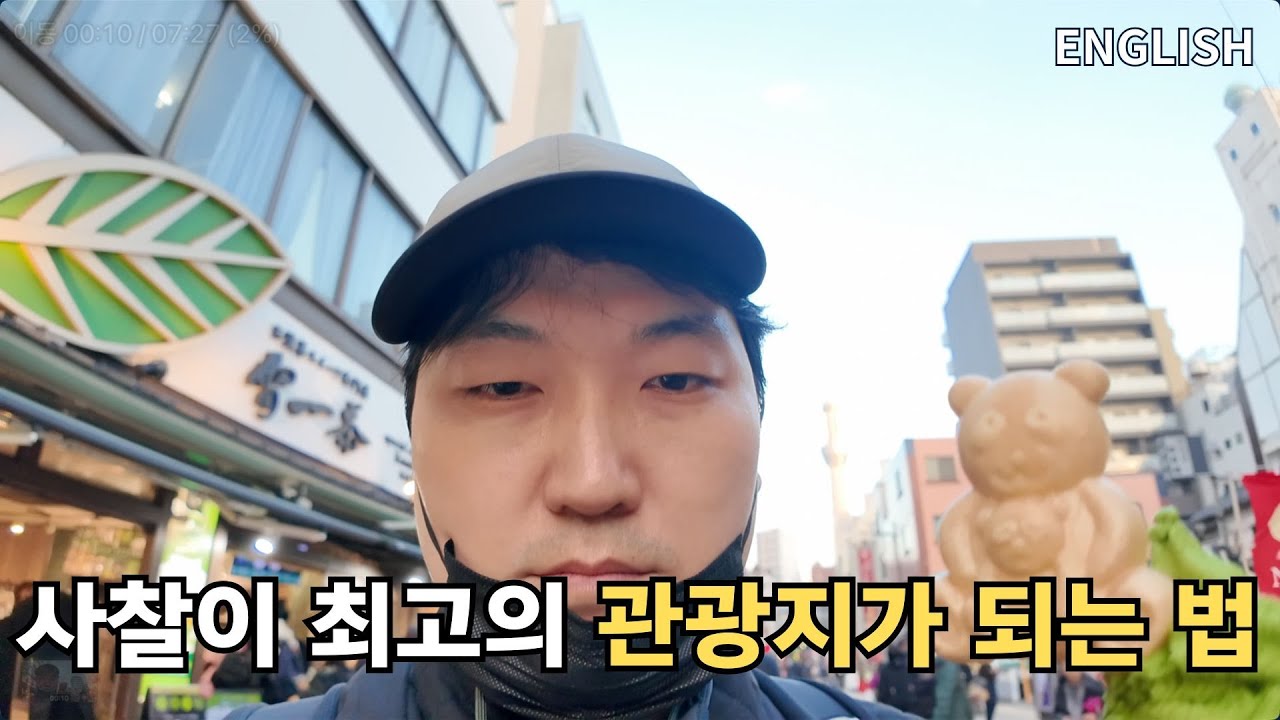
사찰이 최고의 관광지가 되는 법 (#도쿄 #아사쿠사 #센소지 #도쿄 20250128)
Hello, this is Gongbu Namu. Tokyo is full of fascinating places to visit. Sometimes, a place becomes popular simply because many people go there. But what truly draws our attention are the little things—those curious details that catch the eye. Still, we often don’t fully understand
their meaning. We just take photos, share them, and move on. For locals, these places might feel ordinary. For shopkeepers, they are just busy spots
where business is good In the end a place holds different meanings
for different people. Asakusa is one of those places. It’s a global destination where people from
all over the world gather. I visited it for the second time, ten years after my first trip, Not much has changed in terms of scenery But the people have. And the heart of Asakusa is Senso-ji, a Buddhist temple. While temples are common in Japan,
for foreigners, they offer a unique window
into traditional culture. So why do we go to places like Senso-ji or Kiyomizu-dera when we travel to Japan? I think it’s because of the experiences surrounding them. The giant red lantern at Kaminarimon, the iconic photo spot. Nakamise Street, lined with traditional snacks and souvenirs and of course, the famous Mirta gelato. and of course, the famous matcha gelato. and of course, the famous Mirta gelato. I had one too. It was expensive, but I knew this was my
only chance to try it Here. Travel and food are inseparable. Still, I don’t buy souvenirs. They’re pretty, but often end up as clutter. The value of an object depends on where
it’s placed and who appreciates it. The same applies to people. Our environment and the people we meet can change our lives I’ve had the moments in life where a single person’s encouragement helped me overcomegreat challenges. those encounters leave a lasting impact. That’s why I see travel as a form of learning
not just entertainment. Japan brands tradition and modernity
beautifully. Tourism here is just about sightseeing or eating. which about experiencing culture, history, and everything in between. Even eating gelato becomes meaningful when it’s part of a cultural moment like holding it up in front of Tokyo Skytree for a photo. that’s not just dessert; it’s a memory, a story, a product of a tourism. In contrast, I feel that Korea’s tourist spots still lack diversity and symbolic identity. Our souvenirs and local foods often don’t reflect the uniqueness of the place. For example, you don’t need to go to Yang Pyong to eat Yangpyeong hangover soup. Our festivals, too, tend to focus on food stalls and parking lots, Rather than culture storytelling, It’s not that Japan is better and Korea is worse. But we need to reflect critically and ask, what can we improve? Dsdign isn’t just about creating something new It’s also about identifying what needs to change. I hope Korea’s tourism resources
can evolve into global attractions not just through preservation, but through creative experiences and symbolic storytelling. Many Japanese festivals have deep historical roots. Ours often feel temporary, built around commerce rather than culture. We need festivals that bring people together, that express values like cooperation, friendship, and love. Japanese temples aren’t just for monks or believers. They’re in the heart of the city, accessible to everyone. Lighting incense, tossing coins—it’s all part of the experience. At first, I didn’t realize the coin boxes were for donations. In Korea, they are clearly labelled,
almost like asking for money. But in Japan, the act feels more voluntary, more natural. We do have temples in the city like Bongeunsa in Seoul. But the atmosphere is different. There you can buy rice offerings at the entrance. Faith is personal, and maybe that ritual brings peace to some. but it’s not the act of buying rice
that grants you wish. What matters is the intention behind it. Senso-ji, in my view, doesn’t just serve itself. It uplifts the entire area. Visitors explore the surroundings, shop, eat, and engage. In contrast, many Korean temples are deep in the mountains, hard to reach, and offer little beyond prayer. That’s something I envy. In Japan, The street to feel connected. You walk and walk, and suddenly you’re somewhere new—without realizing it. In Korea, spaces are more segmented. Once you leave a tourist spot, it feels like you’ve exited a theme park. That’s not bad
with just a different experience. Ultimately, what matters is harmony between the core and the surroundings. A temple can be the center, but it’s the surrounding experiences that elevate the whole. Japan’s tourist Japan’s tourist spots manage to balance both, creating value through integration. I hope Korea can learn from this. I’ve traveled to many places in Korea, and I believe our natural heritage has great potential. But we must stop seeing it only as a way to make money. We need to create something lasting—something that preserves history and culture. Temples can be the main attraction, but they don’t have to be the main source
of a profit. Instead, they can inspire the ecosystem
around them. When the core and the periphery support each other, the value grows. That’s what I’ve learned from traveling in Japan. I hope to find more ideas that can help Korea grow. I may not be someone with influence, and just posting a video won’t change the world. But I’ll keep thinking, keep dreaming even if those dreams never come true. Because having a dream is better than having none at all. Thank you.
세계에는 볼 것이 정말 많습니다.
우리나라에도 볼만한 곳들로 만들 수 있는 곳들이 정말 많습니다.
하지만 일본의 그 어느곳처럼 세계사람들이 붐비지는 않습니다.
어떤 차이가 있는 것일까요?
어렵고 오랜 시간이 지나며 정말 합리적인 생각할 할 수 있는 사람들이 있어야만
그들처럼 우리의 것을 잘 활용할 수 있을 것입니다.
그것이 가능하기를 바랍니다.

2 Comments
자막기능을 사용하세요
아이스크림 맛있어요?