
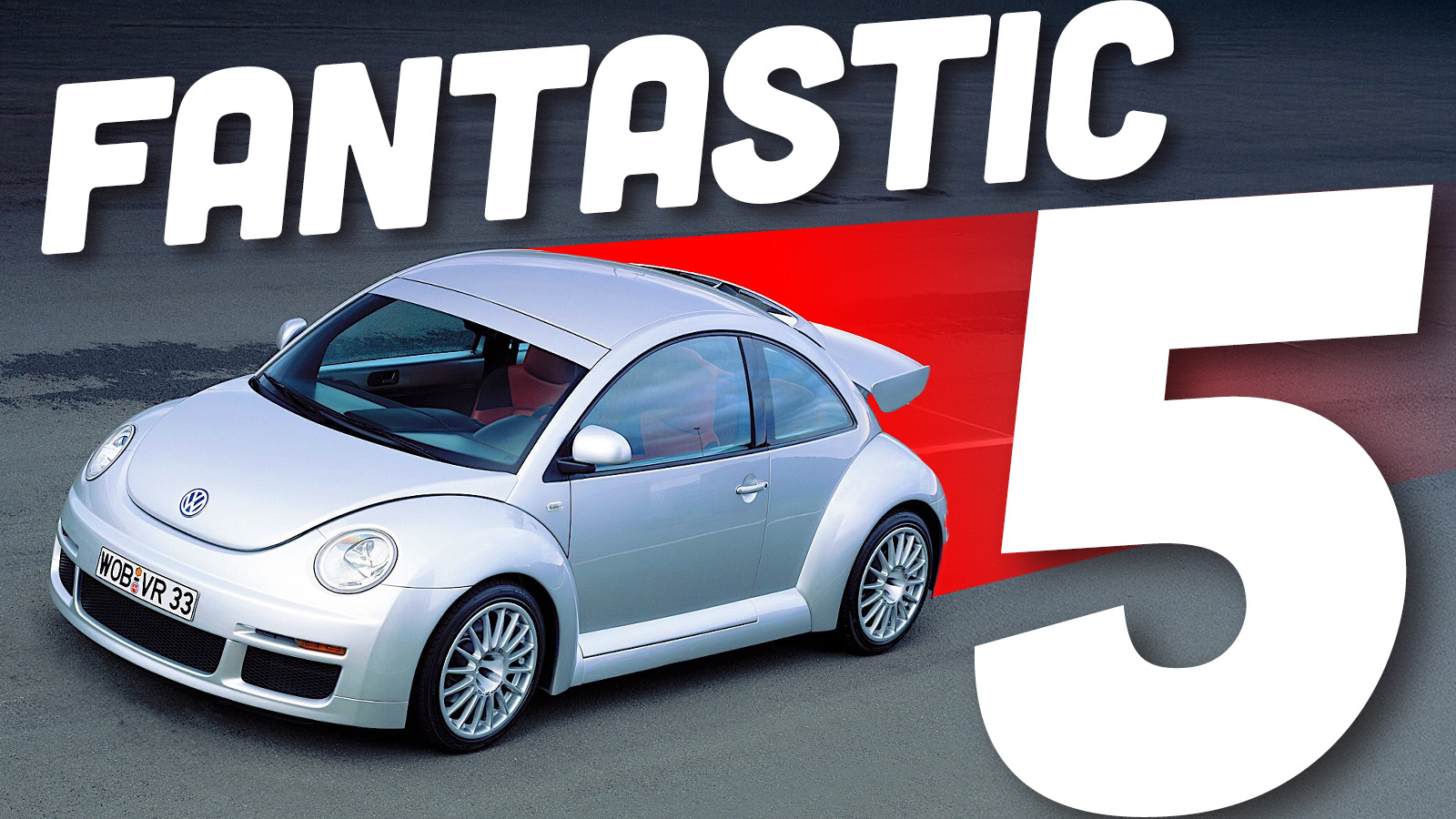
January 2026 is right around the corner, which means that one of my favorite parts of winter is coming. That’s right, it’s time to look at the coolest cars that will turn 25 years old, and thus, will become legal to import into America at some point in 2026. But for a twist, we’re going to ignore Japan entirely. Everyone loves importing cool cars from Japan, but the rest of the world has truly awesome cars that are just waiting to fall into your ownership. I’ve collected just five of them.
Before I kick this off, I want to make sure that your expectations are realistic. While enthusiasts obsess over what year their dream car was built, U.S. Customs and Border Protection also usually pays attention to the vehicle’s manufacturing month. So, if your chosen car was built in June 2001, it’s best to wait until June to import that car.


As I have written in the past, importing a car from Europe is a different process from buying a car from Japan. Unlike Japan, Europe doesn’t have a robust industry designed around sending old used cars to Americans. Japan hosts tons of used car marketplaces where an enthusiast can buy a car and ship it to America in only a couple of clicks, no different than buying something on eBay. Sometimes, you can even pay for your JDM car using PayPal.
 MG
MG
Unless you have a passport and time to physically go to Europe and buy your own car, you will likely end up hiring a vehicle sourcing agent and let them handle the legwork. This extra step will cost you money. What will also cost you even more money is the fact that, due to exchange rates, your American dollar is worth less in Europe, which will make every single step more expensive. As I have written before, it’s entirely possible that you could spend $10,000 on a $2,500 car, and that’s before you even pay the latest tariffs.
So, keep that in mind when you look at these cars today. The purchase price is only the beginning. Click here to read my breakdown on the potential costs of importing a car from Europe. Okay, that’s enough doom and gloom. Let’s look at the seriously cool cars that will be coming of fully legal import age next year!
Renault Avantime
 Renault
Yes, it’s finally Avan-time! I feel like there have been two cars that it seems like modern enthusiasts have been waiting for forever. The first car was the Nissan Skyline R34, which finally became legal without restrictions beginning in 2024. The other is the Renault Avantime. It’s my personal observation that whenever a car enthusiast talks about a weird car that they want to import one day, the Avantime is usually the car they’re talking about.
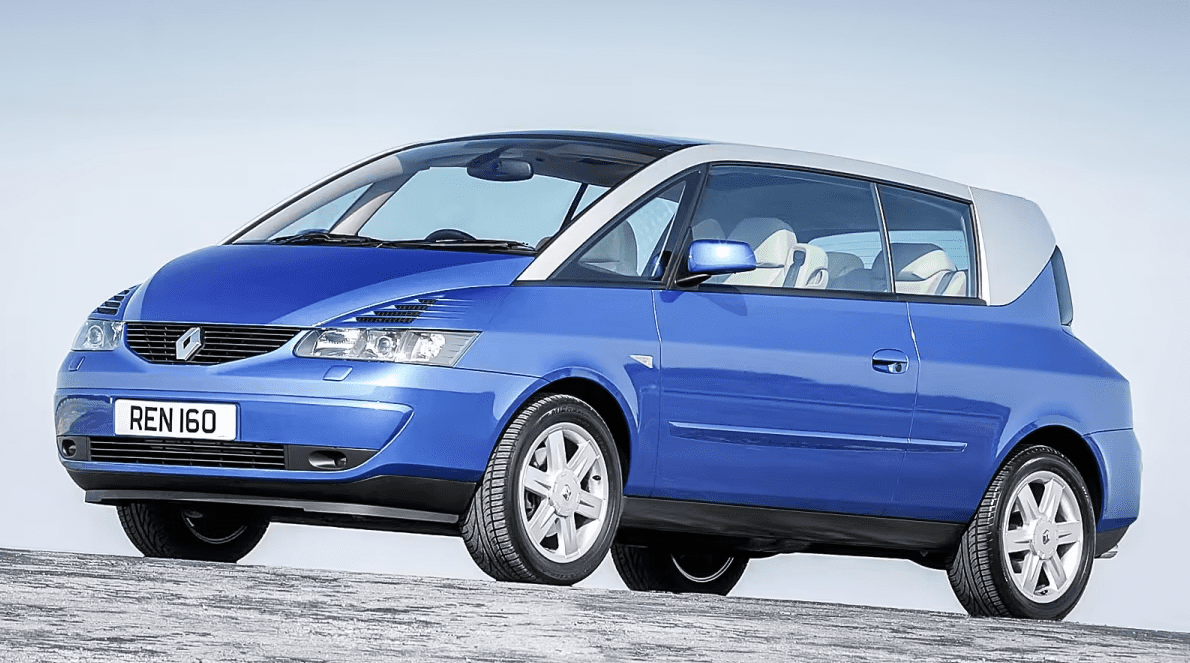
The Avantime is deserving of its icon status, too. If the Nissan Skyline GT-R R34 is Godzilla, then the Avantime is the king of weird. It’s a coupe, but sort of not. It’s a minivan, but sort of not. It also has some truly bizarre styling and no B-pillars like a classic hardtop sedan.
Here’s what Renault says about its icon:
After inventing the MPV with Espace, and popularizing the compact MPV with Scénic, Renault unveiled a new concept, which would be the first Coupespace. It was called Avantime.
 Renault
Designed by Thierry Metroz at the Renault design centre and produced at Matra in Romorantin, Avantime first took the form of an innovative concept car, unveiled at the Geneva Motor Show in 1999. The standard version was produced starting in 2001. Renault Avantime combined the characteristics of a coupe and an MPV. Avantime was developed from the Espace platform, from which it took around half of its parts. The model was available in two finishes: Dynamique and Privilège (with the latter also offering an Exception Pack as an option, for more upholstery colour choices). In its two finishes, leather seats with built-in seatbelt were offered.
When it was launched in 2001, Renault Avantime had an exceptional promotional campaign, with participation from designer Jean-Paul Gaultier. It was also with Avantime that Renault inaugurated its new slogan: “Renault, Créateur d’automobiles”. On the exterior, Avantime stood out with its roof in a different colour from that of the bodywork, a very curved rear window, its large roof entirely glazed, as well as large, wide doors, characteristic of coupés. These vehicles had very sophisticated opening kinematics and had no window frames. There was also no central pillar between the front and rear windows, thereby producing a continuity effect.
Apparently, one of the design goals with the Avantime was to ensure that someone walking around the car would be “continually astonished,” and I think Renault achieved that mission. The one and only Renault Avantime I have seen in real life was the one in the Lane Motor Museum. Sadly, I didn’t get to drive it during my visit, but my colleague Jason Torchinsky did, and called it amazing:
A grand total of 8,557 examples were built between 2001 and 2003. The good news is that the Avantime is so deeply unpopular in its home country that they have remained pretty affordable over time.
Sadly, as Matt Hardigree has informed me, though Avantime production began in summer 2001, the first vehicles were pre-production prototypes and press cars. Customers did get their hands on some Avantimes in 2001, but they are rare. I found a 2001 Avantime for sale in Poland for €4,650 ($5,392 at current exchange rates). Expect more Avantimes to be available in 2027, as the car went properly into production in 2002.
BMW 3 Series Compact
 BMW
BMW
Back in the early 1990s, then BMW Chairman Bernd Pischetsrieder had multiple ideas for how to secure BMW’s future as a major player. One was through purchasing Rover Group in 1994, and another was by giving BMW a true entry-level model to attract a greater clientele. The BMW 3 Series Compact was born through taking an E36 sedan, keeping most of its underlying platform and wheelbase, but giving it a mostly new and truncated passenger cabin. BMW then cleverly cheapened the car further by taking content out. The result was a quirky hatchback that was roughly 10 percent cheaper than a full-size 3 Series. It sold like hotcakes.
The original 3 Series Compact did make it over to America. When BMW updated the 3 Series Compact for the E46 generation, it decided not to bring it to America. Soon, you can have one. Here’s what BMW told the press in the United Kingdom:
It is an all-new car from the ground up. With a body shortened by 21 cm versus the Saloon, a sports tuned suspension, a quick steering rack and the most advanced engine technology in the market, the new 3 Series Compact offers a unique combination of sporting performance and practicality.
The new four cylinder 316ti Compact is faster, more economical and better equipped in every respect than its predecessor. Producing 116 bhp and 180 Nm torque (133 lb-ft), the 316ti knocks one second off the 0-62 mph sprint at 10.9 seconds and achieves an increased top speed of 125 mph. The new Compact exceeds the already high standards set by the former model. The 316ti will be the first production car in the world to feature Valvetronic engine technology. Built in the UK at the Hams Hall engine plant near Birmingham, this newly built state-of-the-art engine plant will build all the four cylinder petrol engines worldwide for the new Compact.
 BMW
BMW
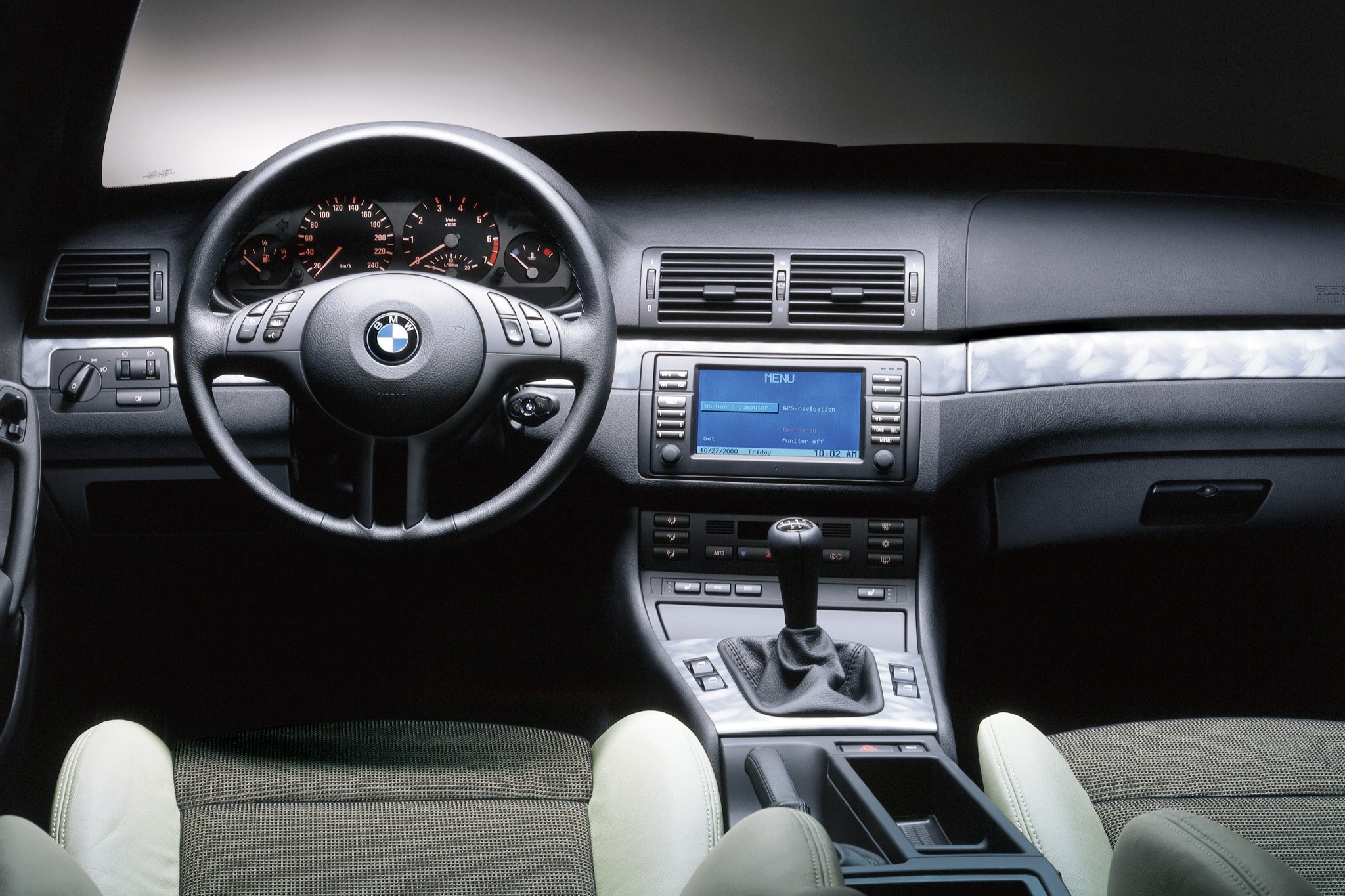
The new Compact had the model code of E46/5 and was mechanically similar to the rest of the E46 line. However, it featured a faster steering ratio, and its 167.7-inch length made it about nine inches shorter than an E46 coupe. The E46/5 got a unique body, just like the previous Compact. However, this time around, the Compact got really weird-looking headlights, and despite having a coupe-like body, it doesn’t share the same doors with the E46 coupe, either.
Prices for these seem to range from under $2,000 for a high-mileage model, with prices rising to around $10,000 or so for a sorted, lower-mile example.
Renault Sport Clio V6
 Renault
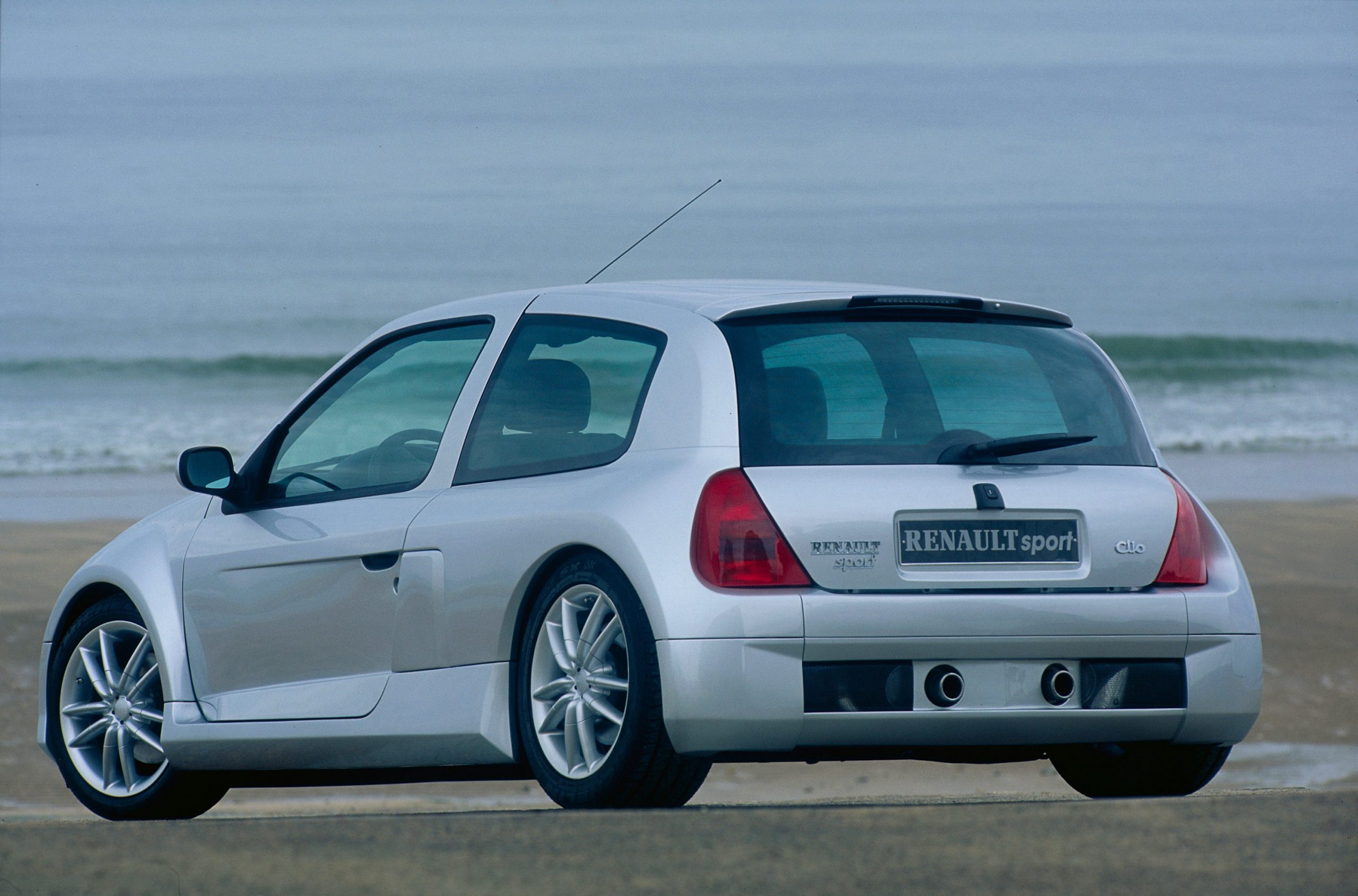
There isn’t just one cool Renault that becomes legal in 2026. One of the coolest Renaults of all time will be able to be parked in your garage next year. In 1998, Renault began celebrating its 100th birthday with the launch of the second generation of its Clio hatchback. The new Clio was rounder, with a unique sloping roof. Renault thought that this car, which shipped with front-wheel-drive and four-cylinder engines, was a big deal. As I’ve written in the past, Renault had a unique way to market the new Clio, and it developed into something much larger:
To promote the car, Renault launched the Clio V6 Trophy series. Replacing the Renault Sport Spider Trophy, the Clio V6 Trophy featured Clios modified for competition. But it wasn’t just plopping a V6 up front. Instead, it was a major transformation of the whole vehicle. Renault chucked out the back seat and in its place, lowered in a 3.0-liter V6 pumping out 281 HP. That beating heart behind the driver seat drives the rear wheels. To support this change, the vehicle saw changes to its structure. The race car is wider, lower, and features a slightly longer wheelbase than the standard car. Track width is also wider and the vehicle is fitted with wider tires. Feeding that back-seat engine are two huge air intakes flanking the vehicle’s sides.
 Renault
While the racing was popular, Renault says that things really took off when it arrived at the Paris Motor Show that year with a concept for a roadgoing version of the racing vehicle. Renault says that the Clio Renault Sport V6 pays homage to the Renault 5 Turbo, and I think the company nails it. It was a hit, and Renault decided to team up with Tom Walkinshaw Racing to see the road car become a reality.
The end result is something that Renault says is 98 percent faithful to the concept. The roadgoing 2001 Clio Renault Sport V6 is 6.7 inches wider, 2.6 inches lower, and has a 1.5-inch longer wheelbase than the base car. Track was increased by 4.3 inches up front and 5.4 inches in back. The engine, adapted from the Renault Laguna, is detuned to 227 HP, but it still accelerates to 60 mph in 6.4 seconds and goes on to a top speed of 147 mph. You got a limited-slip differential, but no traction control. And where the engine would be in a normal Clio is a frunk.
 Renault
The first road-going Renault Sport Clio V6s will become legal in 2026. Clio V6s have been imported into America in the past, but those were the racing-only versions. Finally, you’ll be able to enjoy one on the street!
These cars were £25,995 when they were new, delivering supercar levels of fun for not a whole lot of cash. That said, prices seem to have held steady. One Renault Sport Clio V6 was sold in Canada for $23,000 in 2017. Prices seem to go north from there. I found one mint condition low-mile Clio V6 for sale in France for the equivalent of $73,651. One of the race-only versions sold for $78,000. Oof.
Fiat Stilo
 Fiat
Fiat
Going after a regular car is a great way to get a good deal in the import world. Sure, these cars won’t be the legends that you’ve driven in video games or put on your bedroom posters, but they’re still cool. They’re still cars that were never sold in America, and will still be a unique experience for you and other people. Besides, you can be the person at the car show who will have something different than yet another Nissan Silvia.
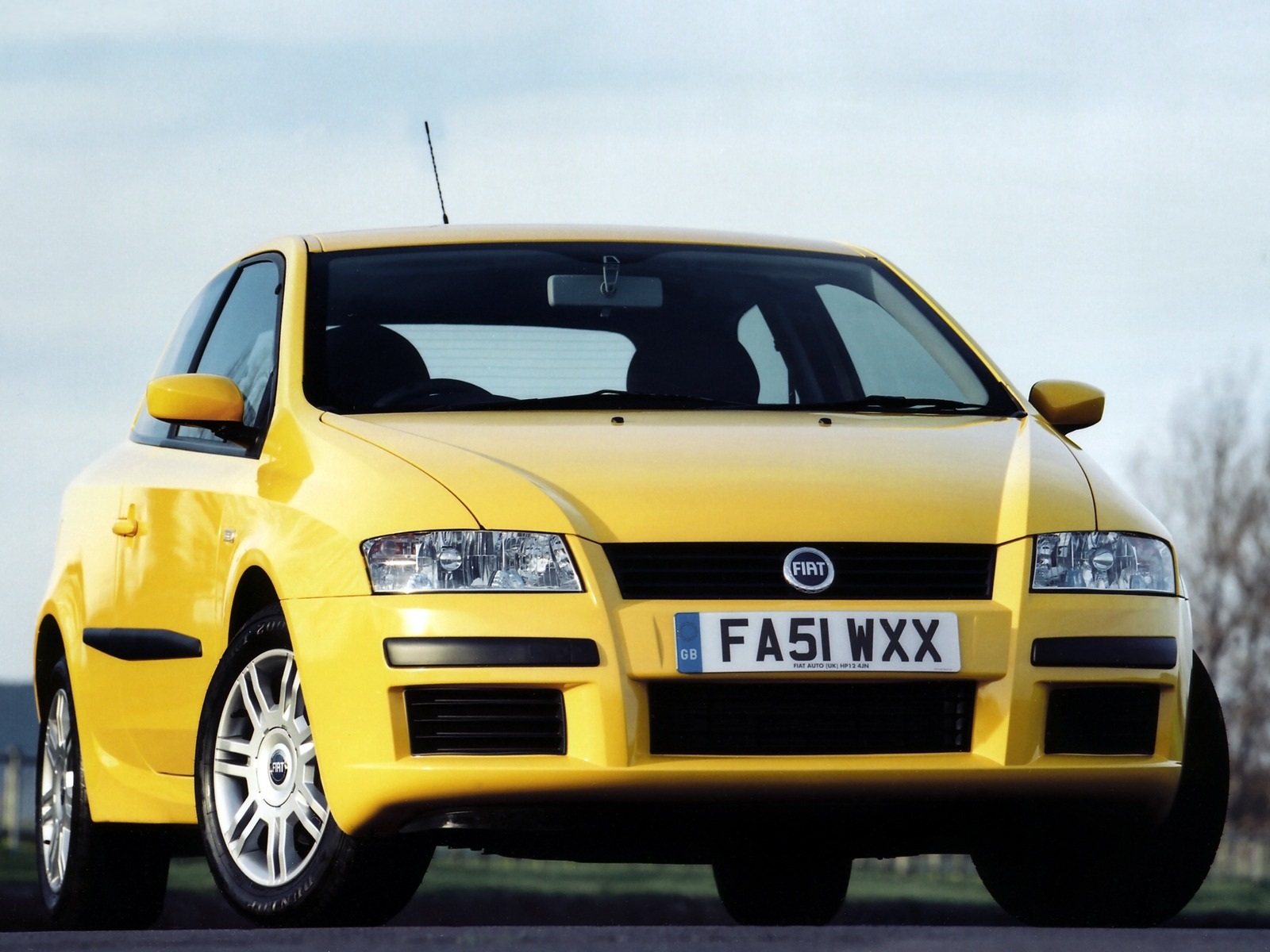
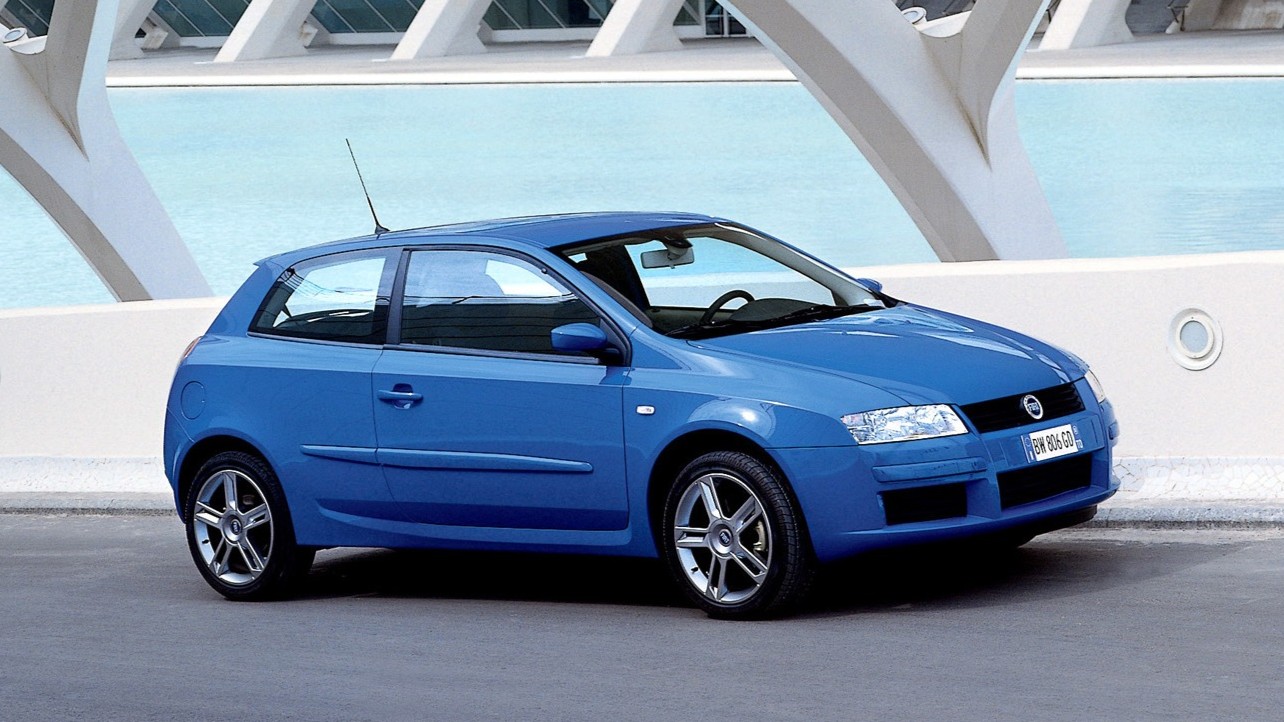
The Fiat Stilo caught my attention because this little guy is a regular hatchback and wagon, but it looks pretty stylish. Fiat says it built the Stilo in 2001 as part of a renewal strategy that sought to build the automaker into a full-line manufacturer. Thus, it felt the need to make a hatch to achieve this.
The Stilo was sold as a three-door hatch, a five-door hatch, and as a wagon. At launch, the Stilo was available with six engine choices that included four gasoline engines and two diesels. The smallest engine of the bunch was a 1.2-liter four-cylinder gasoline engine that made 79 HP. The hottest gas engine was a 2.4-liter straight-five with 170 ponies on deck.
 Fiat
Fiat
Diesels included a 1.9-liter four making 80 HP and a hotter version of that same engine with 113 HP. A Stilo with the 1.2-liter gas engine hit 62 mph in 13.8 seconds, while the hot 2.4 got the car to the same speed in 8.5 seconds. At launch, buyers had only three transmissions to choose from: a five-speed manual, a six-speed manual, or a five-speed single-clutch Selespeed automated manual.
The Stilo was not a fast car; it was more like a family car with Fiat flair. There was even an Abarth version, but, confusingly, Fiat initially paired it with the Selespeed and not a proper manual. It seems many owners think of the Stilo as a pretty car, and decently reliable with a diesel, but not a particularly thrilling one to drive. Again, this is a regular car here. You’re not going to be buying it to carve canyons. A quick search suggests you could get one of these for under $3,000, or under $2,000 if you aren’t afraid of a well-used Fiat that was never sold in America.
Volkswagen New Beetle RSi
 VW
VW
Here’s a car that has technically existed in America for a while. Prolific tuning shop HPA Motorsports used to build the turbocharged Volkswagen New Beetle RSi models using U.S.-spec New Beetles as donors. A wealthy enthusiast should have been able to petition the U.S. government to import one of these under the Show or Display exemption to the 25 Year Rule. Now you’ll be able to own one without having to go through HPA, or flexing your muscles with the feds.
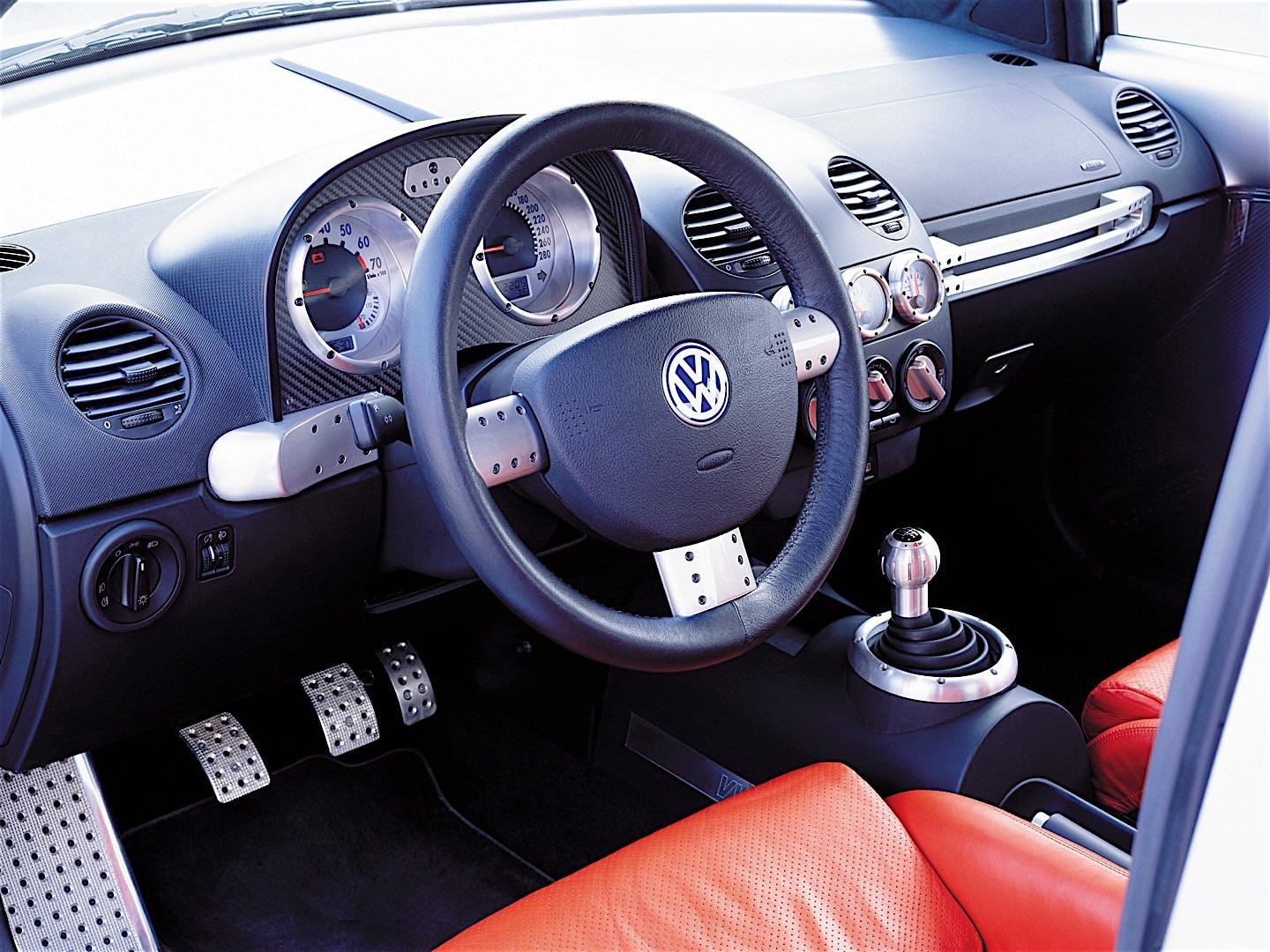
In 1999, Volkswagen rolled into the Detroit auto show with a surprise. The New Beetle had a successful launch and, at the time, was selling smashingly well. Everyone had a little bit of Beetle fever, and while everyone was excited, Volkswagen decided to show off just how crazy a Beetle could get with the Beetle RSI design study. Remember, this was the Ferdinand Piëch era of Volkswagen that did insane engineering projects pretty much just for giggles. But what was even more funny was that Volkswagen decided to build 250 of the machines.
 VW
VW
The RSi was a stupid car, and Jason’s old review of one shows it. It featured all sorts of carbon fiber and billet aluminum fixings, 4Motion all-wheel-drive, and a 3.2-liter narrow-angle VR6 punching out 221 HP and 234 lb-ft of torque. You even got a six-speed manual, because how else would you drive the ultimate water-cooled Bug? This is a Beetle that hits 62 mph in around 6.4 seconds and races on to 140 mph. Nothing about this car made sense, from its 235 section-width tires to the $80,000 asking price. Even the bucket seats were carbon fiber, just like a Beetle Cup racecar.
If you love the meanest Bug to ever leave the factory, it’s going to cost you. Finding one for sale isn’t too hard. The problem is that they’re all outrageously expensive. I found a 2001 model that’s for sale right now for $88,544, and that’s before you pay tariffs. Still, these cars are New Beetle holy grails, and they are finally going to be legal.
Imports Are Still Fun
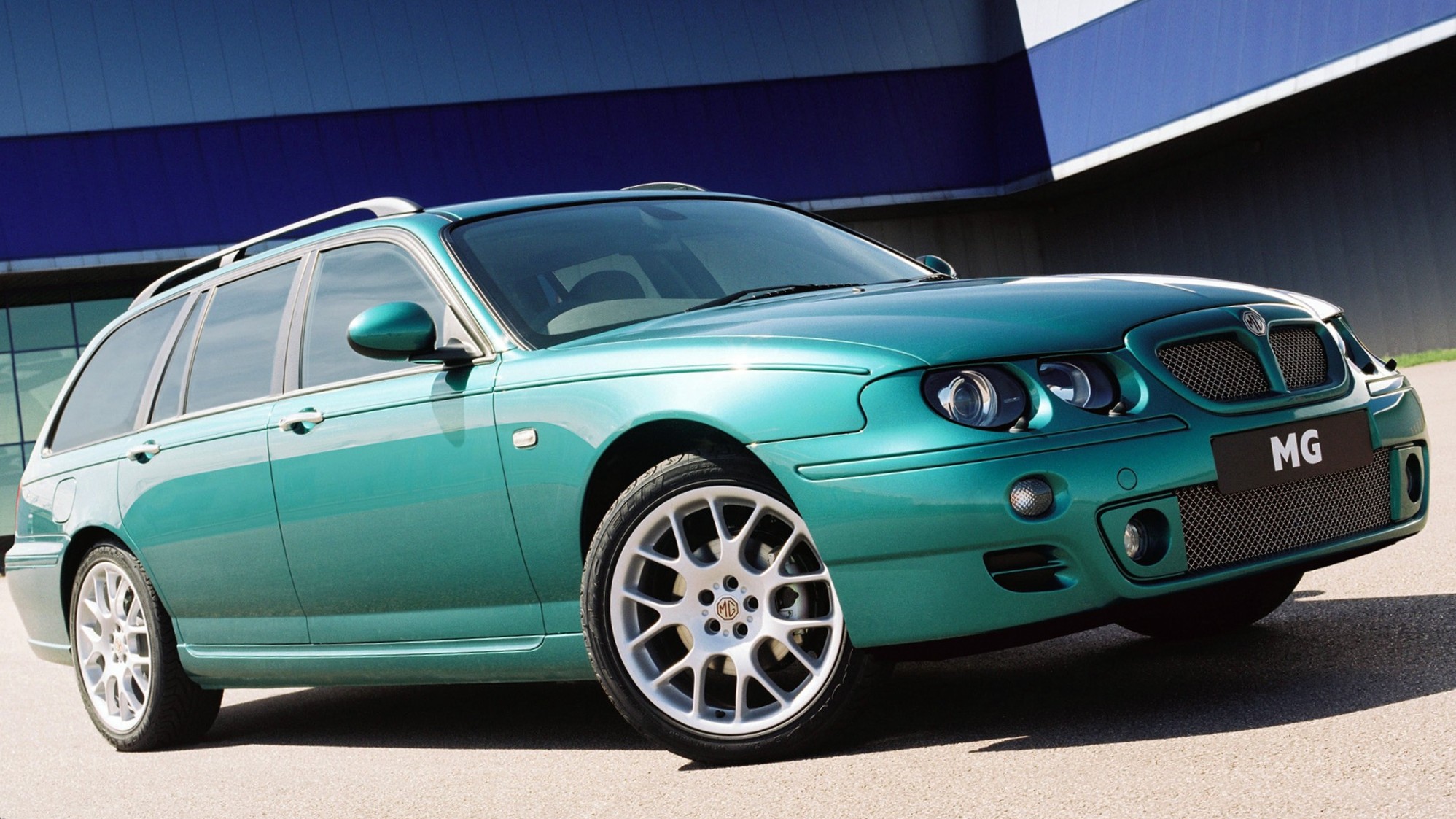
So, there you have it, five cars that you can import at some point next year that don’t come from Japan. As always, this list is not exhaustive. The first Audi A2 3Ls will also become legal next year, in addition to weirdos like the MG ZT!
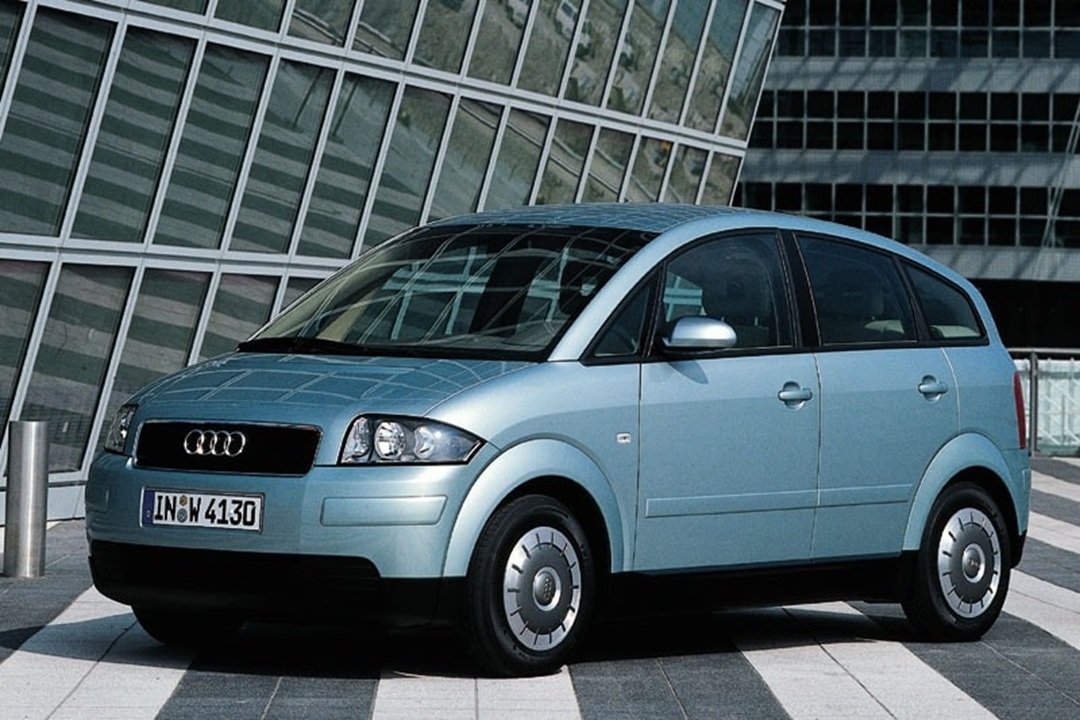 Audi
Audi
You should reach out to an import expert if you have any specific questions regarding tariffs, pricing, or possible legal issues with your chosen steed. However, so long as you can confirm that the vehicle was built at least 25 years before the date you import the vehicle, you should be fine. In a worst case, your importer may be able to help you find a place to store the vehicle until it becomes of age.
Sadly, I do not have any personal experience with importers who work in Europe, but it appears that friend of the show, Doug DeMuro, has had good luck with vehicle sourcing agent Dutch Munich and with Inbound Motorsports. Don’t worry, I’ll eventually take a crack at importing something from Europe.
Until then, get excited. There’s a whole world of fun imports out there, and it’s only getting better.
Top graphic image: Volkswagen
AloJapan.com