
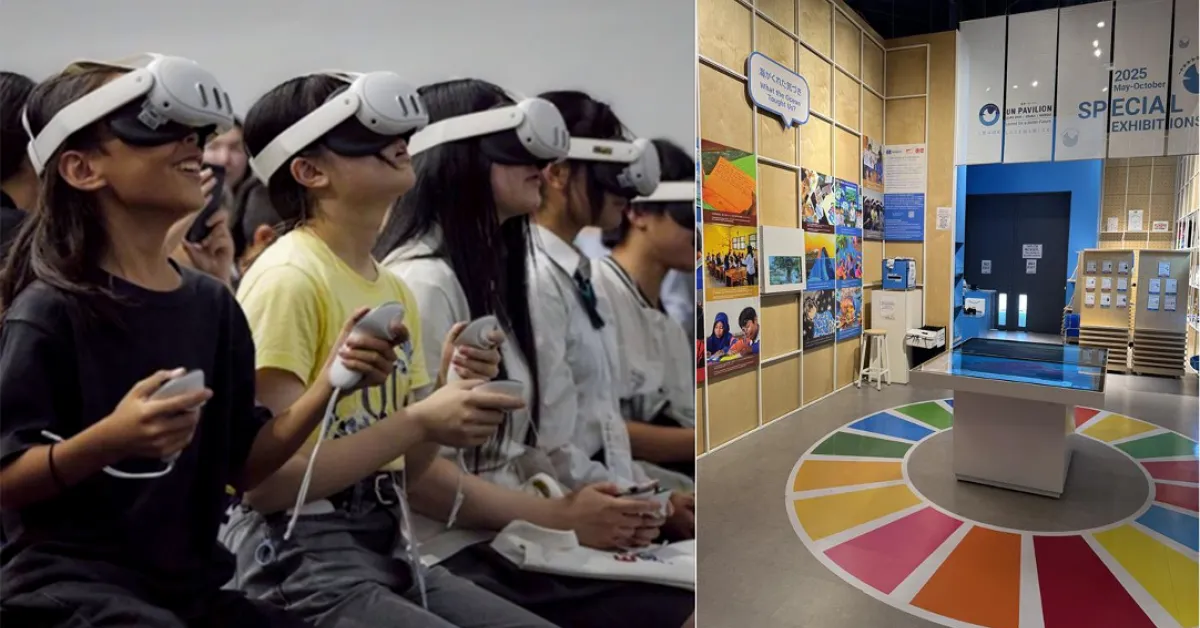
During the exhibition’s opening, Maher Nasser, Assistant Secretary-General and Commissioner-General of the United Nations at Expo 2025, emphasized the urgent need to protect the world’s oceans and biodiversity.
“These exhibitions show what’s possible when technology and education come together,” said Rika Yorozu, Education Programme Specialist at UNESCO Regional Office in Bangkok and Office for UN Coordination for Asia and the Pacific (UNESCO Bangkok). “They are part of a broader effort to help young people see, feel and understand the ocean, so they can act to protect it.”
The activities in Osaka build on work already underway at UNESCO Biosphere Reserves across Southeast Asia through the Sustaining Our Oceans initiative. At the Ranong Biosphere Reserve in southern Thailand, for example, students and teachers have been testing new learning materials that use augmented and virtual reality to bring marine ecosystems to life in the classroom. On 3 November, the UNESCO Regional Office in Bangkok launched a Sustaining Our Oceans Augmented Reality (AR) nature trail at the Ranong Mangrove Research Center, Ranong Biosphere Reserve, along with a Fieldlab Toolkit that encourages students and educators to engage with coastal communities in the area.
AloJapan.com