
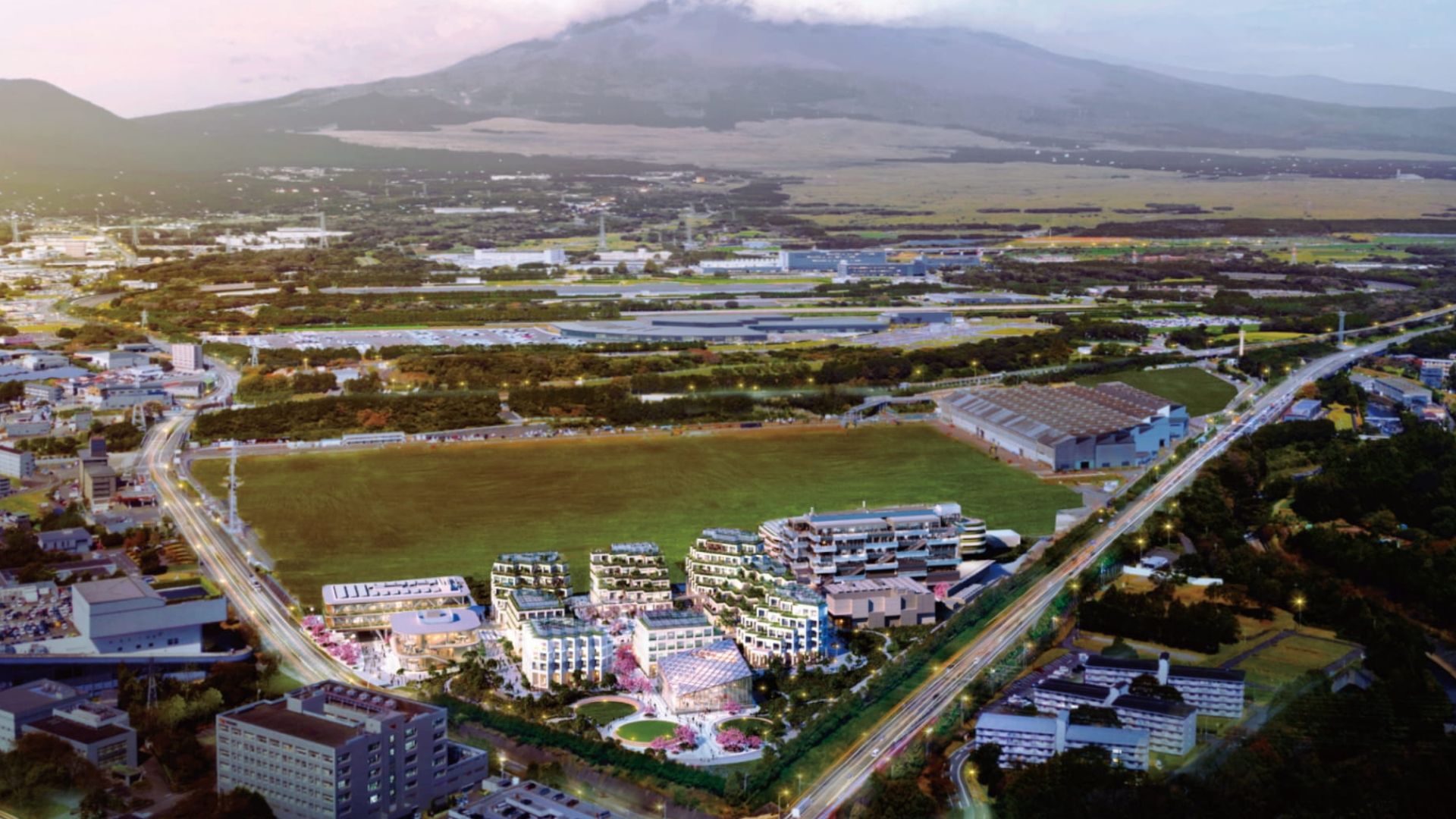
At the foot of Mount Fuji, Japan has launched one of its most ambitious technological experiments, known as Woven City, a fully connected, self-contained prototype metropolis developed by Toyota Motor Corporation.
More than a decade in conceptual development and five years in construction, the 175-acre site is designed to serve as a real-world testbed for future mobility, smart infrastructure, and sustainable living.
World’s first robot city
Announced at CES 2020 and now set to launch in fall 2025, Woven City marks a critical milestone in Toyota’s transformation from an automobile manufacturer to a mobility-focused technology company.
The experimental city occupies the former grounds of the Higashi-Fuji plant in Shizuoka Prefecture, approximately 140 kilometers southwest of Tokyo.
Described by Toyota as the world’s first “robot city,” Woven City will initially host 100 residents, mostly Toyota engineers, staff, and their families.
That figure is expected to grow to 360 during Phase 1, with a long-term population goal of 2,000.
The city is populated by two key resident groups: “Inventors,” who design and test new technologies, and “Weavers,” who interact with and provide feedback on the systems in daily use.
The concept’s core is Toyota’s e-Palette, an autonomous electric vehicle platform initially developed for the Tokyo 2020 Olympics.
These vehicles will form the primary transport layer of Woven City, supported by an underground logistics network for autonomous goods delivery.
Surface roads are divided into three dedicated lanes: one for pedestrians, one for slower mobility devices like scooters and bikes, and one for autonomous vehicles.
The aim is to test autonomous systems in a controlled but fully functional urban setting. “We are building a city where everything, people, buildings, vehicles, is connected through sensors and AI,” said Akio Toyoda, Chairman of Toyota’s Board of Directors.
“It’s a unique opportunity to create a living digital operating system for urban life.”
Smart infrastructure and energy independence
Woven City’s infrastructure goes beyond mobility. The entire urban system is designed to support sustainability and resilience.
Energy is provided through a hydrogen fuel cell grid, supplemented by solar panels, water recycling systems, and advanced eco-waste management.
Smart homes will incorporate robotics and AI to monitor health, manage energy, and optimize daily life.
Each structure, street, and service is networked, enabling full-spectrum data collection and simulation of future urban models.
The city is a simulation environment and a functioning habitat, enabling direct real-world testing of smart infrastructure technologies.
Woven City is not yet open to tourists, but Toyota plans to allow public access in 2026.
The long-term strategy is to establish a replicable model that can be scaled across geographies.
As nations wrestle with the future of urban planning amid climate and security pressures, Toyota’s Woven City may serve as a strategic template for smart city development and how public-private partnerships can incubate next-generation technologies in real-time.
AloJapan.com